Performing Social Justice resident Allen Otte (standing) speaks with faculty and students.
One of the missing links between refugees and Swedish citizens is performing arts. At least, that’s what Roosevelt music composition student Sean Hussey argues in his latest project.
The recipient of a Performing Social Justice Seed grant offered annually by the Chicago College of Performing Arts (CCPA), Hussey spent two weeks with vocal quartet Åkervinda in residence at the Inter Arts Center in Malmö, Sweden, where he spoke with musicians, refugees and locals about the often problematic integration of refugees in the Scandinavian nation.
“The [Social Justice Seed Program] could not have been more perfect,” Hussey said. “We needed funding for an idea, and every other funding opportunity required us to have a product. We didn’t have that. Our goal was to figure out what we wanted to do.”
“We want students to use this program to ask themselves what more they can do as artists besides performing at concerts in the community.”
– Thomas Kernan, CCPA Faculty Member
Discoveries made by Hussey during the experience could form the basis for a future book and provide him with countless opportunities to grow the project in the future. This is exactly the kind of outcome CCPA music history professors Thomas Kernan and David Kjar had in mind when they launched the Performing Social Justice Seed Program two years ago.
“We want students to use this program to ask themselves what more they can do as artists besides performing at concerts in the community,” Kernan said. “We want them to explore what social justice should look like as a performing artist in the 21st century.”
“When musicians and creative types move themselves into other worlds and get to know others, they end up learning more about themselves,” Kjar added.
The two preside over the program that awards grant money, which has ranged from $500 to $3,500 per project. The faculty members mentor awardees in their work, giving them a financial head start in pursuing ideas that bridge performing art with Roosevelt’s mission of social justice.
Recent projects include a critique of gender inequality in the opera world, by Heidi Joosten. CCPA students Ian McGuffin and Cassandra Kaczor worked on the “Dried Tobacco Project,” a musical exploration of the emotional risks within the LGBTQ community.
Members of Åkervinda rehearse in Sweden.
“What’s been most satisfying about the program is that there’s a community starting to form in which CCPA students are sharing their ideas on how, as performing artists, they can best put social justice into action,” Kjar said. “All those who’ve applied for grants are joining periodically to meet, inspire others and give advice.”
CCPA students can apply for Social Justice Seed grants starting in their second semester. Applicants prepare proposals explaining why their idea relates to social justice, the support they need, and plans for the future. A group of CCPA faculty members reviews the proposals, working with students to refine ideas before a project begins.
It is a process that Hussey followed in order to get the grant that took him to Sweden, an eye-opening experience that has led to his growth both as a performing artist and a socially conscious citizen.
“This project has opened doors for new ways of thinking about my future and looking into PhD programs,” Hussey said. “It’s been remarkable to have the guidance of CCPA faculty members, and this wouldn’t be possible without their time and effort.”
Desire Bernard first did a project on Chicago homelessness as a Mittie, Moselynne and Dempsey Travis scholar. As an honors student, she was paired with a nonprofit professional who taught her more about the homelessness issue and how it can be best addressed. Now the Roosevelt senior is applying all she’s learned to help a homeless man named Larry Roby reclaim his dignity.
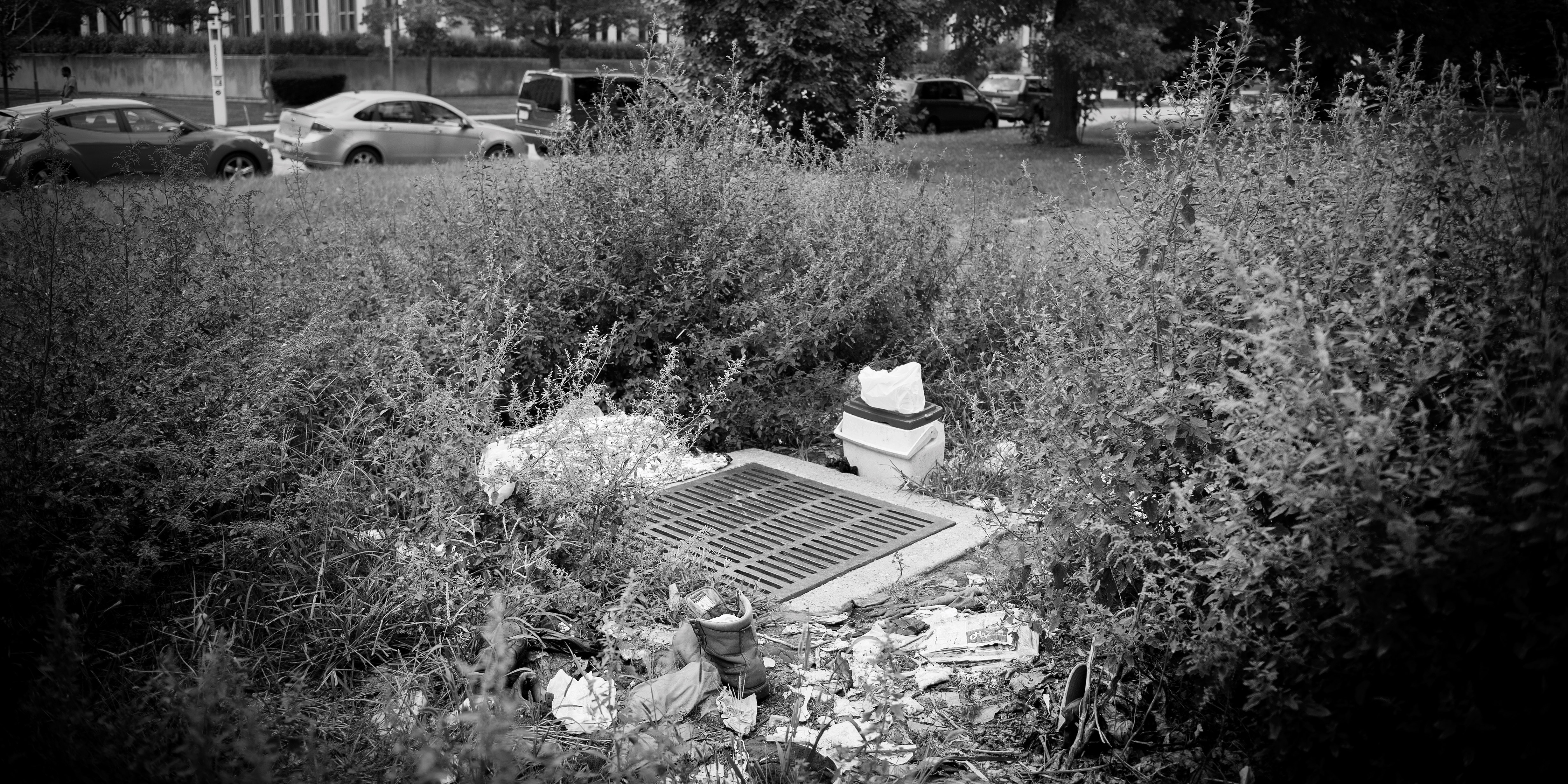
Ignoring the man who sleeps outside her office window atop a heating grate in Chicago’s Midway Plaisance Park has never been an option for Roosevelt University senior Desire Bernard.
The 35-year-old psychology major, whose motto in life is “We can figure it out,” comes from a tradition of giving. “My mother was always feeding somebody,” said the Belize native who came to the United States at age 11 and was awarded U.S. citizenship last year. “In that regard, I’m following in her footsteps.”
The honors student will be the first in her family to receive a college diploma when she graduates from Roosevelt in the spring of 2016. Her odyssey of learning about and understanding the plight of Chicago’s homeless began as a new Roosevelt student in fall 2013.
“Desire’s philosophy in life is to help others and do justice. She’s the real deal in terms of living those values,” said Laura Evans, a Roosevelt professor of organizational leadership and mentor to Bernard, who enrolled at the University because of its mission.
An office manager at the Urban Education Institute in Chicago’s Hyde Park, Bernard first saw movement under a blanket in Midway Plaisance Park as she looked out her window in early October 2013. She realized a man lived there when she saw him a few days later sitting on a plastic cooler next to the blanket.
After two weeks of watching and with the weather turning colder, Bernard decided to carry down a cup of coffee. The whir of a boiler fan shooting hot air up through the heating grate could be heard as Bernard offered the coffee and the man nodded in thanks.
“When she discovered this man living on a heating grate, it was only natural for her to befriend him,” said Evans, who taught a critical reasoning and skills course that Bernard took as a freshman. “She’s been doing one-on-one social justice with him ever since, though it’s probably been a tougher road than she expected.”
“What I’ve learned is that America has the resources in place to help, but it lacks the community.” Desire Bernard
Bernard certainly has experienced plenty of ups and downs during the past two years as she has come to know and understand Larry Roby, the 60-year-old homeless man whose life has been full of frustration.
“When people find out you don’t have anything, they have a tendency to turn their noses up,” Roby said recently. “They don’t know the situation, even though they think they do.”
The experience also has been a career builder for Bernard, who has done considerable legwork contacting caseworkers, free medical clinics and homeless housing advocates, among others, to assist her in helping Roby.
“This is not someone who shrinks from challenges,” said Megan Bernard (not related to Desire Bernard), associate provost for inclusion/enrichment and a director of Roosevelt’s new Community Mentoring Program, which paired the honors student with a leader of a Chicago not-for-profit homeless-care provider. “The knowledge she’s getting in the classroom and the know-how she’s gaining in the field are preparing her to be a leader capable of making contributions to positive change in communities.”
There wasn’t much conversation at first, as Desire didn’t want to be too pushy, but she thought a lot about the man on the heating grate, visiting him twice a week with food, clothing, drug-store sundries and other essentials.
By January 2014, Bernard had learned Roby’s story, interviewing him for her 2013-14 Mittie, Moselynne and Dempsey Travis scholarship project at Roosevelt – a video she titled “The Invisible Ones,” which was well received at its screening.
“What was nice about the project is the way she approached the topic of homelessness,” said Joan Berg, a Travis family foundation attorney who attended Bernard’s February 2014 presentation. “The message was about preserving the dignity of those you’re trying to help get back on their feet,” said Berg, “and that is in line with the mission of the foundation,” which after the screening, awarded Bernard a second Travis scholarship for 2014-15.
“At that point, I didn’t want to let the project go,” said Bernard, who remembers thanking Roby in April 2014 for helping make the video and her presentation powerful. “I asked if he wanted me to help him get off the street. He said ‘yes,’ we shook on it and I told him ‘We can figure it out together.’”
A Chicago native, Roby is a high school dropout, former U.S. marine and steel worker whose job at U.S. Steel South Works in Chicago was to open the door of a blast furnace.
After the plant closed for good in 1996, Roby lost his townhome to foreclosure and his car to repossession. Depressed and discouraged, he became estranged from his family, living on the street for 20 years, including the last six without any form of identification.
“I was literally walking in the dark,” said Bernard, who initially sought school and hospital records to try and establish Roby’s identity so he could get a Social Security card and be put on a waiting list for housing.
Chicago Public Schools officials informed Bernard that Roby’s records were in a warehouse, and that it could take months to find them. Staff at Cook County’s Provident Hospital refused to release Roby’s records unless he had a police report proving he’d been transported to the emergency room.
Complaining of back pain and stomach problems, Roby was seen in summer 2014 at the hospital’s emergency room where he received paperwork that became the basis for establishing his identity. With this report, Franciscan Outreach in Chicago went ahead that fall, at Bernard’s urging, to issue a letter officially affirming Roby’s homeless status.
The letter helped Roby get a Social Security card, birth certificate, Illinois identification card and a place on a waiting list for permanent housing. After the eight-month paper chase was over, Bernard gave Roby a wallet for his state ID. She also held onto his original documents, which she continues to store for safekeeping.
“I never realized the obstacles that our homeless have in getting back on their feet,” said Bernard, who grew up in Belize City where she first saw street people and learned that reaching out is part of belonging to a community. “If anyone was hungry, there was always someone there with a pot of food,” she said. “What I’ve learned is that America has the resources in place to help, but it lacks the community.”
When psychology major Desire Bernard first saw a homeless man outside her office window, her inclination was to help in any way possible, including assisting him in obtaining his long-lost identity.
Bernard and her mother, Esther Hudson, have been a safety net for Roby. They bring him supplies, drive him places and show concern when he stays in the cold or misses appointments that could open doors to getting off the street.
“Desire is happiest when she is helping others. You can see it in her face,” said Hudson, who pitches in whenever Bernard asks. “She’s going into a life of service, and even if Mr. Roby doesn’t get out of homelessness, I believe my daughter will be rewarded for trying.”
Roby admits being surprised that Bernard hasn’t given up on him yet. “I’ve come to believe she really cares about me,” he said recently.
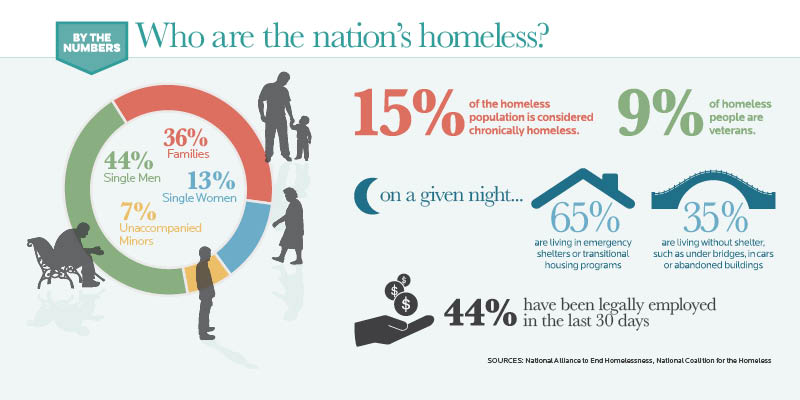
Among nearly 140,000 people in Chicagoland without a home, Roby is in line with approximately 26,000 others seeking permanent, subsidized housing.
His case isn’t likely to be a priority, as Roby is adamant against going into a temporary shelter, a step that can increase one’s chances for getting a private apartment. Simply put, Roby wants the apartment, but not at the expense of his privacy and freedom.
“Desire has come to understand homelessness on the micro and macro levels.” Sol Flores, Executive Director of La Casa Norte and one of Bernard’s mentors
“Most people helping the homeless agree that the longer one stays outside, the harder it becomes to make a change,” said Douglas Fraser, executive director of the Chicago Help Initiative, a homeless-care nonprofit that Bernard has contacted for guidance in helping Roby.
“When you deal with people who have been outside for a very long time, the reality is that it can be difficult to figure out how to help them,” said Fraser, who has warned Bernard not to expect miracles. “I’ve told her that ‘None of us always make good decisions, and that includes the homeless. It’s a matter of finding that right moment when a person is really ready to make a decision to change.’”
Mentored last academic year by Sol Flores, executive director of La Casa Norte, whose mission is to serve youth and families confronting homelessness, the Roosevelt student has learned how to talk Roby through his frustration and how to help him troubleshoot his problems. She’s also attended La Casa Norte events, community meetings and press conferences, even meeting Chicago Mayor Rahm Emanuel while learning about the city’s plan for addressing homelessness.
“Desire has come to understand homelessness on the micro and macro levels,” said Flores, who hired her over the summer to assess the needs of approximately 100 households receiving assistance from the nonprofit.
“I’m excited to see what she will do next,” added Flores, who hopes to continue the mentor relationship that officially ended last spring with a symposium presentation by six Roosevelt mentees, including Bernard. “I see Desire as someone who could lead initiatives and teams from the non profit sector in their work on important social issues like homelessness.”
Going forward, Bernard continues to build on service experiences. Every three months, she sends boxes of shoes, children’s clothing, medical supplies and other necessities to the needy in her old neighborhood in Belize City. Earlier this year, she created a GoFundMe page on the Internet, raising $650 to help pay for the funeral of a 29-year-old family friend who left behind five young children.
Through La Casa Norte, she learned of volunteer opportunities at Chicago’s Erie Neighborhood House, where she tutors an adult learning to read and is on a list to be a counselor assisting immigrants seeking citizenship.
Well versed about homelessness and its challenges thanks to opportunities she had as a Roosevelt student, Bernard is making a difference one person at a time, beginning with Roby.
“If you need me, I’ll be there. I just need you to take the reins,” she said recently as the two sat on a bench in the park discussing next steps for the homeless man in making a transition from the heating grate.
Mentioning a list of benefits he’d like to apply for – food stamps, Medicaid, Social Security disability – Roby hid tears when Bernard promised to stick with him.
“That kind of kindness and concern – it hits me in the heart,” said Roby, adding, “If I ever get back on my feet, I’ll always be there to show my appreciation.”
At that, Bernard smiled and said something she’s repeated before. “We can figure it out Mr. Roby. We’ll figure it out together.”
Susan Torres-Harding is an associate professor in the Department of Psychology. Her research interests include understanding the impact of sociocultural factors on physical and psychological health and assessing the development of social justice attitudes and social activism. She earned her PhD in Clinical Child Psychology from DePaul University in 2001.
Social justice has always been an important value to me and a foundation for my career aspirations. Therefore, in 2006, I was pleased to join the faculty at Roosevelt University, a university founded on inclusivity and one with a strong focus on social justice and social action. I quickly realized that this was a friendly “home” where I could continue to discuss the impact of societal inequalities and discrimination in health care, my own area of research.
At the same time, I was intrigued by the reactions of friends and colleagues when I told them that I was now at Roosevelt. Invariably, I would meet people who had been at Roosevelt in those early years, and they would tell me stories about what a special place Roosevelt is. They described Roosevelt as a school where people of all races came together—a college unlike others. The pictures hanging on the walls of the Auditorium Building from those early years are visual reminders of this truly unique integration of people from diverse racial groups at a time when racial segregation was the norm. Today Roosevelt continues to be ethnically and racially diverse, but the world has changed since Roosevelt came into being in 1945. In addition to racial injustice, which regrettably remains prevalent in our society, we now truly confront other forms of discrimination based on gender, sexual orientation, social class and disability status.
As a Roosevelt psychology professor, I often talked in my classes about social justice as a key value for the Roosevelt community, but I found students grappled with the meaning of social justice. What is social justice? Whom is it for? Many students talked about social justice as if it were a high-minded ideal, unrealistic or impractical to do in real life. While we often discussed the need to use our knowledge and skills to work for a more fair and just society, I wondered if students had become overwhelmed with the amount of injustice in society and whether they believed they could actually make a difference in the world.
This led me to ask myself, what do students think social justice is all about? More importantly, I wanted to know what I could do to empower them to take action and strive to make a difference while at Roosevelt and after.
In response to these questions, I started a series of studies to investigate how students understood social justice and how, if at all, they were learning about our social justice message and integrating it into their own lives. What did all of this talk of social justice mean to the students? And, how could we, as educators, facilitate the goals of students who had the sincere desire to promote social justice, but who also had the notion that it was too hard, impractical, unrealistic or idealistic? As an educator, I had a personal stake in these questions. I wanted to know if integrating social justice concerns into my classes was actually making a difference in how students viewed themselves, their communities, and their own personal and professional actions. In other words, were we living up to the Roosevelt University mission of educating “socially conscious citizens”? Does talking about social justice make a difference, or is it all a lot of feel-good talk that is disconnected from reality?
Students Define Social Justice
To begin answering some of these questions, my research team and I embarked on a study to first understand how students defined social justice. In textbooks, researchers and educators define social justice as “involving the recognition of the existence of social injustices based upon being a member of a non-dominant or marginalized social group.” These marginalized social groups can include people who live in poverty, women, people who are LGBTQ, people who are disabled, people from racial and cultural minority groups, and people who have severe mental illness or have a substance abuse disorder. Researchers also defined social justice as “a value or desire to increase access of power, privileges and socioeconomic resources to people from socially marginalized groups.”
But is this how students thought about social justice? I believed it unlikely that most students would think about social justice in such abstract terms. So we conducted a study with Roosevelt students simply asking how they defined social justice. We found that students were relatively consistent in their definitions. They tended to describe social justice as addressing injustices in equality and promoting opportunity, rights, fairness and acceptance of everyone, including people from diverse backgrounds. Interestingly, a significant proportion (44 percent) of the students said they engaged in some activity that promoted social justice.
Additionally, we asked students to describe what they were actually doing to promote social justice. In most academic papers, social activism is defined as political activism: marching in protests, attending rallies, writing legislators or voting in order to promote policy or legal changes.
They tended to describe social justice as addressing injustices in equality and promoting opportunity, rights, fairness and acceptance of everyone, including people from diverse backgrounds.
Interestingly, there was a tremendous range of responses to our question. In addition to political activism, we identified many different categories of social justice activities, including conducting social-justice-related research, being a member of or volunteering for an organization that focused on social activism, seeking out educational opportunities to learn more about social justice, engaging in advocacy on behalf of people from disadvantaged or marginalized groups, and talking to family and friends about social justice.
What was most impressive to me was the creativity displayed by students as they sought to promote social justice, as well as the diversity of issues addressed by their actions. Many students reported participating in marches, protests and other direct social actions for economic or racial change. One participant was working to promote social justice by acting in a short film that aimed to foster acceptance of LGBTQ youth during the coming out process. Some students were using a social justice approach when providing clinical services to children with developmental disabilities. A few reported that they were engaged in youth mentoring or were working on behalf of youth within the juvenile justice system. Others were working to promote racial justice, women’s empowerment and awareness around diversity-related justice. Still others described being LGBTQ allies or serving as advocates for women who have endured domestic and sexual violence. We also had students who volunteered at community or religious organizations to help individuals around issues of poverty and food security.
A significant number of students indicated that they spoke with family or friends about these issues. I think that these kinds of actions are more quiet forms of activism. Discussing issues of social justice with significant others might have the impact of changing attitudes or gaining support from them. In turn, this might ultimately increase awareness of social issues and might influence others to take action in some way in their own lives.
Many of the students’ efforts involved using resources available at Roosevelt University. These included engaging in social-justice related research, attending lectures, being part of student groups and organizations that promoted social justice such as RU PROUD (a lesbian, gay, bisexual, transgender, questioning and ally organization) and Students for a Sensible Drug Policy, engaging in social justice as part of their professional clinical training and volunteering as part of service learning. Although less than half of the students we surveyed reported engaging in activism, those who were active appeared to take advantage of the resources and opportunities available at Roosevelt, and many sought to integrate these experiences with their academic studies.
Connecting With The Mission
The second study that my research team and I conducted focused on the role of the University mission in promoting positive attitudes toward social justice. I wanted to understand whether students who felt more involved at the University and agreed with its mission were in fact more likely to engage in social activism. Interestingly, I found that students who reported having a high sense of community—that is, feeling as if they belonged to the “Roosevelt family”—said they valued the social justice mission more.
Students who respected the social justice mission were much more likely to state that they intended to work for social justice in the future and felt that they possessed the skills to effect positive change. These students were also more likely to report having engaged in social activism, talk about social justice issues with family and friends and personally identify as social activists. It seems that Roosevelt’s social justice mission influenced students by impacting both positive attitudes toward social justice and facilitating the integration of social justice concerns into their personal and professional lives. Feeling a part of the Roosevelt community mattered because it allowed them to share in this core community value.
Thus, the mission and values of Roosevelt University are having an impact on our students’ actions. We are currently conducting additional studies where we hope to follow undergraduate students over time to see how their ideas and views of social justice might change as they move from freshman to senior year. We are also interviewing student activists to learn from their unique experiences, motivations and perceptions of their own work.
Indeed, it has been a pleasure to be able to assess and document the amazingly diverse and creative activism that is going on at Roosevelt. In addition to the examples listed above, Roosevelt students have participated in walk-outs and rallies in Grant Park, lobbied at the state capital, made videos to help educate others about traditionally marginalized groups, conducted interventions to promote health and wellness in our communities, and organized programs that give our students and people in the community a voice. We have so much to learn from our students!
An important part of social justice education is to trust that students are able to evaluate the information we provide and use it in a way that is valid, realistic and relevant to their own lives. Because students are able to come up with so many unique and creative ways to address injustices in their interpersonal and professional lives, professors should not provide answers, but rather should pose questions to help students recognize the real challenges in our society. We can encourage them to critically evaluate their own views and the views of others and provide them with a range of interventions and interpersonal skills that they can then use to confront a range of social problems and issues in their own ways. We also need to recognize that this is hard, risky work.
An important part of social justice education is to trust that students are able to evaluate the information we provide and use it in a way that is valid, realistic and relevant to their own lives.
Working for social justice is, by its nature, “radical” because it focuses on changing the status quo, challenging existing policies and can involve breaking rules. As educators, it is important that we not only talk about social justice but provide students with the skills they need to take action and be effective. Promoting favorable attitudes and teaching interpersonal intervention and activism skills will have a positive impact on students and help them fulfill the Roosevelt mission of creating “socially conscious citizens” who change the world.