Alumni News, Fall 2015, Sidebar Story

Buzzworthy journalism grads make headlines

I have my Roosevelt journalism professors to thank for preparing me well for this experience,” says Giacomo Luca (above), an award-winning journalist who is currently reporting for CBS/Fox affiliate KFVS-TV in Cape Girardeau, Mo.

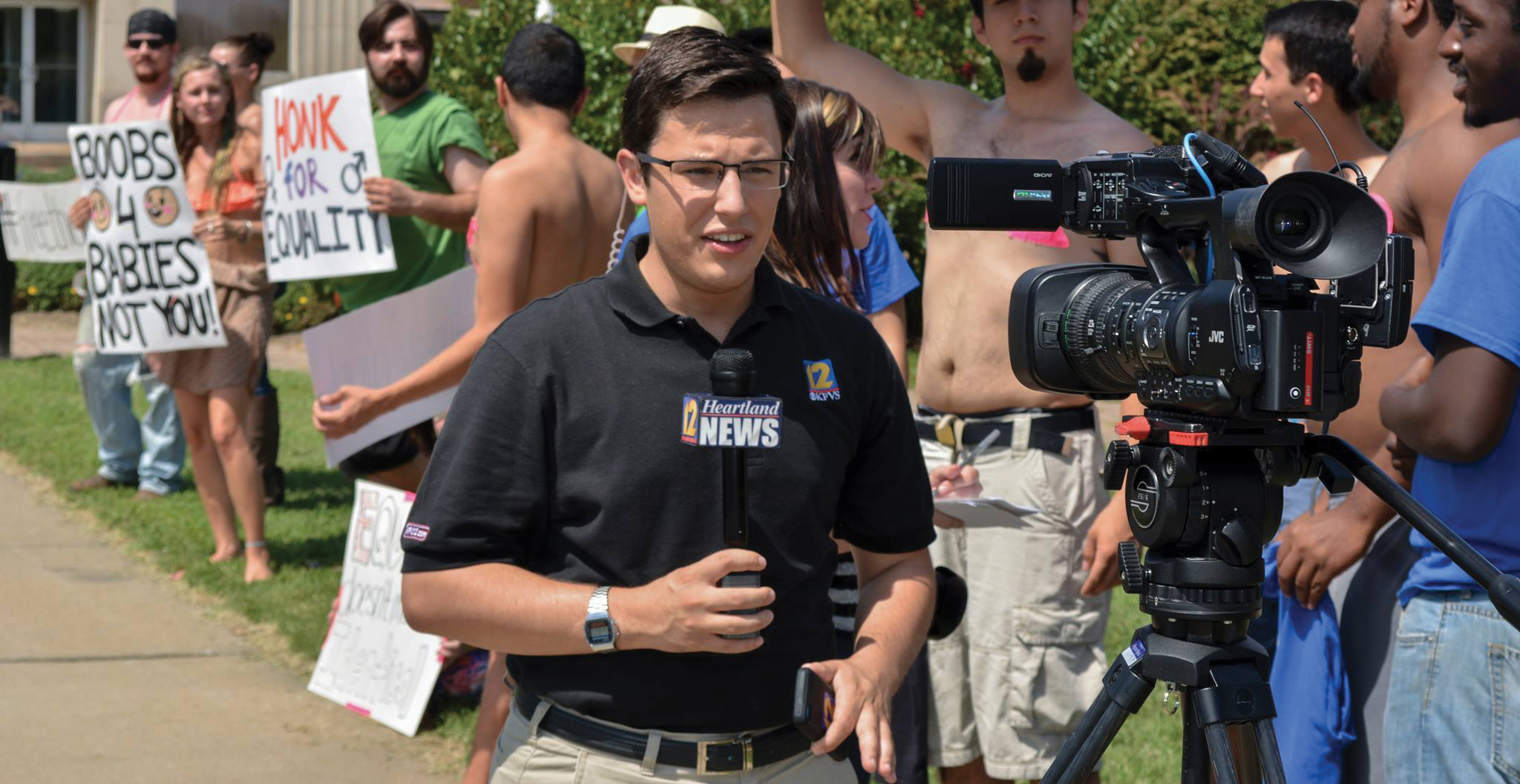
“I have my Roosevelt journalism professors to thank for preparing me well for this experience,” says Giacomo Luca (above), an award-winning journalist who is currently reporting for CBS/Fox affiliate KFVS-TV in Cape Girardeau, Mo.

From writing for daily newspapers to anchoring television news programs, alumni from Roosevelt University’s Journalism Program are realizing dreams as successful members of the media.

“Many of our journalism graduates are doing great things,” said Marian Azzaro, chair of the Department of Communication at Roosevelt. “One of the keys to our program is that it positions students to be prepared for the rapidly changing field of journalism by providing instruction in different media, from newspapers to video to Internet reporting.”

Started four decades ago, the Roosevelt journalism experience includes opportunities for learning at The Torch student newspaper, The Blaze student radio station and most recently The Fire, which is doing video news segments and is the newest student journalism format. “We’re teaching students to write and report for all kinds of journalistic media; these are skills that are useful and needed for success,” Azzaro said.

Jennifer (Berry) Hawes, a 1993 journalism graduate, brought positive attention to Roosevelt’s program as a member of a reporting team for The Post and Courier, a daily newspaper in Charleston, S.C., that won the Pulitzer Prize in April for Public Service for a five-part series on domestic violence.

She credits Roosevelt Associate Professor of Journalism Linda Jones with opening her eyes to the storytelling craft of journalism. “She instilled the importance of storytelling in me,” Hawes said of Jones, “and that’s what I’m really known for today.”

Roosevelt journalism alumnus Aaron Lee recently landed a job with ESPN in Chicago, getting a foot in the door toward one day achieving his ultimate goal of becoming an ESPN anchorman.

Lee, who also learned the importance of storytelling as a journalism undergraduate at Roosevelt, credits Roosevelt Journalism Professor John Fountain with inspiring him to tell his story of battling Crohn’s Disease and coming to terms with his mother’s untimely death.

“I remember having a professor who once told me ‘The sky’s the limit on where you can go’ and I feel that way about Aaron,” Fountain said recently.

Keeping that advice in mind, Lee covered the NFL Draft in Chicago as a freelance sports reporter and shortly after landed a job with ESPN Chicago. “This is going to be a stepping stone for me,” said Lee, who began work this fall on a master’s degree. “I’m getting to meet a lot of people at the network and they know I have aspirations to go a lot further.”

Giacomo Luca, who was working as an anchorman for a small TV station in Lima, Ohio, before graduating from Roosevelt in May 2014, already has moved up as an on-air reporter for a larger TV station that broadcasts out of Cape Girardeau, Mo.

As a reporter for a CBS affiliate station out of Cape Girardeau, which has the 81st largest TV market in the country, Luca goes live nightly, covering news from approximately 50 rural counties in four Midwest states.

“I broke into a top 100 market the month after I graduated from college and I have my Roosevelt journalism professors to thank for preparing me well for this experience,” said Luca. “I’ve been able to do my dream job every day and I couldn’t be happier.”
Standard
Feature Image: RU Adminstrator Lends A Hand In Louisana
Sidebar Story, Spring 2006

[Spring 2006] RU Administrator Lends A Hand In Louisana

Editor’s note: This week, we’re marking the 10-year anniversary of Hurricane Katrina with a pair of posts about how the Roosevelt community pitched in to help after the tragedy.

Connie Goddard

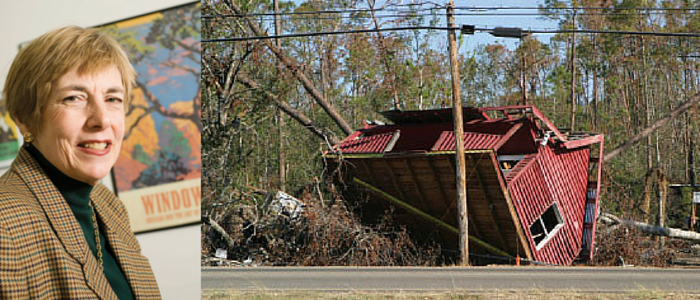
Connie Goddard, director of field placements and partnerships in the College of Education, volunteered during the winter break in storm-ravaged Louisiana.

Last September, a few weeks after Hurricane Katrina devastated New Orleans, my colleague Andy Carter, who is a Louisiana native and an assistant professor of mathematics education at Roosevelt, spoke at a University town hall meeting on how we could respond to the disaster.

Soon after, two other College of Education colleagues, Judy Gouwens and Sheila Coffin (see accompanying story), organized work trips with students to Bay Saint Louis, Miss., an area hard hit by Katrina. Then, sometime in mid-October I phoned Carter, asking him for information on an organization he had suggested we could help.

Thus began my involvement with the Southern Mutual Help Association (SMHA), a group based in New Iberia, La., and its Rural Recovery Task Force, which was established right after Hurricane Rita wreaked damage on parts of Texas and southwestern Louisiana, including parishes near New Iberia. I spent a week during the recent winter break helping SMHA’s cleanup efforts, and one of the things I learned is how a hurricane travels: its winds circle counterclockwise, picking up the ocean’s water on its western, downward thrust, then dumping water on its eastward side as the winds surge upward. In the area we worked, the waters rose from a few inches to waist-deep in less than an hour.

katrina_04

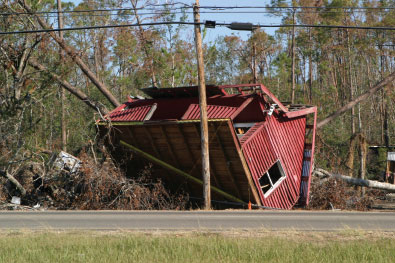
Many homes were toppled in Bay Saint Louis, Miss., which was near the eye of the Hurricane Katrina storm path.

“If you have to be in a hurricane,” noted one longtime resident, “you want to be on its west side, because it gets less flooding.” His house was one of a half-dozen the crew I worked with readied for restoration. We’d been directed there, in southern Vermillion Parish a few miles from the gulf, by SMHA, which, since the hurricane hit, has been organizing volunteer groups to first survey and then begin repairing damage, particularly to homes.

Signs of this project’s ecumenical nature were as abundant as the flood waters and the hardy outlook of the people devastated by them. SMHA, established by Catholic nuns to help sharecroppers emerge from dependence and poverty during the 1960s, had housed Unitarians from rural Vermont and Jews from suburban Boston in a Methodist church dining hall converted to sleeping quarters with bunk beds constructed by Canadian Mennonites. Many of our tools and cleaning supplies were provided by members of the Church of Latter-Day Saints.

Our project was to pull, peel and pry wallboard, cupboards, linoleum and appliances away from the structural elements of a half dozen modest homes. For four days, two dozen of us wielded crowbars, sledgehammers and saws to get the job done. Along the way, homeowners affected by the disaster worked with us, while others, including a physically disabled man, could offer little more than moral support. One woman told us it would have taken a month or more to do the job on her own.

Service like this not only continues the tradition of social justice that Roosevelt lays claim to; it helped us, too, as we developed skills we did not know we had.

We also enjoyed ourselves—Acadians are famed for food and good times—and had several invitations to dinner, but we departed knowing there was much left to do. Service like this not only continues the tradition of social justice that Roosevelt lays claim to; it helped us, too, as we developed skills we did not know we had.

Standard
Sidebar Story, Spring 2015

Serving Up Success

Shin-5439

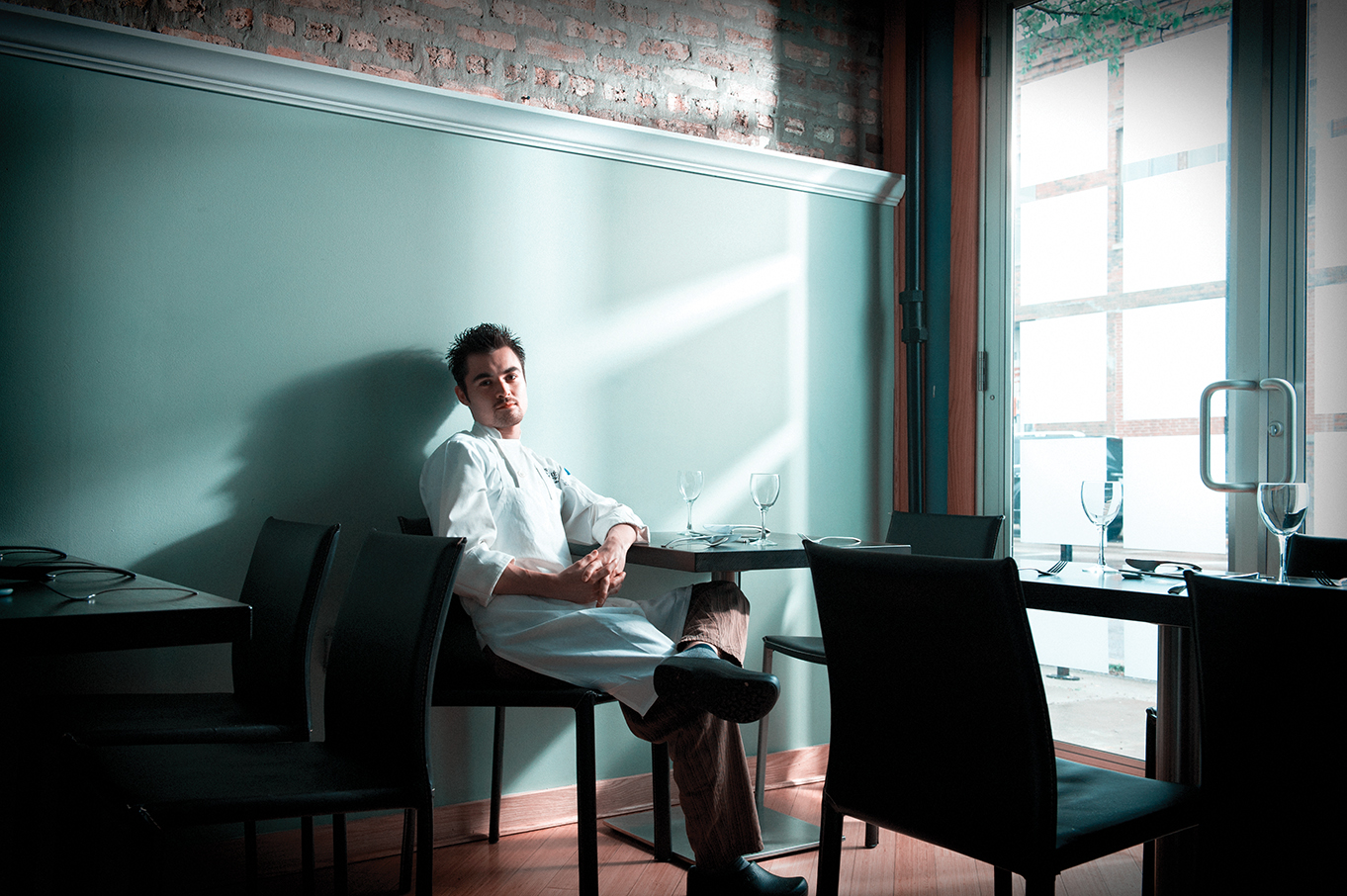
Chicago restaurateur Shin Thompson (BSHTM, ’05)

A few years after graduating from Roosevelt’s Hospitality and Tourism Management Program in 1997, Aaron Michaels started a chef’s supply business in Florida that continues to grow by leaps and bounds today.

Another of the program’s alumni, Adrianna Szczecina Mendel, who left Roosevelt in 1999 to open a business, has had similar success. Her River Grove, Ill. Polish supermarket recently expanded to a second, larger location in Chicago.

Then there is the remarkable ingenuity of Chang Guan. She started one of China’s first destination management companies, which today has the ability to educate out-of-town visitors about more than 9,000 businesses in a major Beijing industrial zone.

“We have many, many stories like these,” remarked Gerald Bober, director of the Roosevelt program, one of the few in the nation and the only one in Illinois to offer both bachelor’s and master’s degree opportunities. “Whether they are starting their own business, or managing someone else’s, our students have an entrepreneurial spirit that is undeniable. It is one of the things that makes our program distinctive.”

Started in 1992, Roosevelt’s hospitality management program prepares students for leadership careers in lodging; food and beverage management; meeting, convention and exhibition management; tourism administration; sports hospitality; and club and gaming management. More than 1,000 students have passed through the doors of Roosevelt’s Manfred Steinfeld School of Hospitality Management.

Some have started restaurants, including: Shin Thompson (BSHTM, ’05), a highly respected chef who created the former Michelin-starred Bonsoiree in Chicago and recently followed that success by opening Furious Spoon in Chicago’s trendy Wicker Park neighborhood; and Blanca Murphy (BSHTM, ’10; MBA, ’13) whose upscale restaurant, Ambrosía, in San Pedro Sula, Honduras has received rave reviews by locals as well as visitors.

Others have created hotels, including Dimple Patel (BSHTM, ’01). Today, she runs a string of hotels in the Knoxville, Tenn. area, according to one of her mentors, Hospitality and Tourism Management Professor Chuck Hamburg.

“Whether they are starting their own business, or managing someone else’s, our students have an entrepreneurial spirit that is undeniable.”
Gerald Bober, director of Roosevelt’s Hospitality and Tourism Management Program

“We want to foster and help students succeed with their ideas and plans,” said Hamburg, who has taught at Roosevelt for three decades and is also a restaurant consultant and leading expert in the food and beverage and hotel fields. “We consider it our job to give our students advice and introduce them to connections that will allow them to network and succeed in the field.”

“It wasn’t just the degree, but it’s also been about the connections I made through Roosevelt that got me started down my path,” said Michaels, who credits Hamburg with advising him along the way. Moving to south Florida a few years after graduating to work with a chef he met through Roosevelt, Michaels started Culinary Convenience Inc., a mobile chef’s supply store on wheels in 2002. Selling everything from kitchen equipment to cooking tools, Michaels has grown Culinary Convenience into a major restaurant-supply distributor in south Florida. In 2014, he also opened a standing chef’s supply retail store.

Szczecina Mendel, founder and proprietor of Ada’s, an 8,000-square-foot Polish supermarket in suburban Chicago, also credits Roosevelt with giving her the know-how to expand the Ada’s concept. “The program taught me the basics—business law, accounting, back and front-office management,” said Szczecina Mendel, who just opened a new 16,000-square-foot store on Chicago’s northwest side. “I use the principles I learned at Roosevelt every day when I train my employees in things like customer service. My Roosevelt experience taught me what I need to do to work successfully with people.”

William Host, associate professor of hospitality and tourism management and a leader in the program’s growing field of study in Meetings and Event Planning Management, believes the sky is the limit on where students can take their ideas and plans. “Destination management companies are big in the United States, but frankly there are not a lot of these companies in China,” said Host of the concept that Guan learned about at Roosevelt and turned into Link Group, which is now operating in Beijing.

Guan and her partners are building the company from her 80-page master’s thesis and business plan that she completed as a Roosevelt student. It calls for the company to one day serve visitors to as many as 150,000 information technology businesses in 16 separate industrial parks in Beijing.

Chang Guan

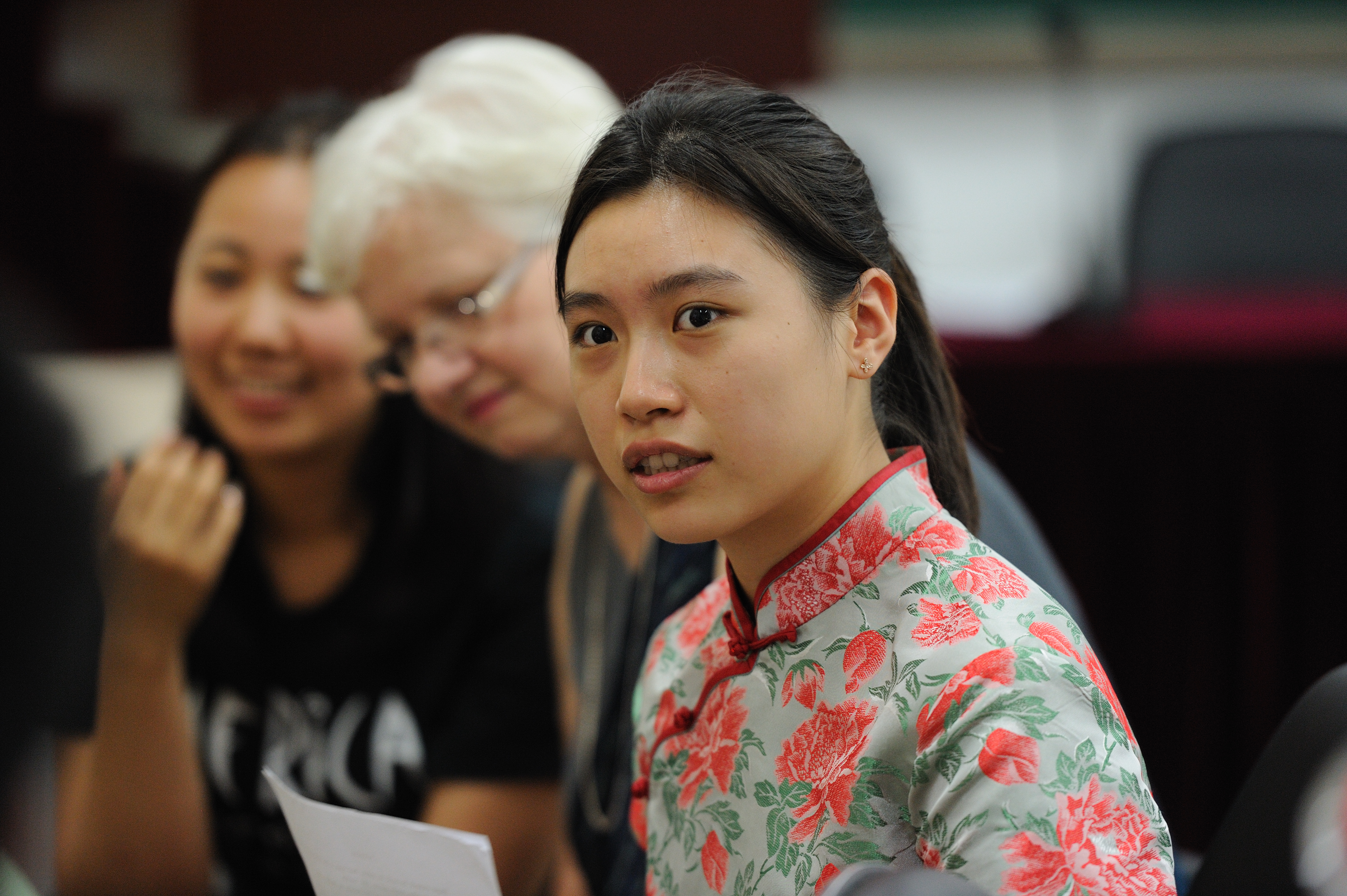
Beijing Link Group founder Chang Guan (MSHTM, ‘14)

“The fact that she (Guan) had a vision for something like this that is based on what she was introduced to in our program, is really significant,” said Host. “It’s a testament to the determination of our students and faculty.”

Standard