A Good Week for Chicago

Environmental news is rarely good. More often it’s disconcerting . . . depressing . . . or highly disturbing. This week, it’s a breath of fresh air (literally) to get some phenomenal news about the near-future prospects for air and water resources here in Chicago.

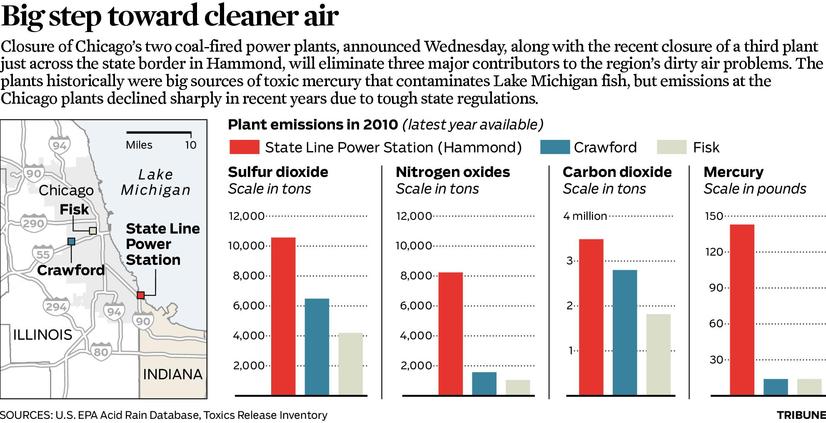
As Michael Hawthorne, environmental reporter for the Chicago Tribune, writes this week, the notorious and heavily-polluting Fisk and Crawford coal-powered generating stations will be shut down earlier than projected by their owner, Midwest Generation. While the economic infeasibility of upgrading the plant’s pollution controls is the direct reason, there is no doubt that continued pressure from local environmental activists in the Little Village and Pilsen neighborhoods as well as from key Chicago politicians (including Joe Moore of the 49th ward and Mayor Emanuel) were key drivers in this decision.
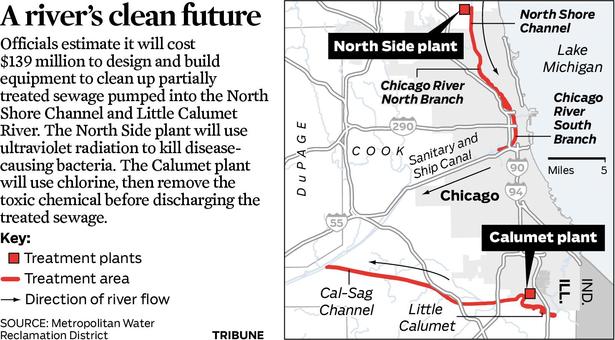
As if that weren’t cause enough for joy, we also learn today that the Metropolitan Water Reclamation District has significantly reduced the projected expense of implementing final-stage disinfection processes for wastewater effluent that is released into the Chicago Area Waterway System. Installing these technologies will be done in budget rather than with a Cook County tax hike.
Read Hawthorne’s excellent report on what has become a hot water topic in Chicago, and find out why a change of leadership is sometimes all it takes to get things moving in a dramatically different, and positive, direction.

Taking Stock of the Chicago River

The Chicago River has been in the news quite a bit these last few months, and for a waterway long treated as a transportation corridor and sewage receptacle, its future is looking brighter — even as city officials, water quality experts, wastewater treatment engineers, and environmental activists admit there’s a long, long way to go. Today on public radio WBEZ’s local affairs radio show, Eight Forty-Eight, the Chicago River was a main topic of conversation between host Alison Cuddy and Henry Henderson of the Natural Resources Defense Council. Henderson was the first head of Chicago’s Department of Environment, an agency that ironically may come under the chopping block in Mayor Rahm Emanuel’s recent plans to address major budget shortfalls. (A prospect which illustrates that even as progress can be make on one environmental front, two steps back can occur on another.)

The good news: after a major turnabout in the summer by the MWRD, which now plans (finally) to eventually add a final disinfection stage to its wastewater treatment process before releasing treated water back into the river, the mayor’s office announced on 19 Sept 2011 that it will seek to “make the Chicago River the city’s next environmental frontier” by funding major restoration efforts in the river’s riparian corridors and by building four boathouses along the river to increase boating access and activity along the waterway. While the latter effort will not directly improve the quality of the river’s water, any increase in recreational use of the waterways adds to the perception of their economic and cultural value, and inspires us to see the rivers as living ecosystems rather than just channelized barge pathways or open sewers.

Also see this article by the Chicago Tribune’s environmental reporter Michael Hawthorne for more details on the various plans for the river and the proposed locations for the boathouses — one of which is planned for a new park located near the mouth of Bubbly Creek, one of the historically most polluted sections of the river.

Such developments are well-timed for my SUST 220 Water class this semester at Roosevelt, since we’re planning a canoe trip on the North Branch of the Chicago River from Goose Island to Wolf Point on October 8th with Friends of the Chicago River. Expect a report on that urban nature adventure!

How Safe Is Chicago’s Water?

Environmental reporter Michael Hawthorne of the Chicago Tribune has published a series of excellent articles this month about the state of water quality in Chicago and the suburbs. These detail the detected presence of lead, chromium, hormones, vinyl chloride, herbicides, antibiotics, and other contaminants — some of which are regulated by the EPA, others of which are not. He also reports on the latest developments in the Crestwood IL water scandal in which village officials knowingly laced their Lake Michigan municipal water supply with vinyl chloride-polluted well water for over 20 years.

For commentary on and links to these water-related stories, see my essay “Water Quality in Chicago” on the Sustainability Studies at RU Blog.