Great Lakes Undergraduate Internship for Summer 2026 in Coastal Resource Management

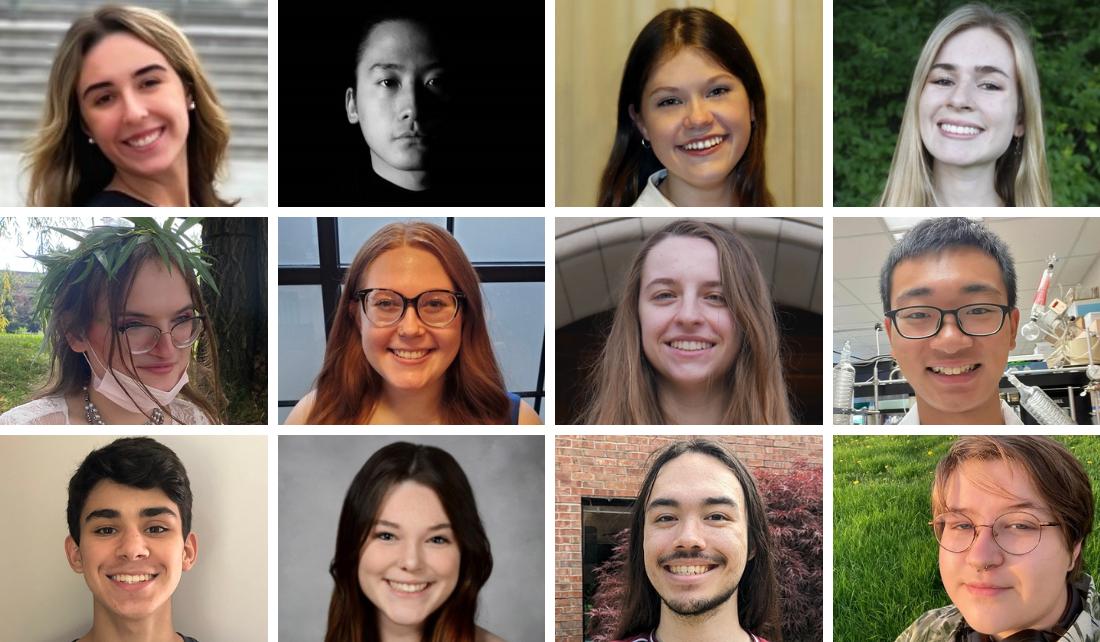
collage of headshots of IISG's 2023 interns

The Great Lakes Undergraduate Internship program for 2026 offers undergraduate students the opportunity to help address issues affecting coastal communities through social and environmental conservation sciences. Through this program, Illinois-Indiana Sea Grant’s (IISG) interns will gain knowledge and skills to support Lake Michigan coastal communities in making more informed decisions about resource management and everyday activities. These paid internships may include research, communication, or outreach activities. Applicants may also have an opportunity to participate in activities (for example, attend a professional conference) in addition to their specific internship duties.

As part of this program, IISG includes required professional development training that takes place, on average, for one hour per week, or approximately eight hours altogether. (One or more of these opportunities may take more than one hour, so in some weeks, no activities will be offered.)

Intern Positions

For 2026, up to eight intern positions are available in six topic areas: aquaculture, aquatic invasive species, green stormwater infrastructure, water resource economics, sustainable communities, and youth education.

Application materials are due by January 12, 2026. Successful applications will be notified of their acceptance by February 27, 2026, 5:00 p.m. ET.

All interns in the IISG program will be paid $17–18 per hour and work 37.5 hours per week for a minimum of eight weeks (June 1–July 24, 2026). Additional weeks may be available at the discretion of each intern’s mentor and are noted in the position description. Occasional work during evenings or weekends may be required. Each intern will be a student employee of Purdue University or the University of Illinois Urbana-Champaign.

Eligibility
Undergraduates currently enrolled in any 2- or 4-year accredited U.S. community college, college, or university are eligible.

  • Graduate students are not eligible.
  • Applicants should be U.S. citizens, permanent residents, or have an active F-1 visa.
  • Previous IISG interns who have participated in the Summer Student Internship or Community Engaged Internship programs are not eligible.

Expectations

  • Work 37.5 hours for eight weeks.
  • Attend four professional development trainings.
  • Submit a summary of your work and project at the end of employment.
  • Participate in social media takeovers on Instagram.
  • Attend a potential gathering of the intern cohort (encouraged).
  • Attend weekly coffee breaks (encouraged).
  • Attend career panel (encouraged).
  • If working remotely, perform job duties during regular working hours unless otherwise arranged with the supervisor.

All interns are responsible for the cost of housing, plus transportation to and from their workplace.

Application

Applicants should submit their materials via esg.iiseagrant.org to the “2026 Great Lakes Undergraduate Internship” opportunity. Any questions should be
directed to Angela Archer, amcbride@purdue.edu. The following components should be included with your application.

  • Cover letter. Please tell us about yourself, why you’re interested in the overall IISG internship and specifically the projects you’re applying for, how your experiences will benefit this internship, and how this opportunity will help you with your career goals. (1–2 pages)
  • Curriculum vitae or resume detailing your education and work experiences. (2 pages maximum)
  • Copy of unofficial transcript(s).
  • One letter of recommendation on your behalf that can be sent directly to amcbride@purdue.edu or included in your application. Letters from family, friends, or IISG staff members will not be accepted.* (1 page maximum)
  • Ranked preference of the available internship positions. If applying for the aquaculture intern position, please indicate which location is your top preference.
  • Where or how you heard about the Great Lakes Undergraduate Internship program. (This information is used to improve future communications about IISG opportunities to interested students.)

APPLICATION SUBMISSION

Submit Public Comments Now on the EPA’s Proposed Rollback of Air Pollution Standards

Today 8/5/25 I’m forwarding a message to anyone in higher education concerned about public health and environmental protection from Dr. Debra Rowe, President of the U.S. Partnership for Education for Sustainable Development. Please consider making a comment by the 8/7 and 8/11/25 deadlines noted below!

I am reaching out today to encourage all higher education faculty, [students,] and staff to help defend important air quality standards currently being slated for rollback by the U.S. Environmental Protection Agency (EPA): the Mercury and Air Toxics Standards and the Carbon Pollution Standards for Fossil Fuel-fired Power Plants. These standards were recently finished by the Biden administration and protect our climate, our communities, and our financial and physical health.

Please submit comments to the EPA now or as soon as possible, using both of these links:

Mercury and Air Toxics Standards (deadline 8/11)

Carbon Pollution Standards for Fossil Fuel-fired Power Plants (deadline 8/7)

These online forms provide fact sheets and bullet points to use (or you can write your own), so submitting your comments to the EPA is quick and easy. Please share this info with your networks!

Thank you for your continued support for the fight for cleaner air and a more sustainable future.

Debra Rowe, PhD
Co-author
UNEP Global Guidance on Education for Green Jobs
Facilitator
CEM EPI Clean Energy Workforce Project
Facilitator/Initiator
SDG Publishers Compact Fellows program
Education for Green Jobs
Higher Education Sustainability Initiative
Co-organizer
National Clean Energy Workforce Alliance
President
U.S. Partnership for Education for Sustainable Development
Disciplinary Associations Network for Sustainability
Sustainability Improves Student Learning
Higher Education Associations Sustainability Consortium

Attend Social Justice Day @RooseveltU this Th 3/13


Thursday, March 13, 2025, at Roosevelt University
10 a.m. – 1:20 p.m.

430 S. Michigan Ave., Chicago, IL 60605
Ganz Hall, 7th Floor

Social Justice Day Moderator:
Natasha L. Robinson, JD, Deputy Chief Diversity Officer and Title IX Coordinator

Social Justice Day 2025 features a panel discussion of the Chicago Future Fund and the annual Matthew Freeman Lecture. The Chicago Future Fund panel features the work of two distinguished RU Sociology alumni: Richard Wallace, founder of the Equity and Transformation (EAT) community organization; and Dr. Ashley Baber, professor of Sociology at Augsburg University. Rounding out the panel are Rachel Pyon, research director of Equity and Transformation (EAT), and Deon Hodrick, a participant in the Chicago Future Fund.

Mr. Wallace’s EAT organization launched a Universal Basic Income program, providing formerly incarcerated people $500 each month to help them transition back home. Dr. Baber conducted a one-year study of the program to assess the impact of the money on reducing recidivism rates (likelihood they commit a crime) and reducing homelessness among formerly incarcerated people. Both Richard and Ashley are great examples of what students can do with their sociology degree from Roosevelt University.

This year’s Matthew Freeman Lecture by RU alum Melanie K Hall will address the importance of centering social justice in our Diversity, Equity and Inclusion (DEI) work toward building communities that share power. Throughout the day, attendees will participate in a series of community building activities; a Q&A session; book signing for 2025 lecturer Melanie K. Hall’s new book Change Your Words to Change Your World: A Guide to Breaking Dysfunctional Patterns of Communication in Marriage, Relationships and the Workplace; and the “Pizza with a Purpose” reception.

This Social Justice Day celebrates our 80th Anniversary. Roosevelt University was born in 1945 when a visionary leader and 62 faculty members had the guts to go against the norms of exclusion in favor of inclusion. They went against the discriminatory practices of higher education in 1945. When asked to limit access because of race, religion and gender, they simply said, “We don’t count that way.” Our history is grounded in courage, acceptance, and a commitment to social justice.

Event Hosts: College of Humanities, Education and Social Sciences; Mansfield Institute of Social Justice; and the Office of Diversity, Equity and Inclusion

Co-sponsor: The DEI Advisory Council Leadership Team

For more information, contact Natasha Robinson.

Light refreshments will be served.


Public Input Requested by 2/7 on Cook County’s Environmental Justice Policy

Cook County’s Department of Environment and Sustainability (DES) is seeking input from the public on the County’s draft environmental justice (EJ) policy. This draft has been co-developed by an EJ internal working group, made up of County employees, and the EJ Community Advisory Committee. Once adopted by the County, the environmental justice policy will help inform and guide programming and policy decision-making across County bureaus and departments.

The deadline for commenting online is 11:59pm on Friday 2/7/25.

“Residents in low to middle income communities across Cook County, particularly communities of color, have been disproportionately impacted by pollution and lack of investment in green infrastructure. This has impacted their quality of life, their health and even life expectancy,” said Cook County Board President Toni Preckwinkle. “Creating an environmental justice policy with critical feedback from our residents will allow us to integrate this policy into programs and initiatives ensuring that we are effectively addressing past environmental injustices and working to prevent further injustices.”

Those who live or work in Cook County are encouraged to review the draft EJ policy and share their thoughts. A public input form is available on the DES website until midnight, February 7, 2025.

The County is hosting a series of in-person and virtual town hall events this month. The following town halls have been scheduled:

Tuesday, January 21 | 6 – 7:30 p.m.
Niles North High School
9800 North Lawler Ave
Skokie, IL 60077

Wednesday, January 22 | 6 – 7:30 p.m.
Cicero Public Library
5225 W Cermak Rd.
Cicero, IL 60804

Monday, January 27 | 6 – 7:30 p.m.
South Suburban College
15800 State St.
South Holland, IL 60473

Wednesday, January 29 | 6 – 7:30 p.m.
Virtual – Via Zoom
Click here to register for the Zoom Session

Monday, February 3 | 6 – 7:30 p.m.
Malcolm X College
1900 W. Jackson Blvd.
Chicago, IL 60612


Historically, communities of color and low-income communities have experienced disproportionate environmental burdens. Responding to the compounding effects of environmental inequities and preparing for additional challenges resulting from climate change are crucial aspects of the County’s strategic plan.

The creation of an environmental justice policy was requested in the Cook County COVID-19 Response Plan, the Cook County Equity Fund Taskforce recommendations and in Cook County Board Resolution 23-1092.