Feature 4, Feature Stories, Spring 2016

Roosevelt in the World: Zindaba Nyirenda

Zambian Princess and Roosevelt Alumna on African representation and returning home

Zambian princess and Roosevelt alumna on African representation and returning home

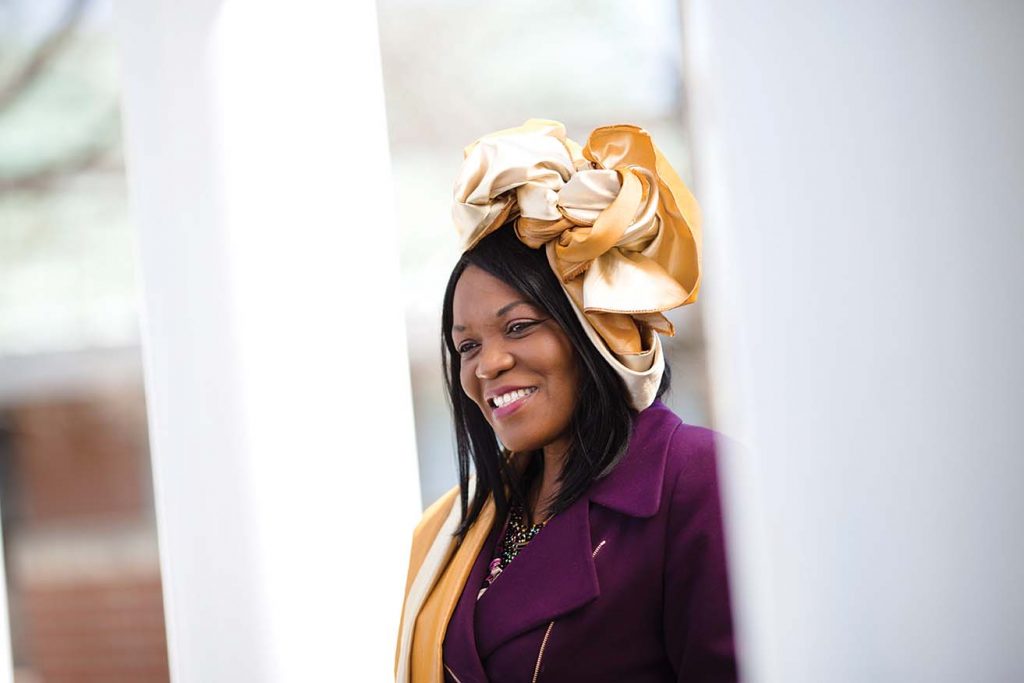
Zindaba Nyirenda, a 2010 Roosevelt University graduate and princess in Zambia, has dedicated most of her career to the recognition of equality in Africa, and fighting for the rights of women and children in Zambia and around the world.

Now working as an instructional designer for AbbVie in Mettawa, Ill., she plans to go back to Zambia this year to run for election and be part of the next cabinet in the National Assembly, trying to represent women and children and help them through education based on technology.

Nyirenda thinks one of the most important problems for the African people is the brain drain that men and women like her represent. The dispersion, all over the world, of well-trained students and workers from Africa makes the situation comparable to a diaspora phenomenon. She said “Africa is missing leadership because of this, and we need to have a voice.

Born as an Nkhosikazi princess of sixth generation Shaka Zulu ancestry in Zambia, she said that “the title there really doesn’t give you anything. It’s a symbol. It’s a status. It just indicates that I come from a royal family.” Despite that, she is trying to use her title to help change her country through the Parliament, using the knowledge she acquired during her education.

“I have to use everything I have learned to make a difference for all people.
– Zindaba Nyirenda

Nyirenda studied public administration at the University of Zambia in the early 1980s. At that time, she noticed the differences between men and women in her country: just 10 percent of the students were girls, and less than a tenth of them were in engineering schools.

Later, when she lost her two younger brothers, Nyirenda realized that her first-born sister was deprived of her right to be the leader of her tribesmen and didn’t enjoy the same access to power afforded men. “Just because we are women doesn’t mean we cannot be leaders recognized as capable in our country. Women, too, are just as capable,” she said.

She graduated from the University of Zambia in 1985, the same year she moved to the U.S. to follow her husband, who had an opportunity to further his education here. For 20 years, she dedicated herself to raising her three children and did not work outside her home, though she did establish a non-profit organization she ran from home and managed her own bridal shop, a small retail business that afforded her the flexibility to be with her school toddlers for all of their school functions. However, when her youngest child got to high school, Nyirenda recognized the great timing and opportunity she had put on hold to attain her master’s degree.

“After the kids grew up, time opened up for me to go back to having the career I had put on hold,” she said. She chose Roosevelt University to advance her education and specialized in the field of training and development.

She enrolled at Roosevelt not only for its social justice mission, but also because the program offered courses relevant to her real life quest for knowledge. Another advantage was taking courses online at her pace and the flexibility of studying anywhere, anytime, and not being limited by time or space was the ultimate freedom. This was a trendy new way of learning as she discovered the technological trends incorporated in the delivery of her courses. This opened her eyes to the digital era and the possibilities technology affords.

Zambia

Critical thinking was one of the main attributes of the program for her personal development and the online teaching and application offered learning technologies and possibilities to educate the world beyond borders. “Why then are some countries still lagging behind in education?” she wondered. “Roosevelt raised my quest to the next level, creating a world of possibilities where no child needs to be left behind.”

It was during these years of “training” that she wrote a book about the “inequality issues” that are prominent in the world economies, and Africa suffers the most in comparison to the rest of the world.

In Ta-Lakata, The Tears of Africa, Nyirenda describes her life as a princess in Zambia and how, despite her wealthy upbringing, that wasn’t enough to avoid the tragedies that impacted her family as well; tragedies that she sees as having been perpetuated by poverty-stricken economies with poor or inadequate healthcare systems. Both her father and mother died of illnesses that could have been prevented, and through these hard experiences Nyirenda tried to make the case for what it will take to make a difference and improve lives in Africa.

“Being in the U.S., I realized how poor our economies were and how far behind we lagged,” she said. That is why she was interested in attaining a higher degree that would help her understand how to solve these complex problems of needless poverty, given that most of Africa’s countries were very rich in natural resources. “We are truly not that poor. We have diamonds, gold, copper, uranium, oil and animals. Why, though, do we have such immense poverty? We must find practical solutions together to alleviate immense poverty and suffering,” she said. “I have to use everything I have learned to make a difference for all people.”

Roosevelt has supplied her with the training.

Standard
Feature 4, Feature Stories, Spring 2016

Illustrating America’s Childhood: The Art of Roosevelt Alumnus Joel Schick

joel

Millions of Americans recognize the work of Joel Schick (BA,’68). But like many illustrators, his name is not as well-known as his art — renderings of Cookie Monster, Big Bird and hundreds of other whimsical figures in nearly 80 children’s books, including Muppet and Sesame Street stories and illustrations for the beloved Wayside School and Magic School Bus series.

joel2Schick’s first publication resulted from doodles created in Roosevelt University classrooms in the mid-1960s. “I was one of those students,” he said, “wearing blue jeans, an army jacket and sunglasses, sitting in the back of a class with my green denim book bag and drawing in the margins of my notebooks.”

Schick applied to Roosevelt in 1965 after leaving Northwestern University and Augustana College due to disciplinary issues. Roosevelt’s admissions officer told him his test scores were good but he had poor grades and a record as a troublemaker. “There’s not a college in this country that would accept you with a record like this. Luckily for you we are running a special for draft-age men,” the admissions officer said and admitted Schick on the spot.

“I was given a second chance by Roosevelt . . . a school that gave me a break when I was down, and it very likely saved my life,” he said.

Schick had always been interested in art, remarking that “as a kid I was crazy about Donald Duck and Little Lulu, Disney animation and MAD Magazine.” But his high school art teacher told him, “Forget it, you don’t have enough talent to be an artist.” So Schick turned instead toward music and played in a band; while at Roosevelt, he was offered a job in New York City as a songwriter. However, not willing to lose his student draft deferment, he remained at Roosevelt until graduation.

“I was given a second chance by Roosevelt . . . a school that gave me a break when I was down, and it very likely saved my life.”
–Joel Schick
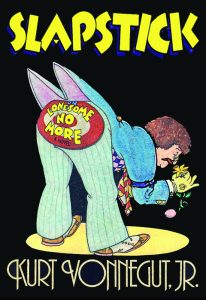
Schick's cover design for Kurt Vonnegut, Jr.'s 1976 novel, "Slapslick."

Schick’s cover design for Kurt Vonnegut, Jr.’s 1976 novel, “Slapslick.”

Like many Roosevelt students, he worked while going to school — loading planes at O’Hare, working as an auditor/night clerk at an Oak Brook hotel and counseling in a home for emotionally disturbed children in Evanston. He assumed he would enter a career in social services. But then he found work at a print shop, where he learned how art made its way from a client’s notion to publication. There he found his vocation.

His schedule was busy — attending morning classes, going to work and studying in the middle of the night. He was rarely on campus except for class, though he recalled reading the Torch and attending campus film festivals. After nearly half a century, he still can remember several of his professors, including Aurora Biamonte in psychology, Morris Springer in French (“I remember him better than I do French!”), and especially English professor Marilyn Levy, who taught public speaking and invited Schick to meet her husband, a graphic designer, at her home in Evanston, Ill.

Graduates in 1968

While earning a BA in psychology, Schick married Northwestern University student Alice Raffer, who became an editor and writer and a collaborator on many projects. In 1968 he graduated. “I am deeply grateful to Roosevelt,” he said. “I felt that it actually cared about my wellbeing. And I came out a lot better than I went in.”
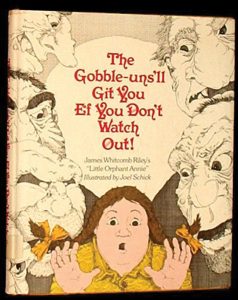
Detail and cover from the award-winning book “The Gobble Uns’ll Git You, Ef You Don’t Watch Out!”

Detail and cover from the award-winning book “The Gobble Uns’ll Git You, Ef You Don’t Watch Out!”

Joel and Alice moved to New York with a portfolio of cartoon marginalia from his Roosevelt notebooks. There he sought design work with book publishers and began a career with such publishing houses as Holt Reinhart and Winston, Random House, Delacorte and Dell. During those years, he designed hundreds of books and book jackets. He was especially excited to design several Kurt Vonnegut books, including Breakfast of Champions, and Arctic Dreams by Barry Lopez. Both books won the National Book Award.nHe also remembers spending afternoons at Vonnegut’s house, discussing projects, watching the Nixon impeachment hearings and meeting a new young author — John Irving.

Drawing for Children

“Designing books was great fun, but I wanted to draw, to illustrate for children,” he said. In the mid 1970s the Schicks moved to western Massachusetts where they created books together and raised their son Morgan. Joel also became art director for the Bank Street College of Education, developing board games, pre-school text programs, retail marketing and corporate branding.

His first children’s trade book illustration came out in 1974 and embellished an 1885 poem by James Whitcomb Riley, published as The Gobble Uns’ll Git You, Ef You Don’t Watch Out! It was an award-winning hit. He then began getting calls to illustrate other children’s books. “I became the go-to guy when publishers wanted someone to bring a little humor to a manuscript,” he said.

In the 1980s he and Alice created a newspaper comic strip, which, while it didn’t make it into print, caught the eye of Muppet illustrator Tom Leigh. Leigh had collaborated on previous projects with Joel and Alice and when he began working for Sesame Street introduced Joel to his contacts. “It was a match made in heaven,” Leigh remembered.

joel4

Although Schick had no formal art training, Leigh said, “He drew and painted very well, and understood form and spatial relationships, which helped him easily assimilate how the characters were built and how they moved.” What really set Joel’s work apart, Leigh added, “was the sense of joy and animation he drew from these characters.”

Artist James Mahon, the former creative director for Henson Associates and Sesame Street, said that Schick’s illustrations “reflected the bright, cheerful enthusiasm of the Muppets and also the human foibles of many of them. An artist puts ideas into form and working with Joel allowed us to explore more complex things.”

Muppets and More
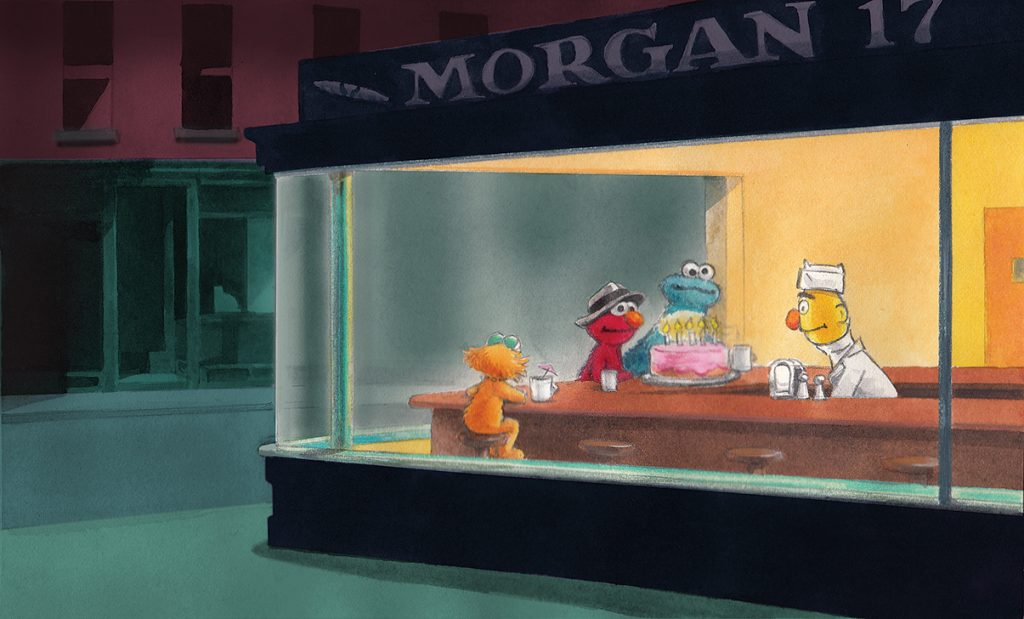
Edward Hopper: Nighthawks on Sesame Street

Edward Hopper: Nighthawks on Sesame Street

For 15 years Schick created images of Kermit, Miss Piggy, Gonzo, Elmo, Big Bird, Cookie Monster and Grover. He illustrated Muppet books, Sesame Street magazines, products and packaging. “I loved this work,” he said, “because it required that I learn how every product was manufactured, what limitations the manufacturers faced and how to work within and around those limitations.”

At that time Muppet creator Jim Henson insisted that every Muppet product feature a new piece of art, and there were hundreds of products requiring hundreds of pieces of art — and only about a dozen artists in the world were permitted to draw the characters.

While working with the Muppets, Joel continued to collaborate with Alice on picture books, comic strips, a public school reading program and a website. “And all along, “he said, “I kept doing design, not just books, but advertising, packaging, posters, toys. All sorts of fun projects for paying clients and also pro bono work for animal causes, schools and a public theater.”
joel10

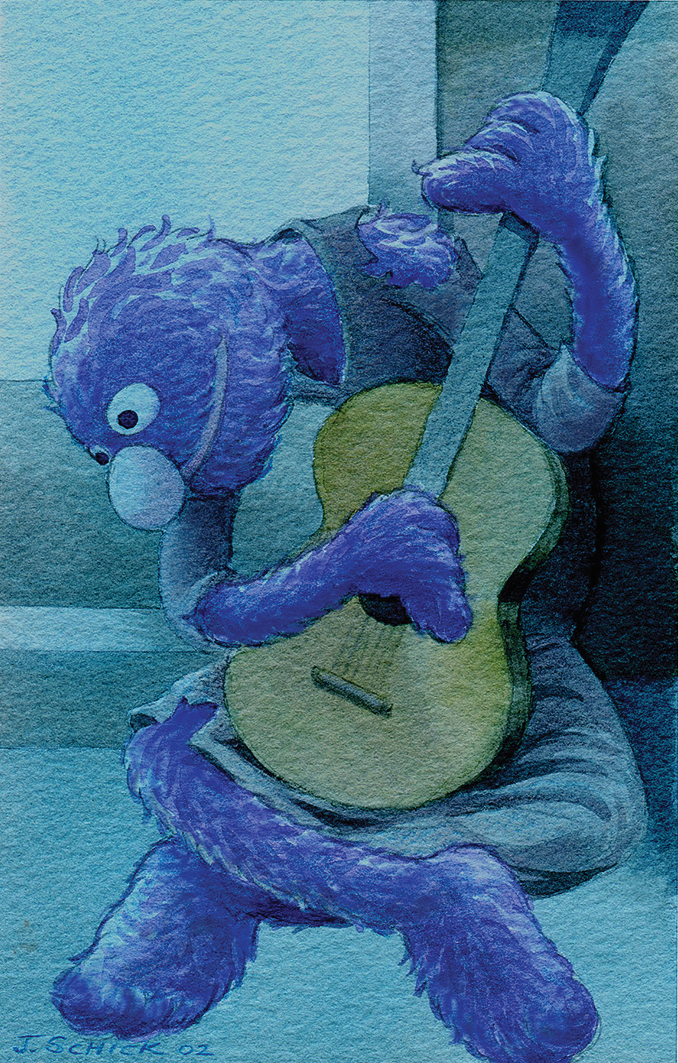
Pablo Picasso: Old Guitarist (Furry Blue Period)

His trade book illustrations have been honored with many awards, including a Wisconsin Golden Archer Award (voted on by middle school students), a New Jersey Book Award, and a Caldecott Honor award. His career was also recognized in 2012 by the W.E.B. Du Bois Center in Great Barrington, Mass., with a show titled “Bein’ Green: Why Every Color is Beautiful: An Exhibition of Original Muppets Artwork by Illustrator Joel Schick.” He also created a series of popular art parodies, featuring Muppets at the center of well-known paintings, including Grover as Thomas Gainsborough’s Blue Boy, Elmo and Zoe in Jan Van Eyck’s Arnolfini Marriage, and Telly in Edvard Munch’s The Scream.

Just as satisfying have been the numerous letters from young readers. “One of the joys of illustrating children’s book is the contact with kids,” said Schick. Six-year-old Randy Cecil in 1975 created a puzzle based on one of Schick’s illustrations. The two corresponded several times through the years and Cecil grew up to become an artist who has now illustrated over 20 children’s books.

joel8Other fans included Michael, who wrote in 1981 that “I thought my brother was a good artist but he’s nothing compared to you.” Christian liked the pictures in Schick’s adaptation of the monster in Frankenstein, but believed that Schick missed something crucial — there was supposed to be “a steal piece stuck threw his head!” (Christian still had to learn some spelling techniques), and Devin, who wanted to emulate one of the Wayside School book characters with a tattoo, which Joel was happy to draw for him.

Schick no longer illustrates books but has returned to music — writing songs, singing, playing harmonica and guitar, and producing CDs. He has written almost 400 songs and finds a connection between art and music. According to Joel, both art and music are “about a desire to entertain, to communicate with an audience.” Samples of his songs and art are available on the website he and Alice established to make their work available: FamilyGorilla.com.

And he hasn’t forgotten the university that took him in. “I love Roosevelt . . . they treated me like an adult,” he said. “They allowed me to decide how much I would or could integrate into the RU community . . . they offered me everything I needed for a college education.”

Roosevelt Archives 2015

In November 2015 Schick visited Roosevelt and donated his papers, books and original artwork to the library. “The Roosevelt University Archives is thrilled to house Joel Schick’s collection,” said archivist Laura Mills, “especially since the artwork will enhance our collection of award-winning children’s books.” Among the items donated are sketches, correspondence, original art and even some of Schick’s old Roosevelt notebooks complete with doodles.

The Joel Schick Collection, Schick hopes, will show how people really produce art: by refining, redrawing, re-imagining, editing and discarding. And, he suggests, the collection “is important because I’m not famous. I’m a good illustrator, but not a famous one. Millions of kids have read the Wayside School books I illustrated, millions of people have seen my Sesame Street art. But nobody knows the artist.”

“The Roosevelt University Archives is thrilled to house Joel Schick’s collection, especially since the artwork will enhance our collection of award-winning children’s books.”
-Laura Mills, Roosevelt Archivist

Schick believes there are three kinds of illustrators. On the top are a few celebrities, like Maurice Sendak or Robert McCloskey, who had the financial resources to spend long periods of time on single projects and make each book an important publishing event. At the other end of the spectrum are a great number of artists who draw a book or two and then leave the business when they can’t make a living at it.

joel9And in the middle, Schick suggests, “there are the people like me, journeymen illustrators, who work at it all their careers.” They have to work on several books at one time to make a living, draw in many styles and media, realize other people’s ideas and negotiate artistic visions with the client. “We have the soul of an artist, yes,” Schick said, “but also the soul of a tradesman, a cabinetmaker, perhaps or machinist – the soul of a tinkerer and the soul of a hunter-gatherer.”

This last group creates, he said, “a lot of the art we see in children’s books – the art we all grow up on, the art that helps us learn to read, the art that illustrates our fantasies.”

This art is created by successful, talented, familiar, but largely anonymous artisans. Like Joel Schick.
“Sesame Workshop”®, “Sesame Street”®, and associated characters, trademarks, and design elements are owned and licensed by Sesame Workshop. © 2016 Sesame Workshop. All Rights Reserved.”

Standard
Feature 4, Spring 2016

Counting on the Future

 A look at the profession and the Actuarial Science program at Roosevelt

A look at the profession and the actuarial science program at Roosevelt

“Why is the actuarial profession such a mystery?” That question was posed a short time ago by a woman who has been an actuary for more than 20 years.

“One would think,” she wrote in a magazine article published by the Society of Actuaries, “that reporting of actuary as the No. 1 job of 2015 by Forbes magazine might have given us a popularity boost.”

The truth is, she lamented to her colleagues, few people know what actuaries do and those who think they know often confuse actuaries with Certified Public Accountants (CPAs).

There’s nothing mysterious about actuarial science at Roosevelt University. In existence for more than 20 years, the actuarial science program is one of Roosevelt’s hidden gems and one of the top programs in Illinois. The rigorous program currently has about 40 undergraduate majors and 40 graduate students, and many of them will have a high probability of getting a great job when they graduate.

“The combination of healthy compensation, job satisfaction, manageable stress levels and robust growth land actuary in the No. 1 spot.”
Susan Adams, Forbes Magazine

Around the world, there are 169 colleges and universities with programs approved by the Schaumburg-based Society of Actuaries, including 11 in Illinois. Roosevelt is one of them and has plans to obtain the society’s coveted “Center of Actuarial Excellence” designation. Roosevelt’s program currently is ranked 24th in the nation by College Values Online based on tuition, financial aid, return on investment and exam preparation.

“We have a more strongly tailored program than other schools in the Chicago area,” said Melanie Pivarski, chair of the Department of Mathematics and Actuarial Science. “Some schools only offer a couple of actuarial science courses, but we have many, including courses students need for Validation by Educational Experience credits, which are a requirement for becoming an associate of the Society of Actuaries.”

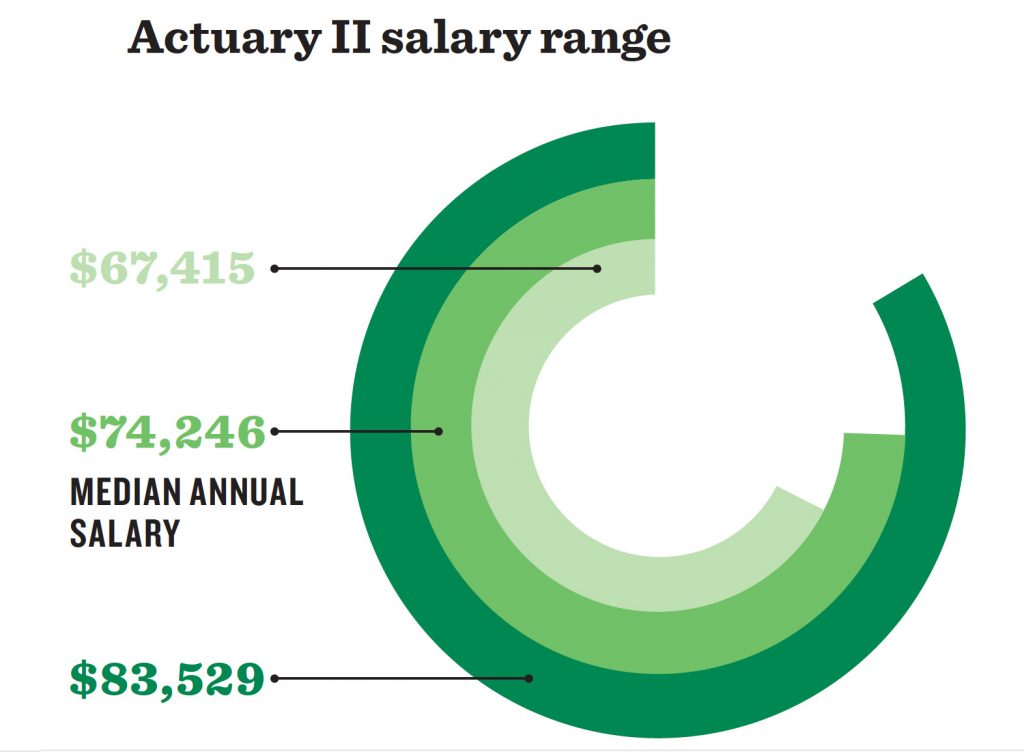
In her article on the best and worst jobs in 2015, Forbes reporter Susan Adams wrote: “The combination of healthy compensation, job satisfaction, manageable stress levels and robust growth land actuary in the No. 1 spot.” That assessment is bolstered by this impressive statistic: the median annual Actuary II salary is $74,246 with a range usually between $67,415 and $83,529.

salary-chart

Mathematics and Statistics

“Managing risk” is the quickest and easiest way to describe what actuaries do, said Wanwan Huang, a full-time actuarial science professor at Roosevelt. “Actuarial science takes mathematics and statistics and applies them to finance and insurance. The insurance industry hires the most actuaries, but they are also employed in many other industries including investment firms, banks, the federal government, including Social Security, accounting firms, and consulting organizations.”

formula

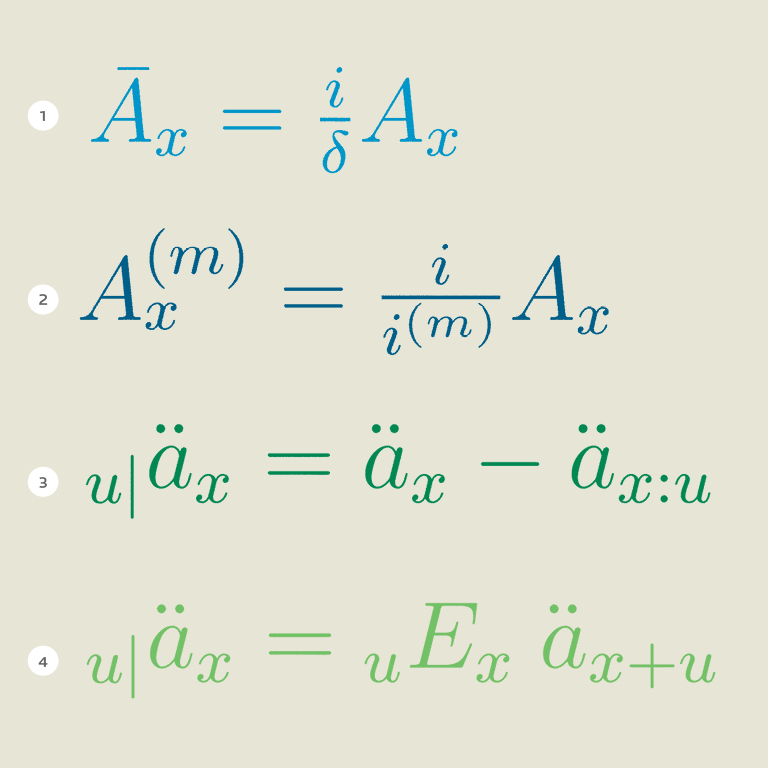
These formulas describe the values of different insurance policies.

She explained that actuaries at insurance companies, for example, use large data sets of people, hospital statistics and accident reports to create mortality tables. “This helps the companies calculate how long people will live and how much money is needed to provide for them.”

But the profession is much more than “crunching numbers.” All actuarial students take advanced courses in economics, finance and statistics, in addition to calculus, probability and computer science.

The Credentials

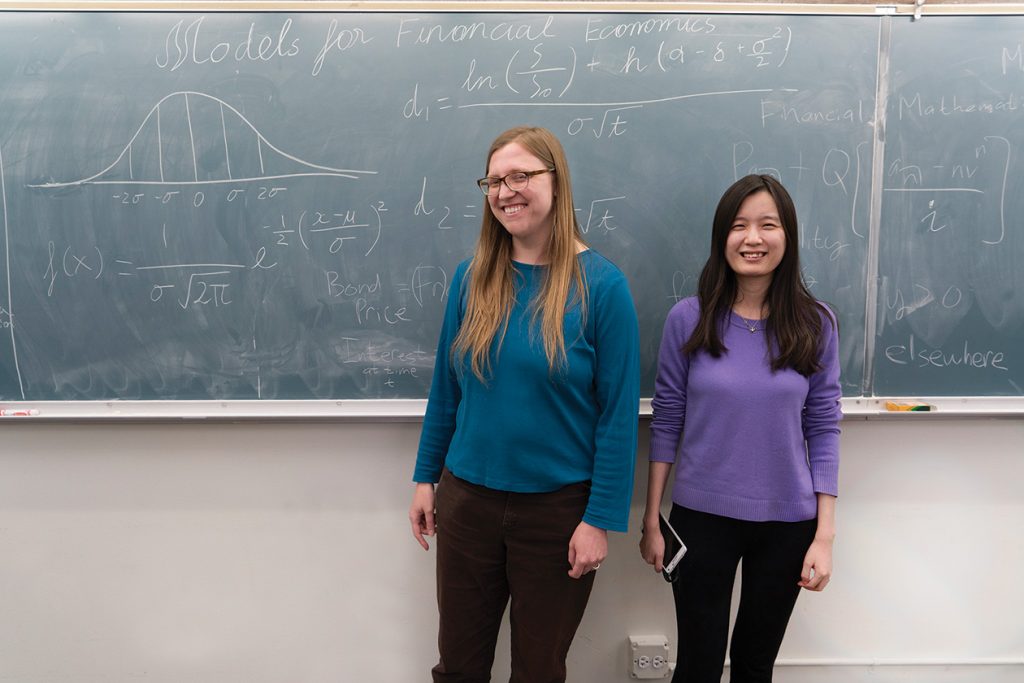
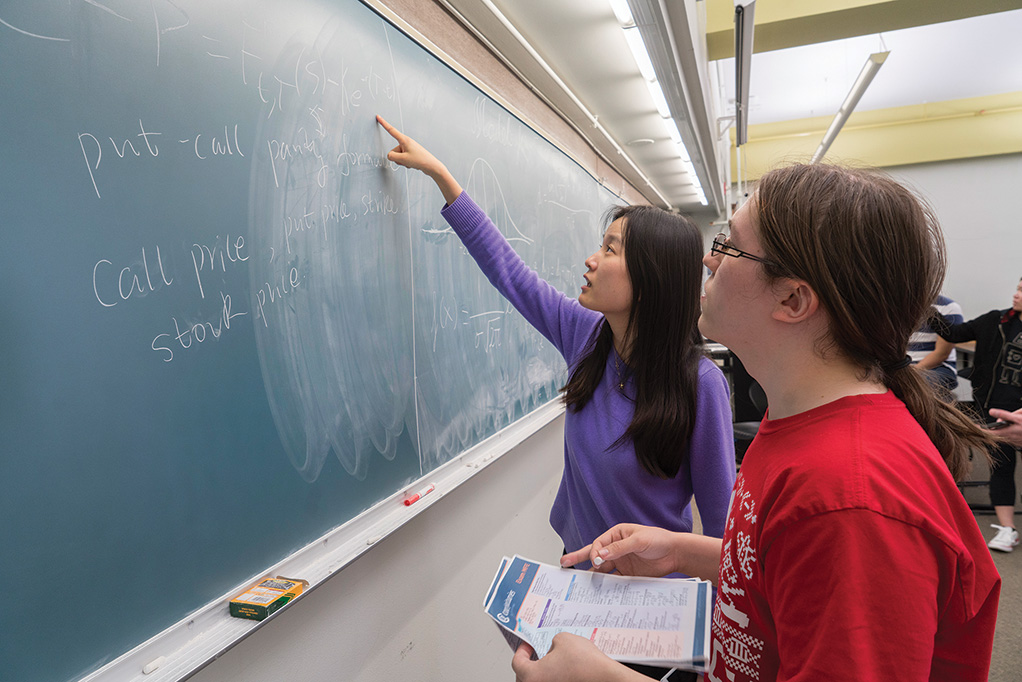
 left to right: Melanie Pivarski, chair of the Department of Mathematics and Actuarial Science and actuarial science professor Wanwan Huang.

left to right: Melanie Pivarski, chair of the Department of Mathematics and Actuarial Science and actuarial science professor Wanwan Huang.

Like doctors and lawyers, actuaries are credentialed by a series of professional exams that students begin taking in college and continue to take while working. To become an actuarial associate, individuals must pass five exams and to become a fellow they must complete 10 exams, which is roughly equivalent to earning a PhD.

Typically students with undergraduate degrees in actuarial science have already passed two exams before being hired as entry level actuaries. They will then often work four-and-a-half days at their firm and study the remaining half day for their next exam. For each exam they pass, they’re usually rewarded with a pay increase.

However, passing exams is not easy.Huang estimates that people need to study 300 hours for each three-hour exam and the pass rate is only 40 percent nationally.

“Anecdotally our students do better than that,” Pivarski said with a smile. “It’s because of our wonderful teachers! From 2010 through 2014, our students and alumni passed more than 140 actuarial exams, an average of 28 per year. We have study groups and provide a lot of support and resources. Wanwan has passed five exams, so she can tell students first-hand what they need to do to pass. Our students know the concepts; speed is the main thing they need to practice — how to complete the problems in the time frame they’re given.”

Dedicated Students & Friends

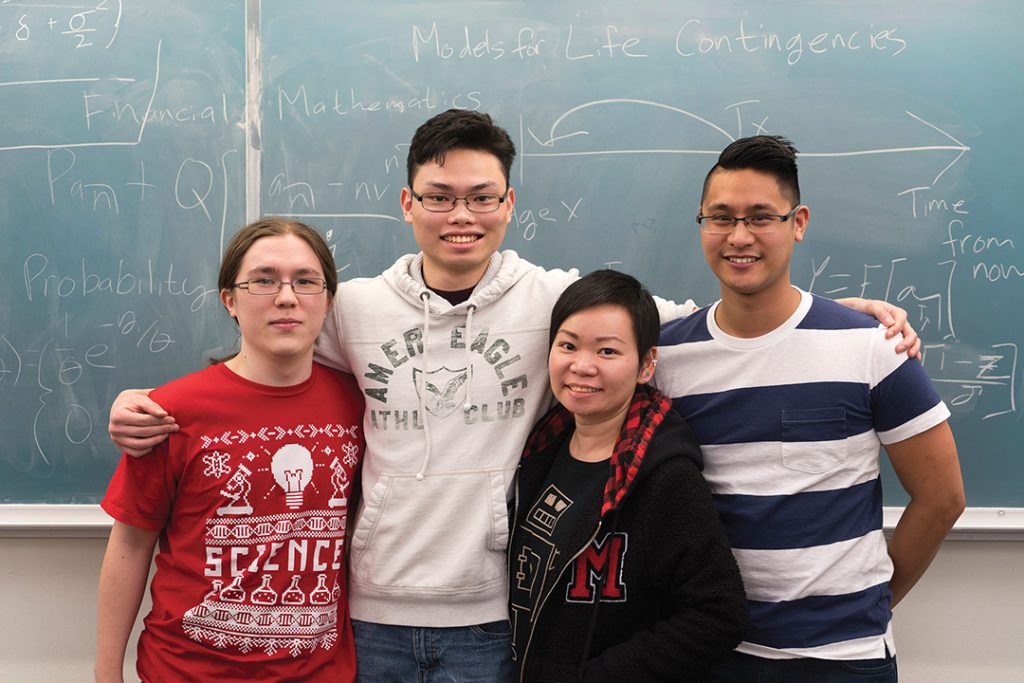
left to right: senior Nathan Gregory (actuarial science), senior Cuong Pham (actuarial science). graduate student Gigi Hoang (math), graduate student Anthony Urgena (math with actuarial science concentration )

left to right: senior Nathan Gregory (actuarial science), senior Cuong Pham (actuarial science). graduate student Gigi Hoang (math), graduate student Anthony Urgena (math with actuarial science concentration)

“Since the actuarial major was small, I found myself in a lot of classes with the same people, many of whom I still keep in contact with today,” said Elizabeth Staszel (BS, ’13), a quantitative analyst with Milliman Financial Risk Management in Chicago. “A fond memory I have was that during junior year, two other students and I would come to the university on Saturdays, either in a classroom or the library, and study for Exam P. We had some memorable, productive study sessions. Professors in the Math and Actuarial Science Department were familiar with all of their students and were interested in what you were up to. Peers and faculty at Roosevelt created a great support system for me.”

Pivarski has a one-word answer when describing what type of individual makes a good actuarial student: “Dedicated.”

“You have to be really dedicated,” she said. “You have to be willing to put in extra time and extra effort. You can’t just go to classes and expect to turn out as an actuary. You have to actually spend extra time on your own studying. Plus, you should really enjoy math. If you don’t then you should do something different.”

“You have to be willing to put in extra time and extra effort. You can’t just go to classes and expect to turn out as an actuary.”
Melanie Pivarski, Roosevelt Faculty Member

Carina Balan, who has an undergraduate degree in actuarial science from Roosevelt and is currently in the graduate program, wanted to be an actuary since high school. “Math has always been the one subject that I looked forward to throughout my educational career,” she said. “During my junior year of high school at Hersey High School in Arlington Heights, I took the AP Statistics course and realized that ideally I would like to apply my knowledge of various mathematical, statistical and economical concepts to the real world. I began reading about actuarial careers, and I felt like this was the right choice for me.”

Vincent Dang, a 2014 a master’s degree recipient and now an actuary for Blue Cross Blue Shield, said he came to Roosevelt on the recommendation of a friend. “I was born and raised in Florida and never had the opportunity to live in a big city. The program was great when I was there and has even gotten better.”

left to right: Professor Huang working with senior Nathan Gregory.

left to right: Professor Huang working with senior Nathan Gregory.

The Changing World

After working on projects that involved risk for water companies, William Torres Amesty, an undergraduate physics major, decided to switch fields and become an actuary. Currently a graduate student in Roosevelt’s program, he already knows about the important roles actuaries perform in the industry. “Actuaries are business professionals and are expected to interact with clients and explain very technical concepts to those who might not have a good understanding of what you do, but they need to make business decisions based upon your opinion,” he said.

“The world changes so much that actuaries are constantly considering how ongoing external and societal forces affect a situation.”
Melanie Pivarski

That belief is echoed by both Pivarski and Huang. “The world changes so much that actuaries are constantly considering how ongoing external and societal forces affect a situation,” Pivarski said. “Once you determine that, you have to be a good communicator and be able to convince people that what you predict will happen.”

Roosevelt Looks Ahead

Obtaining the “Center of Actuarial Excellence” designation from the Society of Actuaries is the next step for Roosevelt’s Actuarial Science Program. There are currently no programs with this distinction in Chicago and only one in Illinois. To earn that label, the University plans to hire more full-time professors, publish faculty work in actuarial science journals, track student exam pass rates and continue connecting with its many alumni already working in the field.

Standard