Feature 4, Feature Stories, Spring 2015

The Equality Experiment

TEXT ON WHITE

For many people the notion that a college or university could restrict admission because of one’s race, religion or gender is unthinkable. But that was the case just 70 years ago when Roosevelt University was founded. At that time, the majority of people attending colleges in the United States were white Christian men.

On the occasion of the University’s 70th anniversary, we asked University Historian Lynn Weiner to examine why the founding of Roosevelt was such an extraordinary occurrence in the history of social equality and why it was a success from the very beginning.


In nineteen forty-five, 70 years ago this year, Roosevelt College was created in a courageous effort to make higher education more democratic. It was born into a world where racial, gender and religious segregation dominated colleges and universities, in a nation where fewer than 20 percent of high school graduates went on to higher education and in a city where stores, restaurants, housing and recreation excluded African Americans.

The first student assembly at Roosevelt College

The first student assembly at Roosevelt College was held in the fall of 1945 in the Wells Street building.

College choices were limited in Chicago during the early 1940s. The only comprehensive public university was 140 miles away in Urbana-Champaign, until the University of Illinois opened a two-year campus for freshmen and sophomores on Navy Pier in 1946. Local options included professional and teacher-training colleges, junior colleges, Catholic schools and the University of Chicago and Northwestern University.

Bigotry further restricted college opportunities. Many private colleges and universities at this time – including Northwestern – imposed admissions quotas on the number of Jewish, Catholic and black students they would accept. To screen out “socially undesirable applicants,” they required photographs, personal interviews or the names of all four grandparents on applications.

The number of black enrollees at selective schools was miniscule and their applications discouraged. Princeton University, for example, would not admit black students until 1945. Public universities also discriminated by race. It was not until 1948 that the University of Arkansas admitted its first African-American student. Northwestern, which did admit up to five black students a year in the 1940s, excluded these students from on-campus housing until 1947.

Jewish students were held to quotas of between 2 and 15 percent as universities responded to what they termed the “Jewish problem.” These discriminatory admission policies, which had begun in the 1920s, persisted until the mid-1960s.

One exception was the Central YMCA College in Chicago. Opened in 1919, by 1941 it enrolled a diverse group of 2,240 men and women and identified itself as “liberal in spirit.”

By the early 1940s, however, the Y’s 16-member Board of Directors comprised mostly of local businessmen and bankers had grown uneasy with the rising numbers of “undesirable” black and Jewish students in the classrooms and hallways. They feared these students would drive away white Protestant applicants. In addition, despite the “liberal spirit” of the school, there were rigid racial restrictions in place. Black students, for instance, were expected to pay athletic fees but were not permitted to use the swimming pool, which was operated by the YMCA.

The president of the college was Edward “Jim” Sparling. A Stanford-educated psychologist, he arrived at the Y College in 1936 and found himself in increasing conflict with the YMCA over three major issues – admissions quotas, discrimination and academic freedom. When the Board told Sparling to prepare a census of the racial and religious composition of the student body, he refused, saying, “We don’t count that way.” In February of 1945 he was told to resign.

Edward James Sparling

Edward James Sparling, Roosevelt’s founding president.

President Sparling and his supporters immediately lobbied for a “friendly separation” from the YMCA and planned a new school – initially called Thomas Jefferson College – that would offer admission and equal rights to any qualified student. They sought financial backing from Marshall Field III, the Rosenwald Foundation, labor unions and progressive Chicagoans.

When efforts to interest the Y in this project failed, Sparling formally resigned on April 17, 1945, and in a walkout surely unique in American higher education, 62 faculty members resigned in his support and signed a document condemning the “illiberal and discriminatory purposes” of the Board. A student resolution soon followed, favoring separation from the Central YMCA College by a vote of 448 to 2. President Franklin Roosevelt had died on April 12 and two weeks later the new school was renamed Roosevelt College.
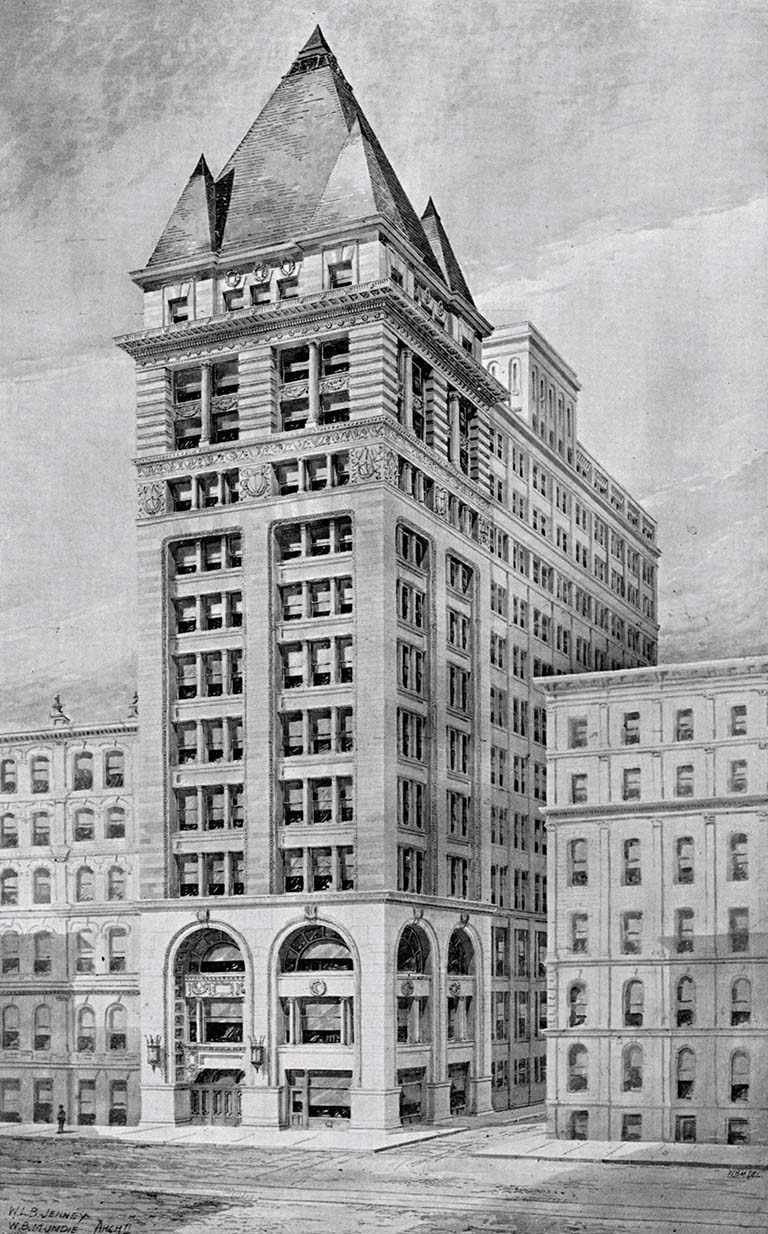
The YMCA College

The YMCA College closed soon after the faculty, staff and student body walked out in protest of discriminatory practices and established Roosevelt College.

Edwin R. Embree, a friend of FDR, head of the Rosenwald Foundation and first chair of Roosevelt’s Board of Trustees, said the new school “embodies the democratic principles to which President Roosevelt gave his life – the four freedoms in action . . . Roosevelt College of Chicago will practice no discrimination in students or faculty and no restriction of class or party line in its teaching or research.”

The College now had a mission, a name, a faculty and students, but no money, classrooms, labs or library. The new Board of Trustees, which included African-American chemist Percy Julian, was undoubtedly one of the first racially integrated college boards. It took the trustees until mid-July to acquire a home, an 11-story office building on Wells Street, and a lease on a second building on Wabash Avenue for a music school.
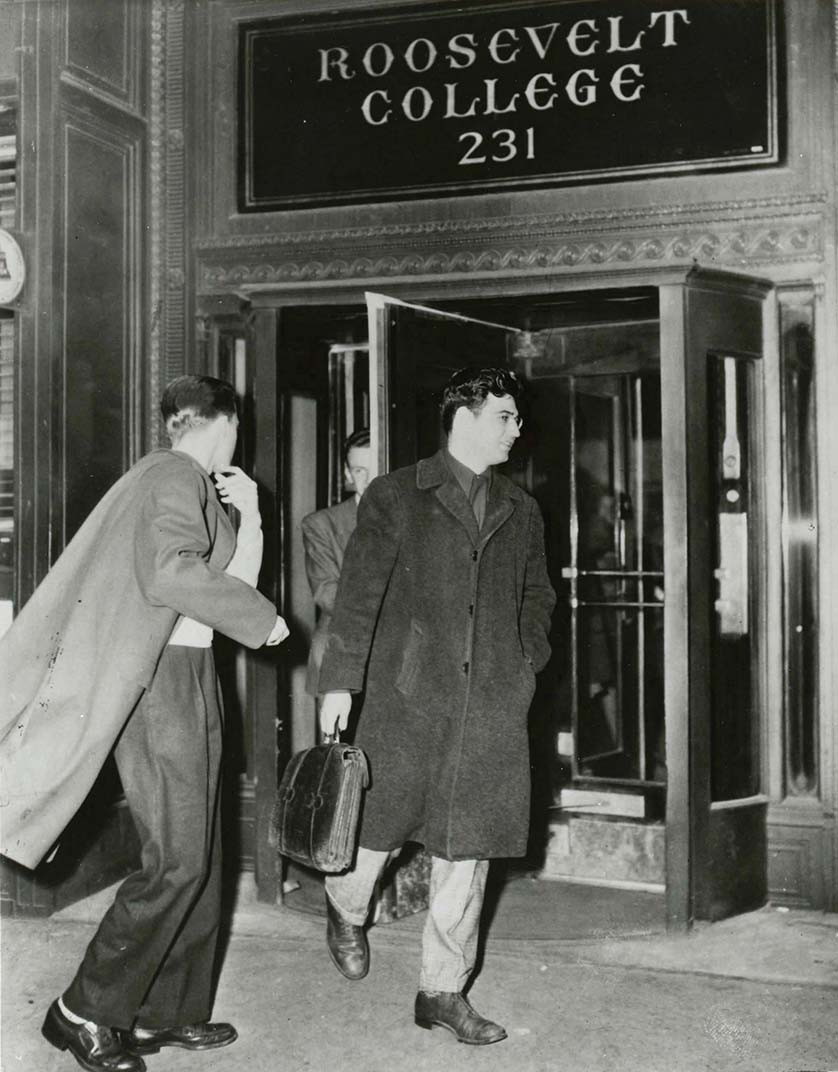
The first Roosevelt campus

The first Roosevelt campus was a hastily renovated office building sitting by the el tracks on Wells Street, and quickly proved too small for the numbers of students seeking admission.

The Board then had two months to raise money, remodel offices into classrooms, studios and labs, and plan for fall classes. They bought chairs from Standard Oil, lab equipment from Illinois Technical College, and books, desks and blackboards from a variety of sources. Faculty and students pushed carts piled high with books and supplies through city streets to set up the new campus and worked alongside painters and carpenters to ready the classrooms for the fall semester.
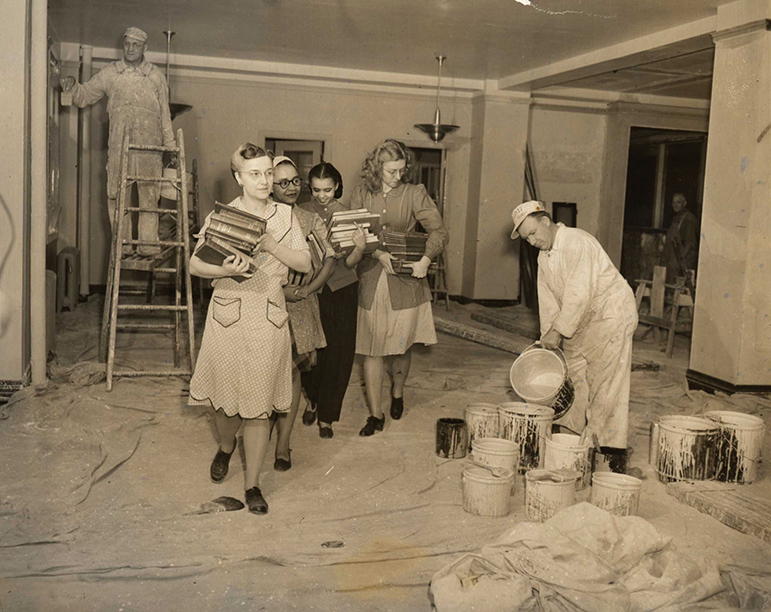
Founding librarian Marjorie Keenleyside

Founding librarian Marjorie Keenleyside (foreground) with help from students and staff established the first Roosevelt library in the fall of 1945.
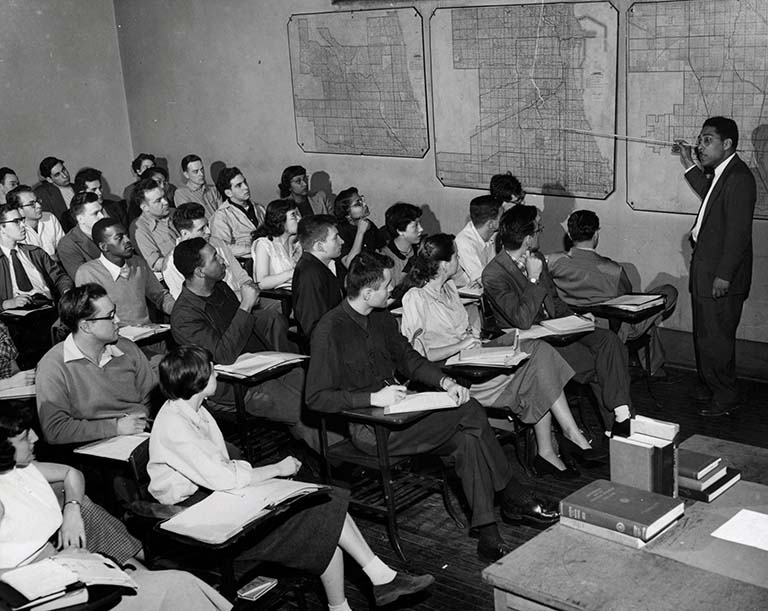
Roosevelt students studied with an outstanding faculty, including the sociologist St. Clair Drake (standing), who co-authored Black Metropolis, the classic study of race and urban lif

Roosevelt students studied with an outstanding faculty, including the sociologist St. Clair Drake (standing), who co-authored Black Metropolis, the classic study of race and urban life.

At the same time, Roosevelt College leaders were busy creating one of the most diverse faculties in the United States. In an era when most American professors were white male Protestants, Roosevelt hired men, women, African Americans, Jews, European refugees, Catholics and teachers from India, China and Latin America. Founding faculty included political scientist Tarini Prasad Sinha, sociologist Rose Hum Lee, economist Abba Lerner, philosopher Estelle De Lacey, language professor Dalai Brenes, sociologist St. Clair Drake, chemist Edward Chandler and many more.

The faculty grew to 71 full-time and 90 part-time professors by 1946. An additional 1,000 professors from around the country sent applications hoping to work at this pioneering college, even if it meant a cut in pay.

Eleanor Roosevelt

Eleanor Roosevelt, a staunch friend of the college from the start, celebrated the opening of Roosevelt College with President Edward James Sparling and 1,000 supporters at the Stevens Hotel in Chicago. Her declaration that the new school would “provide educational opportunities for persons of both sexes and of various races on equal terms” was radical for its time.

Approximately 1,200 students began classes on Sept. 24, 1945. They were even more diverse than the faculty – and were described by one newspaper as “Chinese, Japanese, Negroes, Levantines, Jews, Catholics and Down East Yankees.” The next year, realizing the first campus was too small to accommodate the number of students seeking admission, Roosevelt acquired Chicago’s famed Auditorium Building on Michigan Avenue. Five thousand students, from military veterans to new high school graduates, registered for classes in the fall of 1947.
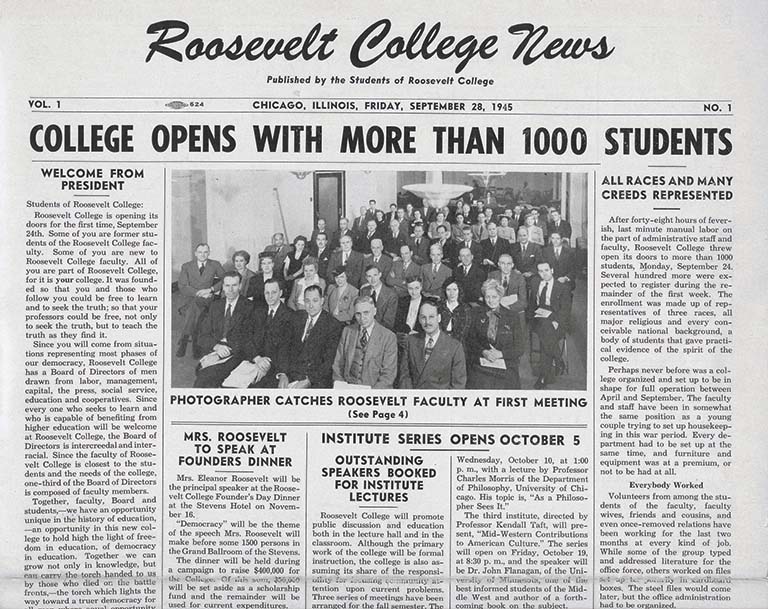
 The first issue of the student newspaper.

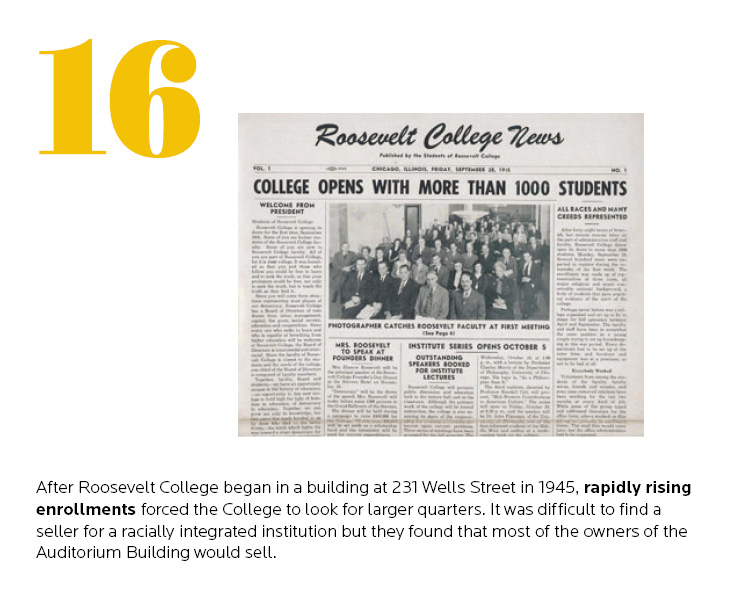
The first issue of the student newspaper featured a front-page story on Roosevelt’s opening.

And so a new college began. Magazine and newspaper reporters flocked to the classrooms and marveled at Chicago’s “equality lab.” In November of 1945 Eleanor Roosevelt, chair of Roosevelt’s Advisory Board, dedicated the college “to the enlightenment of the human spirit.” A remarkable act of courage by a college president, staff, faculty and students in the spring of 1945 had created, as one journalist wrote, nothing less than “a model of democracy in higher education.”
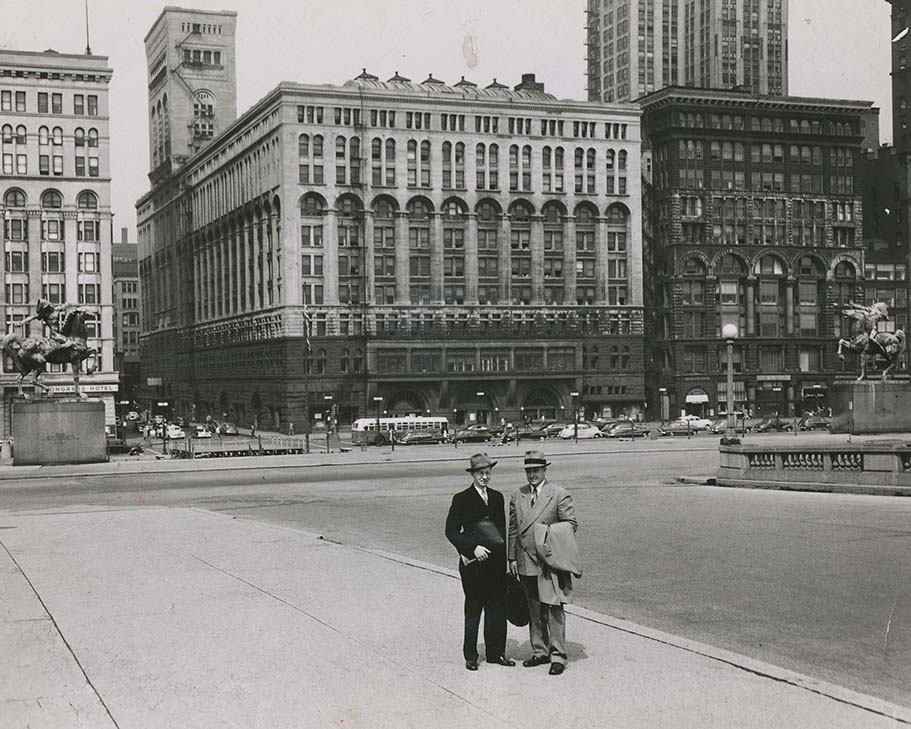
Roosevelt purchased the dilapidated Auditorium Building in 1946 and immediately began the long process of renovating the building into an 18-story college campus.

Roosevelt purchased the dilapidated Auditorium Building in 1946 and immediately began the long process of renovating the building into an 18-story college campus.
Standard
Feature 2, Feature Stories, President's Perspective, Spring 2015, Uncategorized

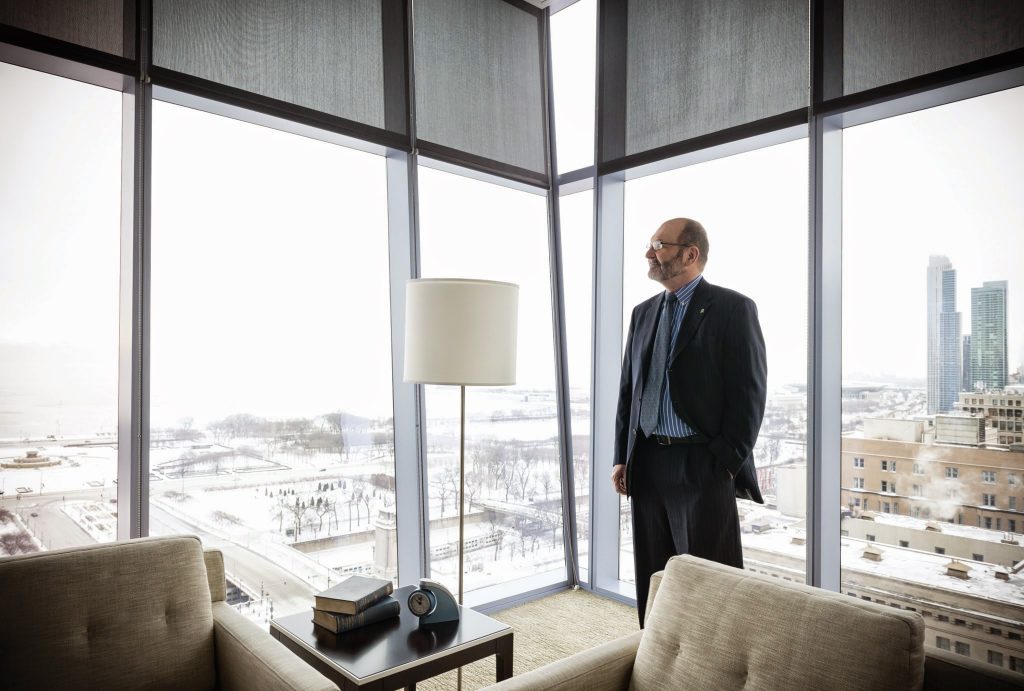
President’s Perspective: Transitions

CRM_6477_Edited

Seventy is, for me, a kind of magical number. Not that there haven’t been others that fascinated me earlier in life. Thirteen, 18, 21, “33 and four months” and 50 come to mind.

These were seasons of my life that in retrospect were important milestones for me and thus for those around me.

Seventy, however, is special in this galaxy of numbers because this is the year that both I and Roosevelt University begin our eighth decade. Of course, institutions of higher education at 70 are really not all that old. But people are, despite our best efforts sometimes to pretend otherwise.

As we turn the page on 70 years, we reflect on where we have been and speculate just a wee bit on where we might be going.

I thought about this last summer when I met several sets of grandparents of this year’s freshman class and discovered that they were my juniors, though not by that much! Makes you wonder what students in the elevator with whom I talk constantly think of all of us who are beyond 35 or so.

This spring we are celebrating the University’s 70th birthday. It comes at a truly momentous period of our history. As we turn the page on 70 years, we reflect on where we have been and speculate just a wee bit on where we might be going.

Lynn Weiner, formerly dean of the College of Arts and Sciences and a really smart and insightful historian of contemporary America after World War II, has been digging deeply for the past couple of years into that history. The first fruits of her work have gelled into the book of pictures and commentary (available from the Office of Alumni Relations) that highlight some of the key moments.

Taken together they record the evolving life of the institution through many challenges, most of them unimaginable before they occurred.

In each case, large and small, it was the resiliency of our people—faculty members, administrators and staff, and especially our students—that saw us through. I think we always emerged from whatever challenges we faced, no matter how intense and intractable they may have seemed at the time, in better shape than we went in.

Lynn meets with me every couple of weeks and she has taught me much about this history.

Turns out that there are notions about it that we Rooseveltians carry about in our head that are more myth than reality. And there are others that are spot on about what transpired—and more significantly, why.

But it’s difficult to recapture the nuances of those moments in pictures and brief commentary associated with each, so we await the arrival of the full book to think about them in more subtle, nuanced ways.

There were other moments in every decade that required bold action so that Roosevelt did not become a prisoner of its past and so that it could resolutely engage its future.

Taking a longer view, however, points out a fundamental common feature of all these periods of our collective past.  It is this: Burnham’s admonition to make no little plans regularly animated leaders of the University, especially when they were faced with big challenges.

For instance, the foundation itself was as bold as it was foolhardy, at least on paper. And bravo to President Edward Sparling for sticking to his guns and not permitting the replacement of the Auditorium Theatre with a garage for employees to park their cars in or for expanded residential or classroom space. It took a fight, but he was right.

There were other moments in every decade that required bold action so that Roosevelt did not become a prisoner of its past and so that it could resolutely engage its future. I’ll leave it to Lynn and others to fill in the details of that broad historical thesis.

For now, I am content to ponder the immutability of transitions—personal and institutional—as not only defining moments in life but as essential ones if we are to continue to grow throughout our lives and if our institutions are to prosper over long periods of time.

President Middleton

It takes a special skill to be  able to look backward and understand as much as humanly possible about where we have been. It takes the ability to dream about how the future can be both tethered in that past and yet change sufficiently to promote a stronger and enduring future.

The mists of the past cover up much of the drama. The mists of the future are totally impenetrable. So we do the best that we can in time present. Always have.

This is essentially the work we have been engaged in for the first decade and a half of the 21st century. We ponder our past and celebrate its successes while simultaneously appreciating its problematic moments. And we imagine how, in this kaleidoscopic world in which we live, we can build upon these successes in ways that shape the transitions into the future that we must promote if we are to continue that tradition of resiliency that underpins and defines our history.

Stewardship of Roosevelt University, as with service here in all other capacities, is a very special privilege. It requires attention to the past and especially to the values that have informed every moment of it from 1945 to 2015. And it presents opportunities, if you can just discern them from among the many possibilities that permeate our environment, for greater and more enduring successes in the future.

-a1226s1355

To the alumni, friends and especially the faculty, administrators and staff, and most especially our students who have traveled with me in this journey, I give thanks at this moment of transition in my life for the privilege of having walked this way with you for a brief period of time in Roosevelt’s ongoing story.

Chuck Middleton welcomes your comments. Email him at cmiddleton@roosevelt.edu.

Standard
Auditorium Building Facts Feature Image
Fall 2014, Feature 4, Feature Stories

The Auditorium Building at 125

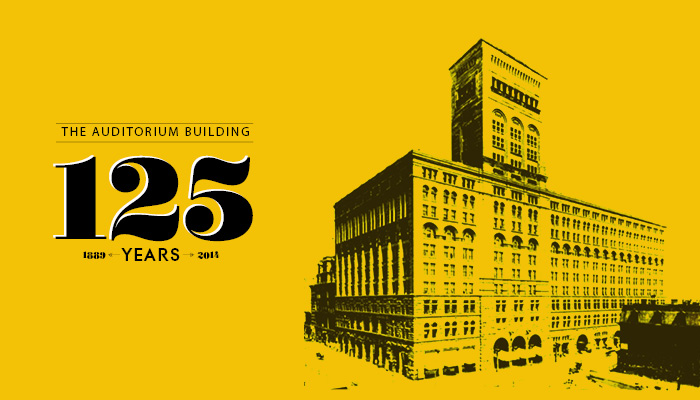
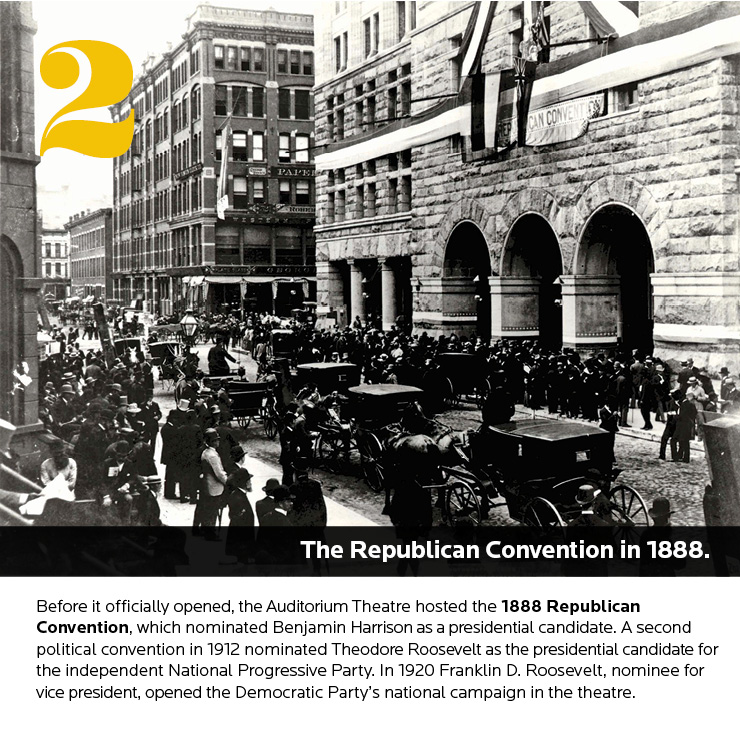
The Auditorium Building – now the home of Roosevelt University and the Auditorium Theatre – is one of the great architectural treasures of the world. Designed and built by Dankmar Adler and Louis Sullivan, it provided a venue for culture that was available to all Chicagoans regardless of income. A hotel and business complex surrounding the theatre helped support the cost of the arts. After the building’s revenues declined in the early 20th Century, Roosevelt purchased the Auditorium in 1946 and has been restoring it ever since. On the occasion of the 125th birthday of this iconic building, we offer the following historical tidbits.

Auditorium Theatre Fact 1

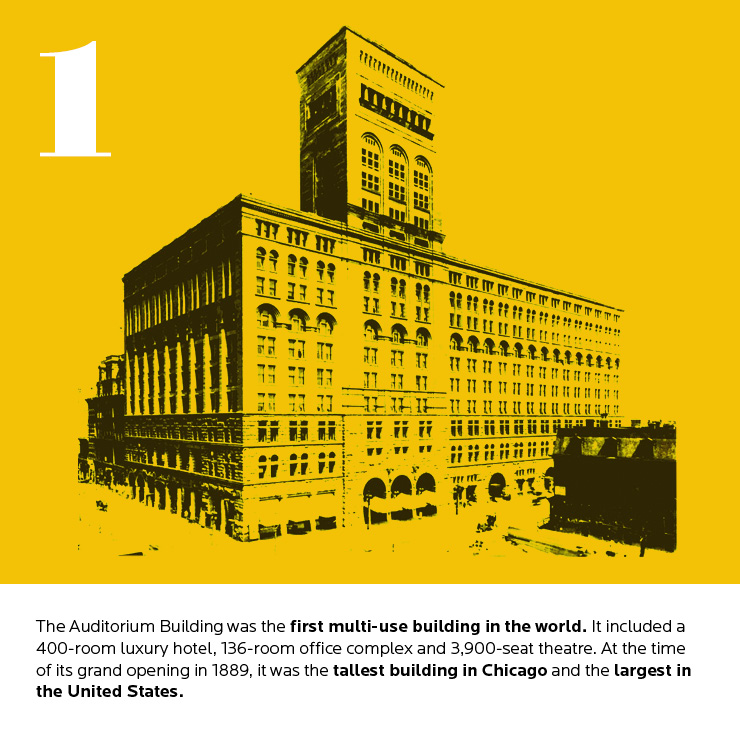
Before it officially opened, the Auditorium Theatre hosted the 1888 Republican Convention, which nominated Benjamin Harrison as a presidential candidate. A second political convention in 1912 nominated Theodore Roosevelt as the presidential candidate for the independent National Progressive Party. In 1920 Franklin D. Roosevelt, nominee for vice president, opened the Democratic Party’s national campaign in the theatre.

The Auditorium Building contained 17 million bricks, 50 million pieces of marble tile, 25 miles of gas and water pipes, and 12,000 electric lights. It was one of the first buildings anywhere to be wired for electricity, and the theatre was the first to rely entirely on incandescent light bulbs — 3,500 of them.

The building was the first to have central air conditioning, which relied on 15 tons of ice each day sprayed by water and dispersed with fans.

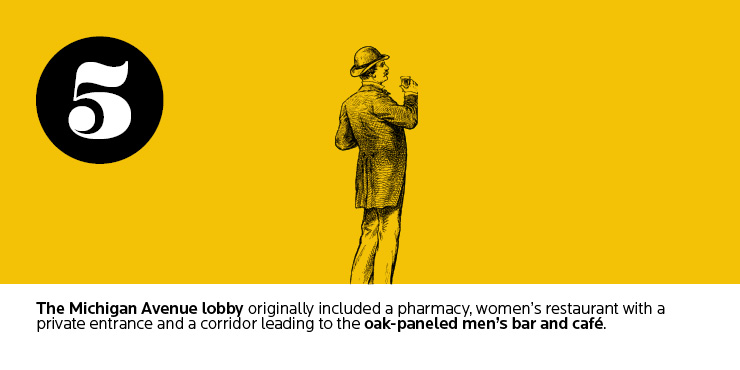
The Michigan Avenue lobby originally included a pharmacy, women’s restaurant with a private entrance and a corridor leading to the oak-paneled men’s bar and café.

The acoustically perfect theatre initially housed the Chicago Symphony Orchestra and Chicago Civic Opera. It was called “the greatest room for music and opera in the world, bar none” by architect Frank Lloyd Wright.


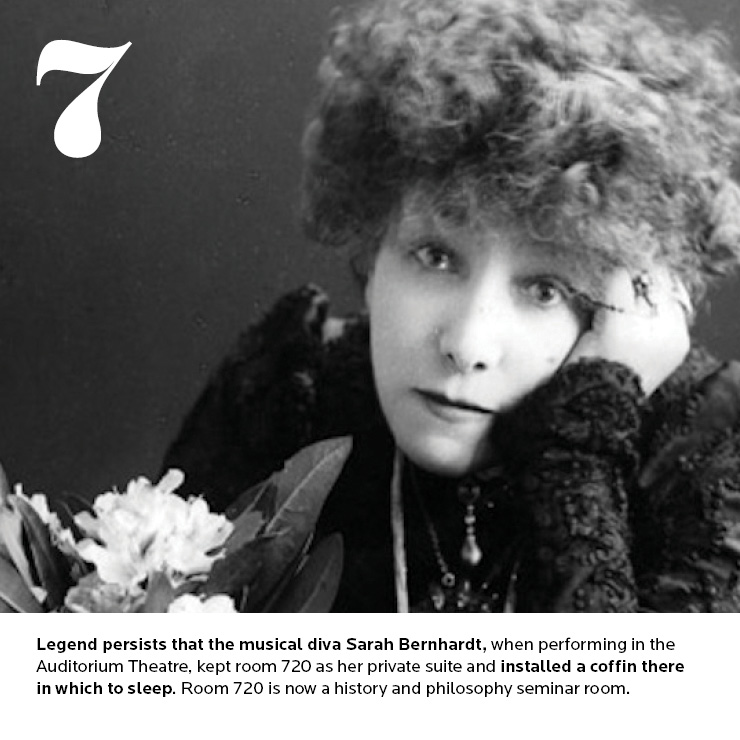
Legend persists that the musical diva Sarah Bernhardt, when performing in the Auditorium Theatre, kept room 720 as her private suite and installed a coffin there in which to sleep. Room 720 is now a history and philosophy seminar room.

Among the other featured acts in the theatre were silent movies with live music, the U.S. Marine Band, a circus complete with elephants, and the 1898 Chicago Peace Jubilee featuring Booker T. Washington and President William McKinley.

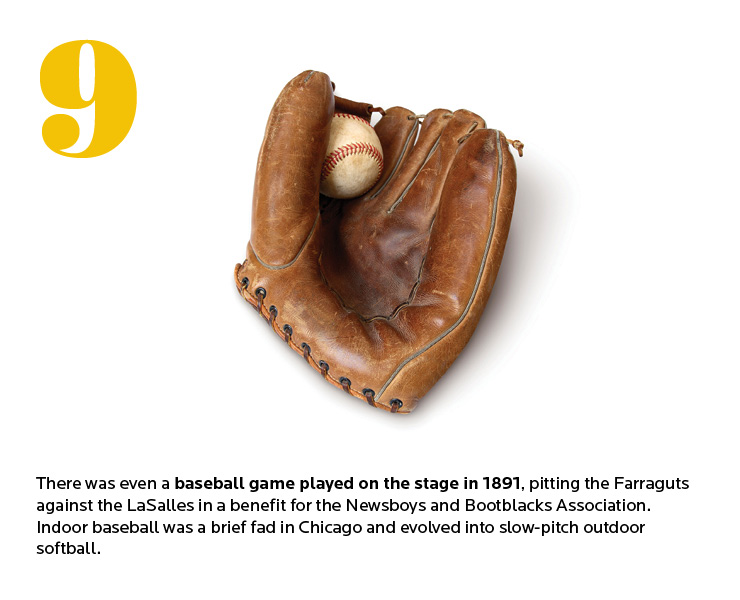
There was even a baseball game played on the stage in 1891, pitting the Farraguts against the LaSalles in a benefit for the Newsboys and Bootblacks Association. Indoor baseball was a brief fad in Chicago and evolved into slow-pitch outdoor softball.

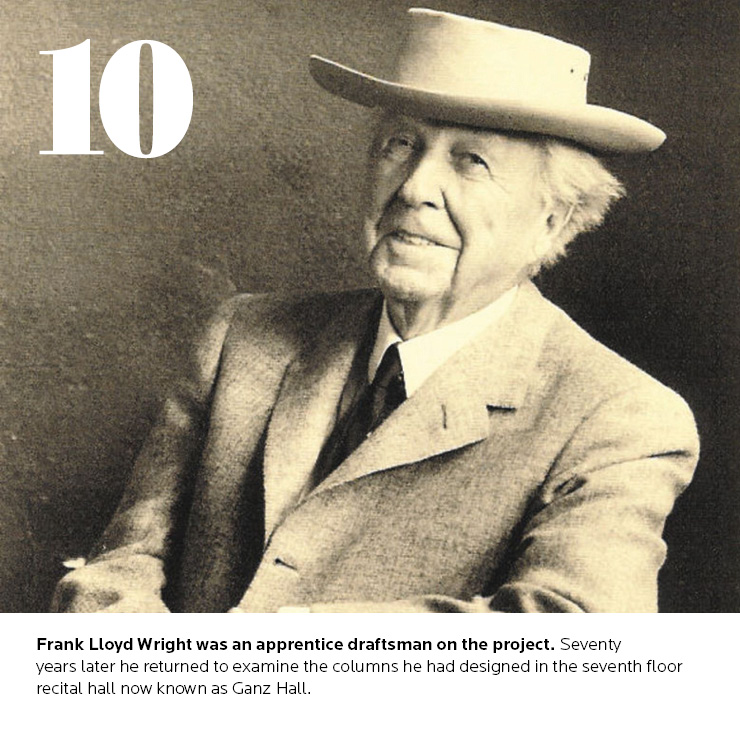
Frank Lloyd Wright was an apprentice draftsman on the project. Seventy  years later he returned to examine the columns he had designed in the seventh floor recital hall now known as Ganz Hall.

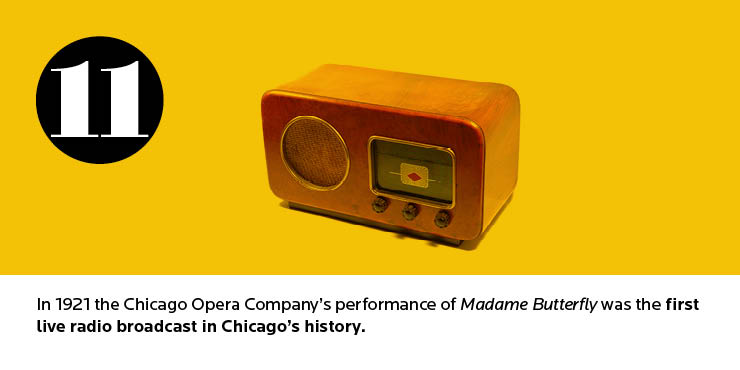
In 1921 the Chicago Opera Company’s performance of Madame Butterfly was the first live radio broadcast in Chicago’s history.

Like many 19th Century buildings,  the Auditorium featured gendered spaces – for women a separate lobby entrance, a “ladies parlor” on the second floor (now the Sullivan Room), and a theatre reception area, and for men a bar and café in the lobby and a smoking room (now the Spertus Lounge) on the second floor.

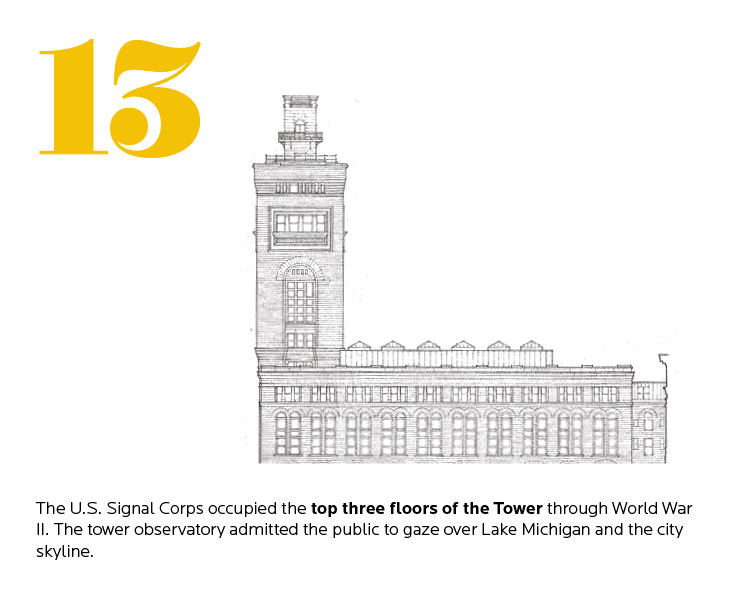
The U.S. Signal Corps occupied the top three floors of the Tower through World War II. The tower observatory admitted the public to gaze over Lake Michigan and the city skyline.

In 1942 the building was taken over by the city as a military USO Center. A bowling alley was built on the theatre stage and the 10th floor restaurant and 7th floor recital hall became dormitories for enlisted men and officers. There were even facilities for families of servicemen soon to be shipped overseas.

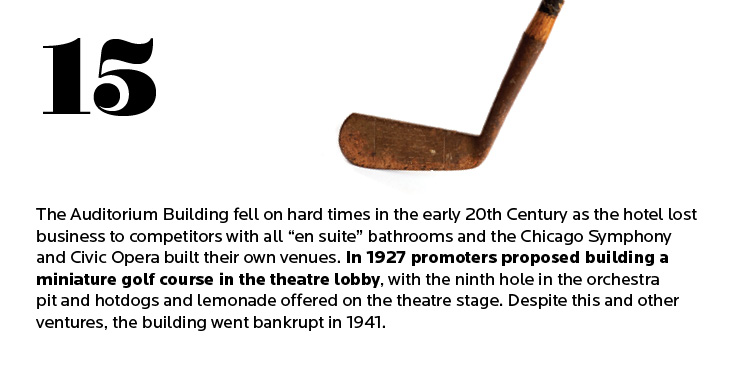
The Auditorium Building fell on hard times in the early 20th Century as the hotel lost business to competitors with all “en suite” bathrooms and the Chicago Symphony and Civic  Opera built their own venues. In 1927 promoters proposed building a miniature golf course in the theatre lobby, with the ninth hole in the orchestra pit and hotdogs and lemonade offered on the theatre stage. Despite this and other ventures, the building went bankrupt in 1941.

After Roosevelt College began in a building at 231 Wells Street in 1945, rapidly rising enrollments forced the College to look for larger quarters. It was difficult to find a seller for a racially integrated institution but they found that most of the owners of the Auditorium Building would sell.

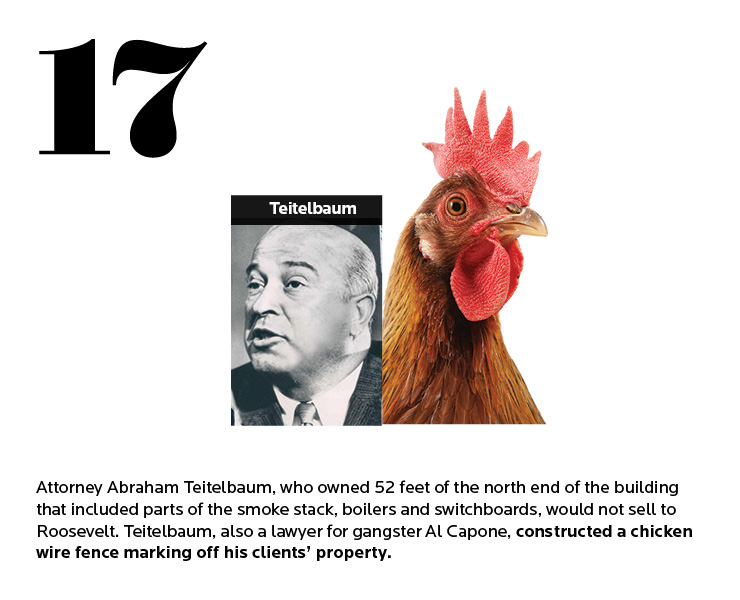
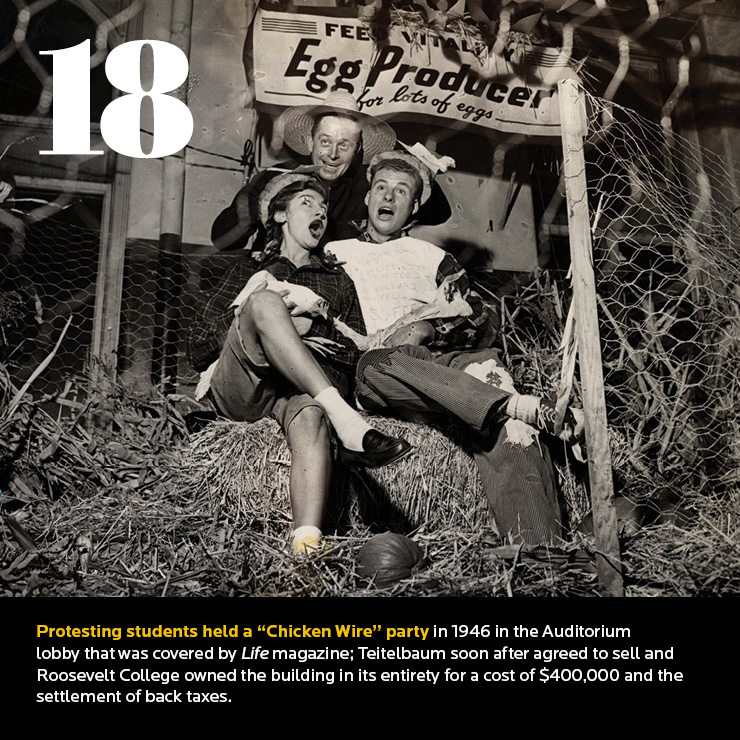
Attorney Abraham Teitelbaum, who owned 52 feet of the north end of the building that included parts of the smoke stack, boilers and switchboards, would not sell to Roosevelt. Teitelbaum, also a lawyer for gangster Al Capone, constructed a chicken wire fence marking off his clients’ property.

Protesting students held a “Chicken Wire” party in 1946 in the Auditorium lobby that was covered by Life magazine; Teitelbaum soon after agreed to sell and Roosevelt College owned the building in  its entirety for a cost of $400,000 and the settlement  of back taxes.

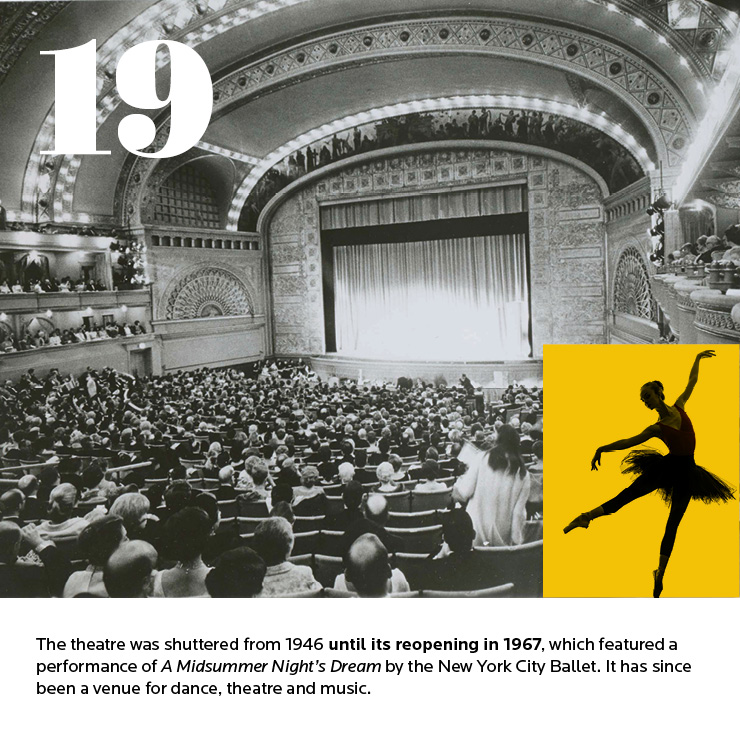
The theatre was shuttered from 1946 until its reopening in 1967, which featured a performance of A Midsummer Night’s Dream by the New York City Ballet. It has since been a venue for dance, theatre and music.

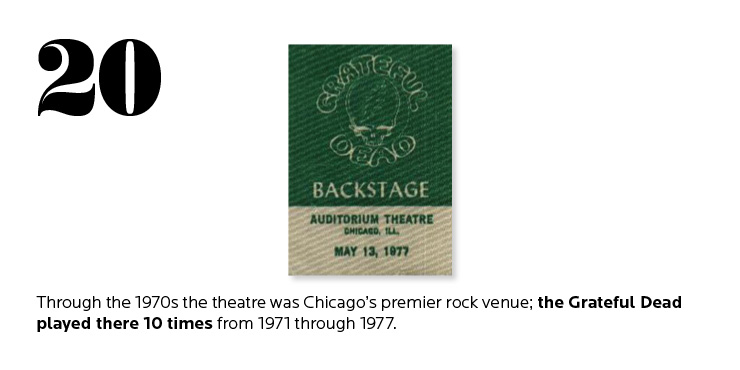
Through the 1970s the theatre was Chicago’s premier rock venue; the Grateful Dead played there 10 times from 1971 through 1977.

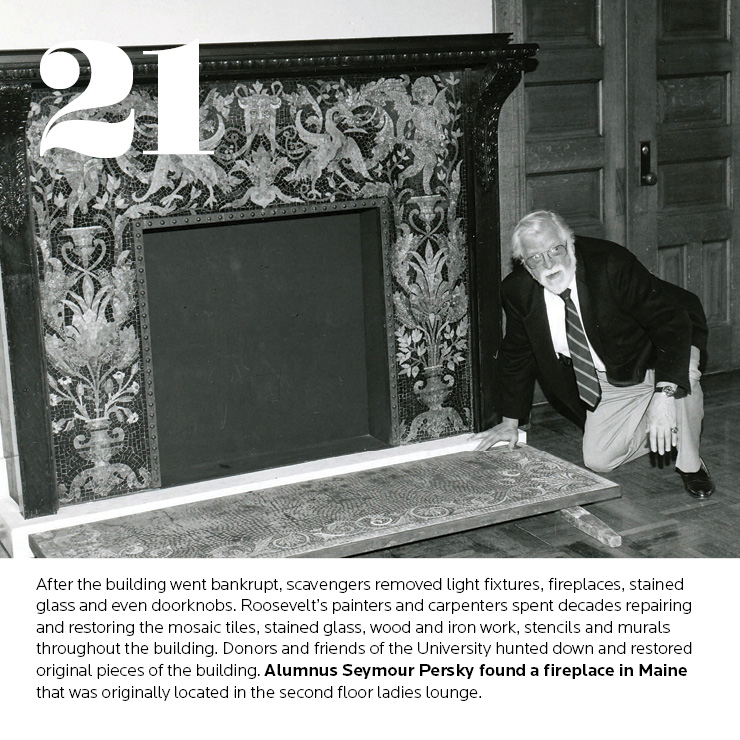
After the building went bankrupt, scavengers removed light fixtures, fireplaces, stained glass and even doorknobs. Roosevelt’s painters and carpenters spent decades repairing and restoring the mosaic tiles, stained glass, wood and iron work, stencils and murals throughout the building. Donors and friends of the University hunted down and restored original pieces of the building. Alumnus Seymour Persky found a fireplace in Maine that was originally located in the second floor ladies lounge.

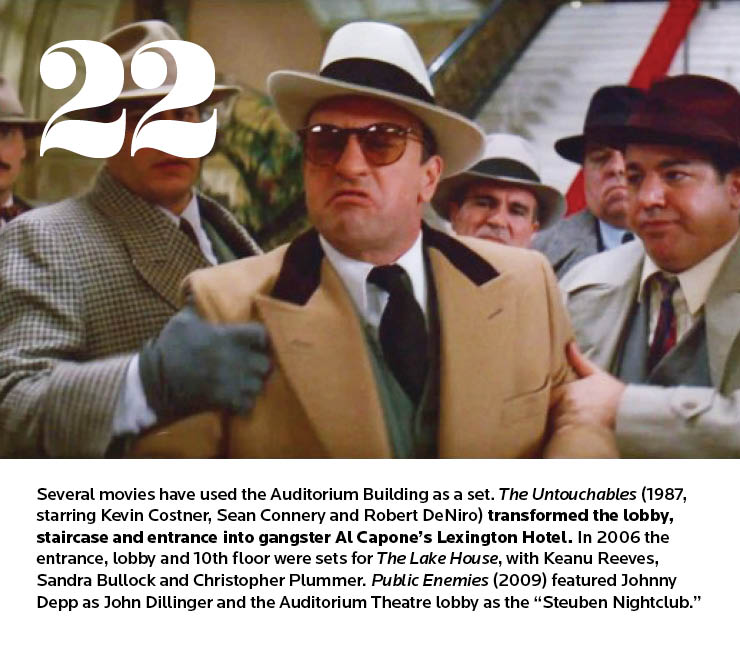
Several movies have used the Auditorium Building as a set. The Untouchables (1987, starring Kevin Costner, Sean Connery and Robert DeNiro) transformed the lobby, staircase and entrance into gangster Al Capone’s Lexington Hotel. In 2006 the entrance, lobby and 10th floor were sets for The Lake House, with Keanu Reeves, Sandra Bullock and Christopher Plummer. Public Enemies (2009) featured Johnny Depp as John Dillinger and the Auditorium Theatre lobby as the “Steuben Nightclub.”

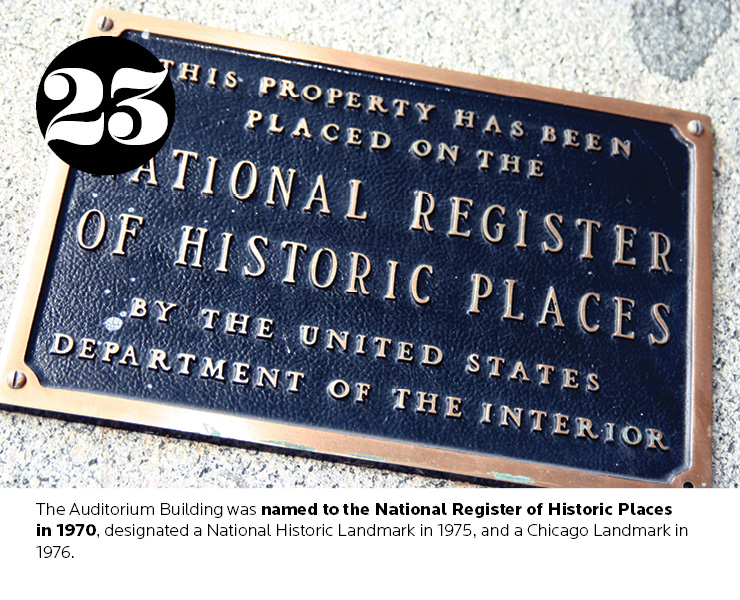
The Auditorium Building was named to the National Register of Historic Places in 1970, designated a National Historic Landmark in 1975, and a Chicago Landmark  in 1976.

Standard