Sidebar Story, Spring 2015

Serving Up Success

Shin-5439

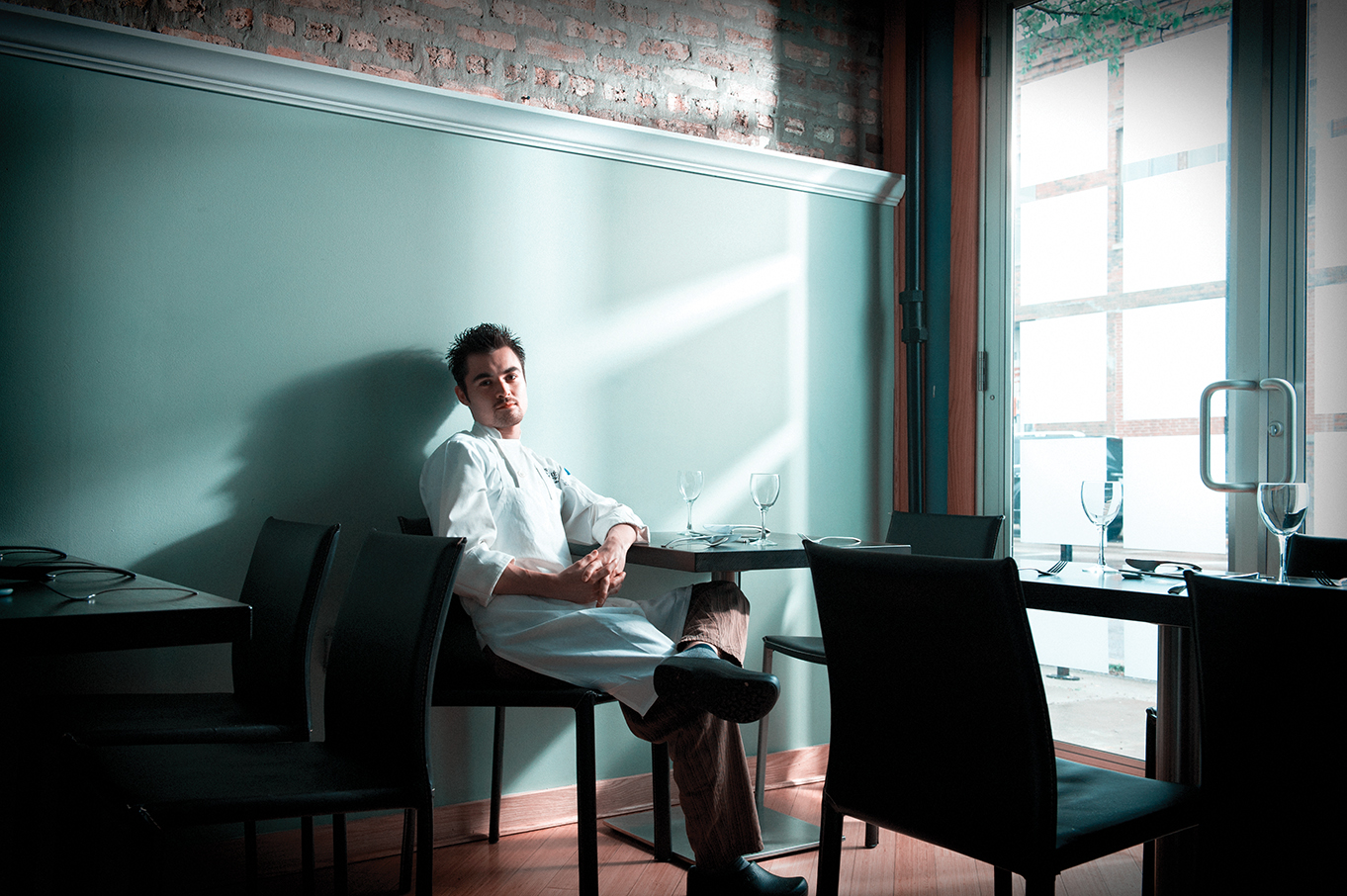
Chicago restaurateur Shin Thompson (BSHTM, ’05)

A few years after graduating from Roosevelt’s Hospitality and Tourism Management Program in 1997, Aaron Michaels started a chef’s supply business in Florida that continues to grow by leaps and bounds today.

Another of the program’s alumni, Adrianna Szczecina Mendel, who left Roosevelt in 1999 to open a business, has had similar success. Her River Grove, Ill. Polish supermarket recently expanded to a second, larger location in Chicago.

Then there is the remarkable ingenuity of Chang Guan. She started one of China’s first destination management companies, which today has the ability to educate out-of-town visitors about more than 9,000 businesses in a major Beijing industrial zone.

“We have many, many stories like these,” remarked Gerald Bober, director of the Roosevelt program, one of the few in the nation and the only one in Illinois to offer both bachelor’s and master’s degree opportunities. “Whether they are starting their own business, or managing someone else’s, our students have an entrepreneurial spirit that is undeniable. It is one of the things that makes our program distinctive.”

Started in 1992, Roosevelt’s hospitality management program prepares students for leadership careers in lodging; food and beverage management; meeting, convention and exhibition management; tourism administration; sports hospitality; and club and gaming management. More than 1,000 students have passed through the doors of Roosevelt’s Manfred Steinfeld School of Hospitality Management.

Some have started restaurants, including: Shin Thompson (BSHTM, ’05), a highly respected chef who created the former Michelin-starred Bonsoiree in Chicago and recently followed that success by opening Furious Spoon in Chicago’s trendy Wicker Park neighborhood; and Blanca Murphy (BSHTM, ’10; MBA, ’13) whose upscale restaurant, Ambrosía, in San Pedro Sula, Honduras has received rave reviews by locals as well as visitors.

Others have created hotels, including Dimple Patel (BSHTM, ’01). Today, she runs a string of hotels in the Knoxville, Tenn. area, according to one of her mentors, Hospitality and Tourism Management Professor Chuck Hamburg.

“Whether they are starting their own business, or managing someone else’s, our students have an entrepreneurial spirit that is undeniable.”
Gerald Bober, director of Roosevelt’s Hospitality and Tourism Management Program

“We want to foster and help students succeed with their ideas and plans,” said Hamburg, who has taught at Roosevelt for three decades and is also a restaurant consultant and leading expert in the food and beverage and hotel fields. “We consider it our job to give our students advice and introduce them to connections that will allow them to network and succeed in the field.”

“It wasn’t just the degree, but it’s also been about the connections I made through Roosevelt that got me started down my path,” said Michaels, who credits Hamburg with advising him along the way. Moving to south Florida a few years after graduating to work with a chef he met through Roosevelt, Michaels started Culinary Convenience Inc., a mobile chef’s supply store on wheels in 2002. Selling everything from kitchen equipment to cooking tools, Michaels has grown Culinary Convenience into a major restaurant-supply distributor in south Florida. In 2014, he also opened a standing chef’s supply retail store.

Szczecina Mendel, founder and proprietor of Ada’s, an 8,000-square-foot Polish supermarket in suburban Chicago, also credits Roosevelt with giving her the know-how to expand the Ada’s concept. “The program taught me the basics—business law, accounting, back and front-office management,” said Szczecina Mendel, who just opened a new 16,000-square-foot store on Chicago’s northwest side. “I use the principles I learned at Roosevelt every day when I train my employees in things like customer service. My Roosevelt experience taught me what I need to do to work successfully with people.”

William Host, associate professor of hospitality and tourism management and a leader in the program’s growing field of study in Meetings and Event Planning Management, believes the sky is the limit on where students can take their ideas and plans. “Destination management companies are big in the United States, but frankly there are not a lot of these companies in China,” said Host of the concept that Guan learned about at Roosevelt and turned into Link Group, which is now operating in Beijing.

Guan and her partners are building the company from her 80-page master’s thesis and business plan that she completed as a Roosevelt student. It calls for the company to one day serve visitors to as many as 150,000 information technology businesses in 16 separate industrial parks in Beijing.
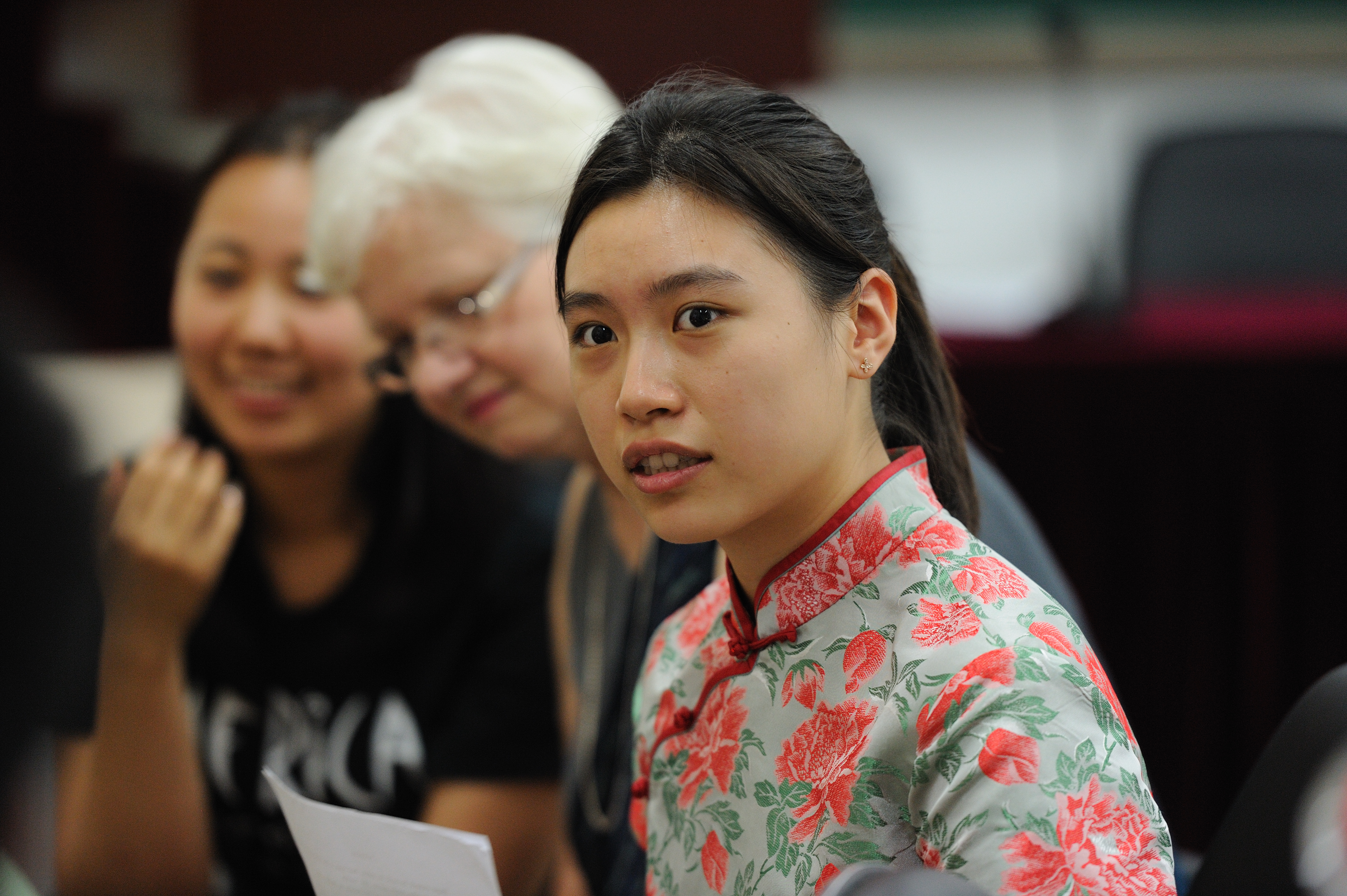
Chang Guan

Beijing Link Group founder Chang Guan (MSHTM, ‘14)

“The fact that she (Guan) had a vision for something like this that is based on what she was introduced to in our program, is really significant,” said Host. “It’s a testament to the determination of our students and faculty.”

Standard
Alumni News, Feature 4, Feature Stories, Spring 2015

Life is Good

for successful entrepreneurs Justin Rolls and Jonas Falk. Now they're hitting it big with their $25 million business, organic life.

Roosevelt served as the launchpad for successful entrepreneurs Justin Rolls and Jonas Falk. Now they’re hitting it big with their $25 million business, OrganicLife.

In 2006, two former Roosevelt University students started a lunch-service business because they knew food in school cafeterias was often not very good.

Determined to do better, Jonas Falk and Justin Rolls began cooking 500 nutritious lunches each night at a rented kitchen in Chicago’s West Town and then personally delivering the meals to small nearby schools. Today, their company, OrganicLife LLC, has $25 million in annual sales and 500 employees who prepare and serve 60,000 healthy lunches every day at 500 Chicago-area sites, including schools, day-care centers, nursing homes and universities.

Falk and Rolls also are restaurateurs, having recently opened Cochon Volant (French for Flying Pig), a brasserie in Chicago’s new Hyatt Centric the Loop Chicago hotel that handles room service and banquets as well as table meals. In addition, in Chicago’s River North neighborhood, the duo created Mixed Greens, a “build-a-meal,” “build-a-salad” concept, and Dough Bros, a New York-style pizza and subs restaurant.

The two also have plans to take OrganicLife into other parts of the Midwest, leading to their ultimate goal, which is to build a $1 billion-a-year business. But that could take some doing. “People say, ‘You’ve built such a great business,’” said Falk. “But to us, it’s not so great. We’re going up against companies that do $50 billion a year in business, and even if we did $100 million a year we’d still be small.”

We didn’t know anything about school lunch service when we got into this business. Our Roosevelt professors got us through the learning curve.”

-Justin Rolls

“We’re pretty much all work and not much fun,” said Rolls, who says that when time allows the partners try to squeeze in competitive sports: for Rolls, it’s tennis; for Falk, martial arts; and for both together, golf. But there is little free time. Their work days usually start at 4 a.m., touring kitchen sites where OrganicLife menus typically consist of favorites like roast turkey, pot roast, macaroni and cheese, burgers and fries – all made fresh daily from scratch.

“You can’t just sell tofu and kale,” remarked Falk. “Kids want the same thing that all of us want, so we’ve replaced the pink-slime burger and white bun with grass-fed beef on a whole wheat roll. We’ve always known there’s nothing wrong with pizza, as long as it’s not frozen,” he added, “so we make ours from hand-tossed dough and all-fresh ingredients.”

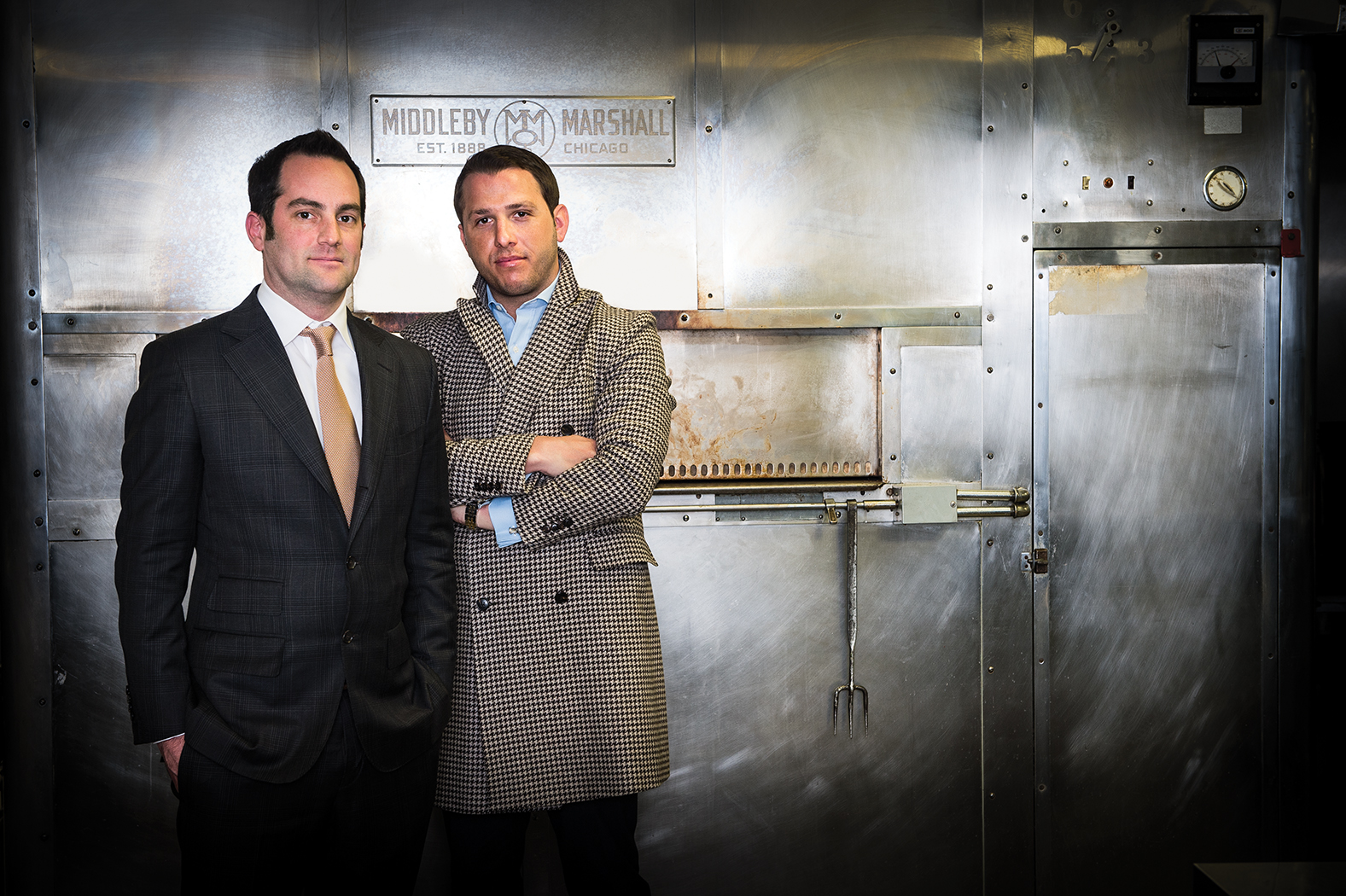
Roosevelt alums Justin Rolls and Jonas Falk were named to Crain’s Chicago Business 40 under 40 list in 2013. Their work in growing OrganicLife also has been recognized by Forbes and Enterprise.

Roosevelt alums Justin Rolls and Jonas Falk were named to Crain’s Chicago Business 40 under 40 list in 2013. Their work in growing OrganicLife also has been recognized by Forbes and Enterprise.

“Over the years, we’ve had dozens of students undertake entrepreneurial activities and start businesses,” said Gerald Bober, director of Roosevelt’s Manfred Steinfeld School of Hospitality and Tourism Management, where Falk and Rolls took classes. “But I have to say, especially when it comes to financial success, that these guys have really hit a home run.”

Falk, who took classes at Roosevelt in 2007, and Rolls, who received his bachelor’s and master’s degrees in hospitality management in 2001 and 2005, grew up in Chicago suburbs, Falk in Glencoe and Rolls in Barrington. As teens, they both worked in restaurants, rising through the ranks as dishwashers and line cooks to general managers: Falk, at the former four-star Le Francais in Wheeling, Ill. where he apprenticed under one of the great chefs of the world, Roland Liccioni; and Rolls, at the now-closed Flatlanders Restaurant and Brewery in Lincolnshire, Ill.

The pair also has family ties to the University. Falk’s mother, Barbara, and father, Joel, met in the seventies as students at Roosevelt’s Chicago Musical College (now the Chicago College of Performing Arts) and Rolls met his wife, Michelle, while taking a Roosevelt science class.

“We didn’t know anything about school lunch service when we got into this business, other than the fact that school food is terrible,” said Rolls. “Our Roosevelt professors took us under their wings and taught us a lot about the restaurant business and management, and it got us through the learning curve.” “I really love the University,” added Falk, who hopes to soon complete his Roosevelt degree, which his father insists is necessary, no matter how large or formidable OrganicLife becomes. “Roosevelt really got us started on this path.”

Destined for Goodness

Falk, 30, and Rolls, 36, didn’t take classes together at the University and as restaurant managers they never crossed paths. They might not be together at all today at the helm of a company called by Crain’s Chicago Business, Forbes and Enterprise as one to watch if Roosevelt hospitality management professor Chuck Hamburg hadn’t connected them 10 years ago. “Justin (Rolls) is the kind of guy who dots his i’s and crosses his t’s,” said Hamburg, who taught both men at different times. “Jonas (Falk) looks at ideas.”

Growing up in a household where his mother enjoyed cooking and his father collected more than 10,000 cookbooks, Falk often heard about bad school lunchroom food. Stories were told about burgers floating in an industrial-size pan of greasy liquid; microwaved pizza that tastes like cardboard; macaroni and cheese topped with a thick, artificial sauce; canned green beans or carrots and peas that were salty and limp from continuous warming.

If they like it, they buy it “Kids are tough critics,” says OrganicLife CEO Jonas Falk. OrganicLife’s business model relies on food quality and appealing to kids’ taste buds, resulting in a growing enterprise.

If they like it, they buy it: “Kids are tough critics,” says OrganicLife CEO Jonas Falk. OrganicLife’s business model relies on food quality and appealing to kids’ taste buds, resulting in a growing enterprise.

“We discussed it a lot of times at the dinner table – how there was just no good food in school lunchrooms,” said Barbara Pierson Falk, who remembers her son liking her lunches so much that he began asking her to make them for increasing numbers of his New Trier High School friends. “Jonas has always been driven and creative,” said Falk, a classical pianist and recipient of the Rudolph Ganz Award for Piano Performance as a Roosevelt freshman in 1972-73. “At one point, he had me making so many lunches that I think he was selling them. It might have been his first foray into the food business,” she joked.

Today, OrganicLife has moved beyond providing lunches-made from scratch at small private schools like Montessori Academy of Chicago, the company’s first customer, or the Sacred Heart elementary schools in Chicago, also an early site. These days, Falk, who is the company’s CEO, and Rolls, who is the President, bid for school contracts against food-service giants like Compass Group, Aramark and Sodexo.

The last four years have been productive with OrganicLife winning contracts at multiple public schools in the Chicago area, including Niles Township High School District 219 and Kildeer Countryside Community Consolidated District 96. “I remember telling them, ‘To be successful at this, you need to be able to build relationships,’” said Brian Margulis, another Roosevelt hospitality management professor who has offered the duo advice. “And that’s really what they’ve done.”

2

With short, mid and long-range goals in mind, Falk and Rolls tick off hurdles they must jump to continue growing OrganicLife. These include: moving into other parts of the Midwest and achieving $50 million in annual sales in 2015; continuing to expand and reaching $100 million in annual sales in three years’ time; and staying focused on essentials of OrganicLife, which are to provide higher quality food and service than competitors.

“What we’ve wanted from day one is to build a billion-dollar company,” said Falk. Both men were named to Crain’s Chicago Business 40 under 40 list of top executives in 2013. “But we’ve never tried to do it their way,” added Rolls, referencing the 50 largest industrial food-service providers, many of which are multinational companies. “We’ve only done it our way.”

As their journey continues, the two are thankful for the beginning they received at Roosevelt. “Our Roosevelt University professors were fantastic sources of information and support,” said Rolls. “They went beyond the call of duty and for that we will always be grateful,” added Falk.

4

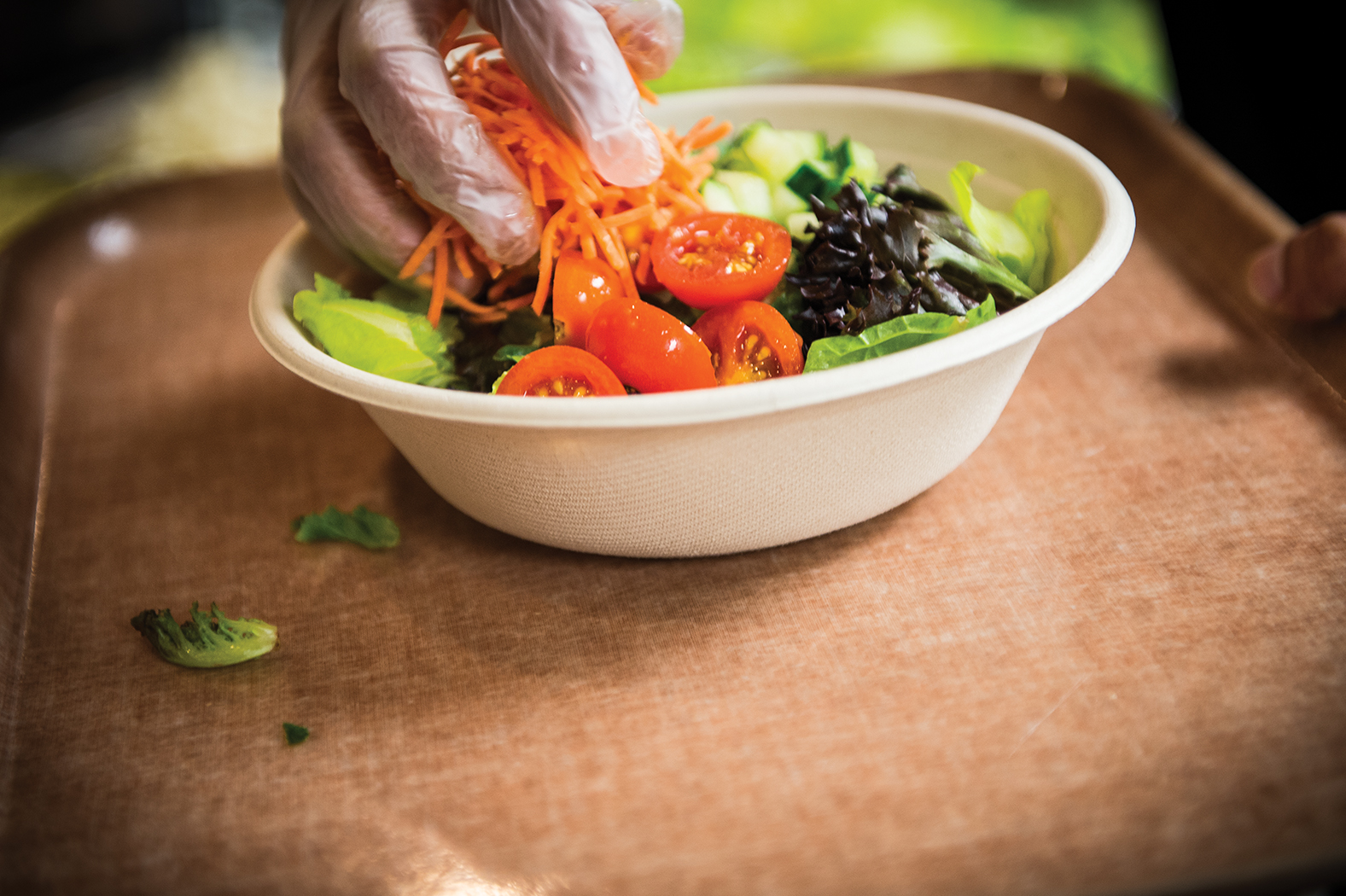
OrganicLIfe serves more than 60,000 healthy lunches to schools across the Chicago area every day.


Standard