

Golden Alumni Celebration
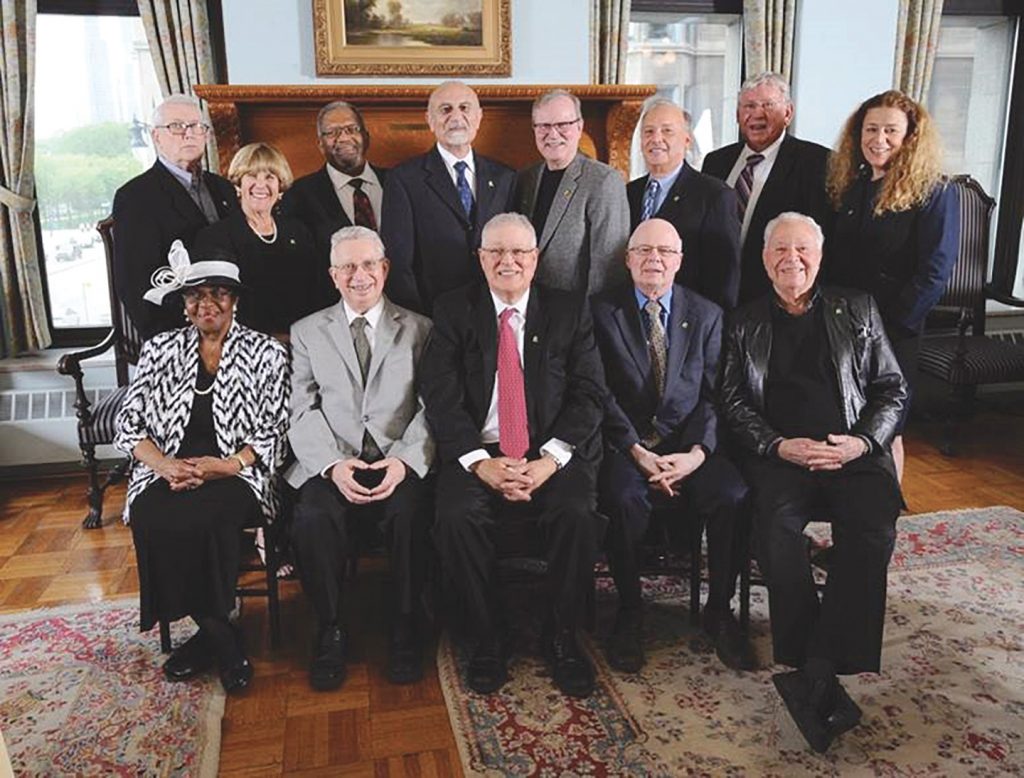
Members of the Class of 1956 joined Roosevelt’s spring graduates on the Auditorium Theatre stage during the spring semester Commencement ceremony in May. The alumni who celebrated their 50th graduation anniversary reminisced about their graduation and watched a new generation of Roosevelt graduates accept their diplomas.
Roosevelt Legacies
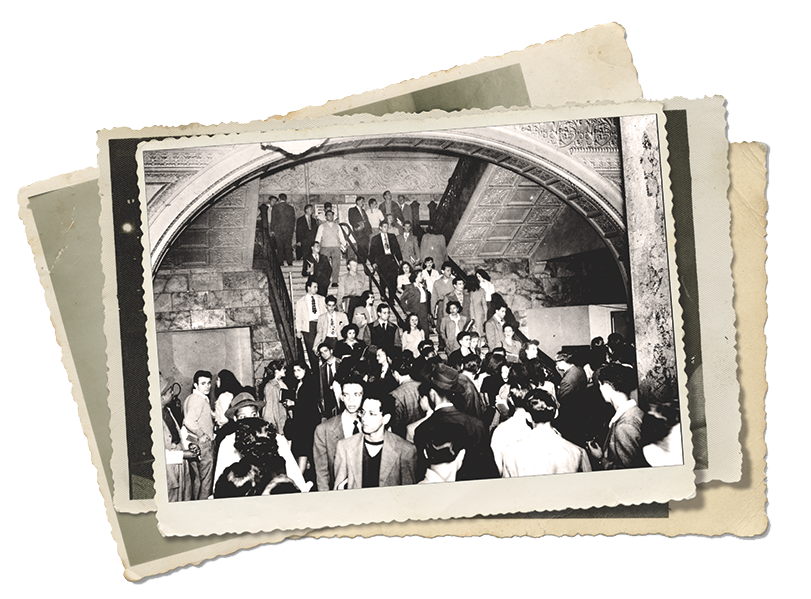
Roosevelt alumni: Did your parents, children, aunts, uncles or grandparents attend Roosevelt as well? If so, then we want to hear from you. This spring, the Office of Alumni Relations is bringing together families with a legacy of Roosevelt graduates for a new special event to celebrate several generations of Roosevelt Lakers. We are inspired by your family’s deep connection to this very special University and look forward to honoring your ties to Roosevelt University.
If you are especially passionate about connecting with your Roosevelt legacy network, we invite you to join our growing Laker Legacy Committee. With your enthusiasm and gifts of time and talents, our upcoming spring legacy reception is sure to be a memorable one for you, your family and our greater Laker Legacy community.
If your family has a legacy of Roosevelt students and alumni, email or call Assistant Director of Alumni Relations David Solberg at dsolberg@roosevelt.edu or at (312) 341-2115. Please include your name, email address, graduation year and those of your family members who also graduated from or are currently studying at Roosevelt. We look forward to hearing your Roosevelt legacy stories and working together in connecting this unique and treasured alumni community.
Roosevelt Kicks Off Executive Mentoring and Career Readiness Programs
To help Roosevelt University students achieve their professional goals, the University has established two new innovative and parallel programs: an Executive Mentoring program and a Career Readiness program.
Academic achievement is not the only factor which affects post-college success in today’s competitive world. College graduates must exhibit a high degree of professionalism and leadership, including skills in cross-cultural communication, networking and presentation. Roosevelt’s new programs will help guide students through these essential experiences and provide expert training so that they can be confident in their careers upon graduation.
The Executive Mentoring Program allows Roosevelt students to interact with and to learn from experienced, successful professionals and to create relationships that will have a positive impact on their careers after graduation. In return, mentors will benefit from meeting and interacting with dedicated Roosevelt students and will experience significant personal fulfillment.
Mentors, who are Roosevelt trustees, alumni and friends, have at least seven years of professional experience and expertise in their field. Mentors give advice and feedback to students about their resumes. They guide students through the interview process and coach students in professional communication, proper attire and conduct.
Roosevelt University invites alumni and friends to guide students by serving as a mentor or career development professional.
Seasoned mentors introduce students to colleagues to help them create a professional network and provide and/or identify internship and job opportunities. They also provide insight about trends, issues and challenges in the mentor’s field of expertise. Students who have had the benefit of a mentor have an advantage over their peers who are entering the workforce, because they will have begun to build their professional network and will be aware of current issues and trends in their chosen field.
Mentors and students communicate at least once each month, including the summer months, and students are responsible for maintaining communication with their mentors. Students remain with their mentors until they graduate or until one of the parties decides to end the relationship. Mentors come from around the country. In this digital age, it is easy to maintain mentoring relationships electronically. Mentors and mentees will gather for an annual mentor appreciation luncheon in the spring semester.
Through the Career Readiness Program, Roosevelt students achieve a competitive edge, whether they intend to pursue a post-graduate degree or to enter the job market. The goal is to cultivate readiness skills and marketability that will prove to be invaluable when students apply for a job, a teaching assistant position or a spot in a highly competitive and selective graduate degree program. Students who complete the program earn a certificate. The program, which begins in the freshman or transfer year, focuses on developing skills to prepare for the workplace or graduate school.
Career Development professionals work with students to create an appropriate career plan of action, through one-on-one meetings, professional assessments, workshops and seminars. In collaboration with each of the six colleges at Roosevelt, workshops and seminars (both on campus and online) are customized to address specific areas of study to ensure that students are prepared, competitive and able to excel and enrich their lives.
Roosevelt University invites alumni and friends to guide students by serving as a mentor or career development professional. For more information and to sign up, contact Megan Bernard, associate provost for Enrichment and Retention, at mbernard03@roosevelt.edu, or call her at 312-341-3685.
Funding for this vital program is provided by The McCormick Foundation and trustees Steve Abbey and Bob Wieseneck.
Staying in the Spotlight


left to right: Scott Stangland, Courtney Reed and Stephane Duret
A dozen years have passed since Roosevelt University theatre alums Scott Stangland, Stephane Duret and Courtney Reed appeared together in a Theatre Conservatory production of Kiss Me Kate.
One of the directors of the fledgling Roosevelt show, Sean Kelley, who today leads Roosevelt’s Theatre Conservatory, remembers well the three alums – and couldn’t be prouder – as each has made it on New York’s Broadway.
“It’s pretty magical to realize that Roosevelt’s theatre program and these actors have come so far,” said Kelley, who considers himself to be more of a recruiter these days for Roosevelt’s theatre conservatory than he is a director of musical theatre.
That said, Kelley remembers working closely with:
- Stangland (MFA , ’05), who starred in 2004 in Kiss Me Kate at Roosevelt’s O’Malley Theatre, and who today is understudy to the lead role in his second Broadway show, The Comet of 1812.
- Duret (BFA, ’07), a Kiss Me Kate ensemble member who recently made his debut in Broadway’s Kinky Boots as both an understudy to the lead role and swing member of the New York show’s ensemble
- Reed, also a Kiss Me Kate ensemble member and Roosevelt musical theatre graduate, who has been starring since February 2014 in Broadway’s Aladdin.
“It wasn’t just about singing and dancing. I remember telling them ‘If this is the career you want, your acting has to come first,’” recalled Kelley. “It’s wonderful for me to think back on how well they did in Kiss Me Kate,” he added. “But who could have known at the time that all three would be Broadway bound?” he said.
Stangland, who was a cast member in Broadway’s Once before starting in November as understudy to the lead role of Pierre, (being played on Broadway by Josh Groban), remembers Kelley casting and advising him on the Roosevelt set of Kiss Me Kate.
“I didn’t think at the time that I’d go on to pursue lead roles on Broadway, but here I am,” said Stangland, who calls the role of Pierre in The Comet of 1812 both “challenging and complex.”
“Looking back now, I realize I developed the work ethic I have today at Roosevelt. I was taught how to be a good person and how the theatre profession works. I credit Roosevelt for giving me the foundation to become strong at acting,” Stangland said.
Duret, who had roles in Chicago theatre before moving to New York in 2011 where he landed parts off Broadway and in international shows, also credited Roosevelt with helping him to polish his acting.
“Had I gone to New York right out of high school I wouldn’t have been ready,” said Duret, who spent the last three years preparing and auditioning for Kinky Boots.
“To know there is someone in your corner – and that’s Sean Kelley has been an amazing support. I really fell in love with the craft of acting at Roosevelt,” said Duret, who has been performing the show’s lead role as Lola.
The continuing star of Disney’s Aladdin, Reed also has credited her Roosevelt education with opening doors to professional theatres, people and opportunities. “I always found the faculty at Roosevelt and my fellow students to be dedicated, passionate and hard working,” she said recently.
While the Kiss Me Kate production is now history, Kelley believes the three Broadway actors it produced are a foundation for future interest in attending the Theatre Conservatory and the program’s continuing success.
“As our freshmen continue to choose Roosevelt’s theatre program, it’s people like Scott Stangland, Stephane Duret and Courtney Reed whom we should thank, for they are the ones who have brought Roosevelt continuing recognition,” said Kelley.
Alumna Forges Path on Broadway
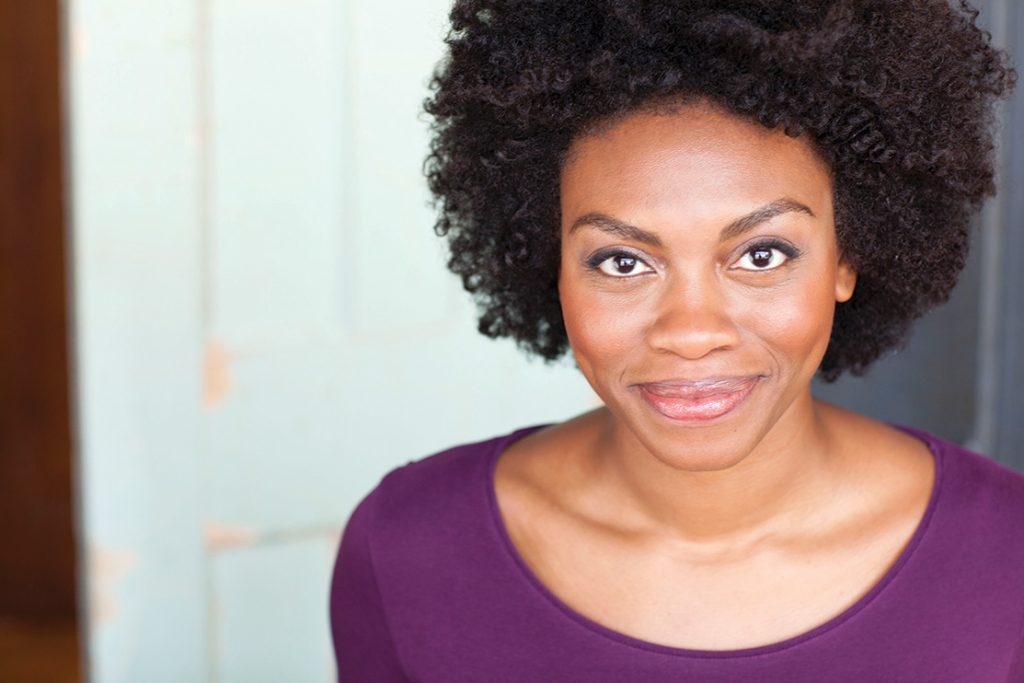
There are a lot of different ways to reach Broadway: For Alumna Adrienne Walker, the journey began as a student opera singer in Roosevelt University’s music conservatory.
A 2011 graduate of Roosevelt’s Master of Music in Vocal Performance program, Walker started her career in Chicago on the cast of the English-language opera, Porgy and Bess.
Then one thing led to another with Walker racking up roles in Chicago-area musical-theatre productions of Hair, Dreamgirls, Rent and The Color Purple, to name just a few.
Today, she is on Broadway, having made her debut in July in the role of the older Nala in Disney’s The Lion King.
“I went from doing classical voice to musical theatre. It was a complete shift, and I think the reason it’s worked out for me is because I’ve been able to adjust and have been enjoying myself,” said Walker.
At Roosevelt, the soprano studied with Roosevelt’s Chicago College of Performing Arts (CCPA) Artist Faculty Member Cynthia Clarey, who has had leading roles with opera companies all over the globe.
“Adrienne was one of my best students,” said Clarey, who has taught voice in Roosevelt’s music conservatory since 2008. “She has a beautiful soprano voice, and could have had an opera career, but I never felt she had the same feeling for singing classical music that she had for contemporary songs.”
Walker is quite confident of her vocal ability – and knows what to do to protect her voice, thanks in part to her training at CCPA. Her challenge has been preparing physically, but Walker is confident she’s gaining strength on stage day by day.
“Everybody has their own path, and this is mine,” said Walker, who believes the Roosevelt experience landed her in Chicago, which is where she needed to be to get started in the first place in musical theatre.
Harold Washington Lounge Dedicated
Congratulations to Roosevelt’s Chicago Southside Alumni Chapter for achieving its fundraising goal and honoring Roosevelt alumnus and former Chicago Mayor Harold Washington. The new Harold Washington Memorial Student Lounge was dedicated Nov. 2. It will provide Roosevelt students with a wonderful new place to study and continue Mayor Washington’s legacy of social activism.
Pizza and Theater
On Nov. 16, alumni gathered for a dinner at the Exchequer Pub before strolling over to the O’Malley Theatre to enjoy Roosevelt students in Promises Promises. Alumni are encouraged to watch their email for an invitation to the next evening of Roosevelt theater.
Parent Event
Parents of Roosevelt students were invited to a reception during new student move-in day in August. At the new event, parents learned about Roosevelt’s mission and goals and were welcomed to a network of parents, students, alumni and staff in Chicago and around the world.
BMO Harris
Roosevelt alumni who work for BMO Harris Bank in Chicago attended a reception at the bank on Oct. 24 that featured Roosevelt President Ali Malekzadeh. The alumni were encouraged to become mentors and support student scholarships.
Like keeping up with your alma mater? Want to learn more about new and upcoming alumni events in your area?
Follow us on Twitter, Facebook and Instagram for updates on Roosevelt alumni news and happenings on campus. We’ll not only be featuring news, networking opportunities and reunion events, but also memorable photos and stories to remember your days at Roosevelt. So give us a like, follow or tweet — connecting with your Roosevelt alumni network has never been easier. Make sure to use the hashtag #LifelongLaker when sharing your alumni memories on social media with us.


 A funny thing happened when I published my last book in the Netherlands this September. It’s a 140-page essay titled