Steven Meyers
Also In This Issue, Faculty Essay, Fall 2017, Feature 2, Uncategorized

Teaching Psychology or Teaching People? Reflections on a Classroom Career

Steven Meyers

Steven Meyers, Roosevelt professor of psychology.


This fall will be the start of my 22nd year of teaching psychology at Roosevelt University. It is summer as I write this essay, and I am preparing for classes, which this semester include Introductory Psychology for new students, a capstone internship course for students as they near graduation, and a seminar for doctoral students in which I supervise them as they teach our undergraduates.

I check the rosters to see how many students have enrolled, and see dozens of names of people whom I have yet to meet. Most are in Introductory Psychology, one of the first classes many students take upon arriving at Roosevelt. My goal, as the semester progresses, is to learn as much as I can about these newcomers, why they chose my class and what drew them to Roosevelt.

Most have dreams, like Dani, one of my students who constantly strove to make social change while she was at Roosevelt, and is now completing a doctoral degree in social work at the University of Chicago.

Many others have shared with me their hardships in getting through Roosevelt while caring for siblings, children and aging parents, or in overcoming medical illnesses. I have even taught students who were homeless, including a student whose plight shook me as a teacher, which I will describe a little later.

Grappling with some of these issues is not easy, but getting to know my students is important. I want to give each one I teach an experience that will lead to success at Roosevelt, in their careers and with their lives in general.

As I reflect on all of this, a recurring paradox occurs to me: Do I teach psychology or do I teach students? It is the kind of question that I believe teachers must ask if they are to prepare students for lives as socially conscious citizens.

“Teaching people means we must support and engage them. This involves not only finding out about them, but also…praising and encouraging students, and using teaching strategies that challenge them.”

– Steven Meyers, Professor of Psychology

Many people are surprised when they learn how little preparation college faculty members generally receive about how to teach effectively. This stands in contrast to elementary and secondary education teachers who complete extensive coursework and receive supervision as they develop their skills. Future college professors tend to immerse themselves in their chosen field during graduate school, and mainly focus on research leading to publication while they pursue their doctoral studies.

When I started teaching shortly after receiving my PhD in Child and Family Psychology in 1995 from Michigan State University, I placed a premium on explaining theories and research in order to prepare students for additional classes. I focused a lot on the content of my lessons, making sure my presentations were thorough, the readings were comprehensive and timely, and the coverage was clear. I remain committed to these objectives today, for this is what it means to teach psychology well. Or is it?

In a revealing study, a team of professors at the University of Alabama administered a test to Introductory Psychology students about the knowledge they had gained four months after their class ended. For comparison, the team gave the same test to a group of new students who had never enrolled in the course. Scores between these two groups were a lot closer than any professor would hope.

This is instructive for college faculty, for it suggests our objective may need to be bigger than teaching facts and theories from our disciplines. Today, I take the greatest satisfaction in teaching people rather than in teaching psychology. Instead of thinking I will be teaching another section of Introductory Psychology, I now look at each semester as an opportunity to work with and get to know a new group of Roosevelt students. This subtle shift in focus has large implications.

Teaching people means that it is important to learn more about them as individuals. On the first day of class, I ask my students to share information about themselves. I then try to figure out how the class material can be useful and relevant in their lives. I also ask about their career aspirations and try to think of ways to connect to their interests and goals. Sometimes I learn their personal stories when they choose to share them, and this allows me to be more responsive to their situations.

Appreciating students’ individuality can be daunting; it is more straightforward just to focus on the subject matter. Like most of us, however, students at times struggle with self-doubt, anxiety and relationships. They sometimes need to share these struggles with someone they trust, which I believe can include me as an invested teacher.

Psychology doctoral students

Meyers’ doctoral students (left to right): Chelsea Geise, Kouri Akagi, Yaritza Waddell and Elaine Yeo.


I am a “fixer” by nature, but I have learned that not all problems are fixable. A case in point involves the student I referenced earlier. Stopping me after class one day, he told me his family disowned him after he disclosed his sexual orientation. He relied on friends for assistance, moving from the couch of one to the floor of another’s residence. This went on for a few months until he wore out his welcome and his money ran out, leading him to decide to withdraw from Roosevelt.

Raised in a household in New York where basics like food and shelter were always available and money was not a problem, I had never really considered the possibility that any of my students would not know where they would sleep at night. I wondered how many facts from class this student could possibly retain when these other life issues were so much more pressing.

While I assured him he could come back to my class any time, I also felt I had let him down because of his decision to step away from his education. These kinds of stories do not always end well. However, the student stopped me in the hall during his last week at Roosevelt to thank me. He told me he was grateful that one of his professors had cared enough to learn about his situation and to listen.

It re-emphasized for me that there is a need, beyond the material I teach, to be there for my students. Teaching people means we must support and engage them. This involves not only finding out about them, but also being available outside of class, expressing enthusiasm when teaching, praising and encouraging students, and using teaching strategies that challenge them.

For college education to produce enduring outcomes, students cannot just be interested or attentive observers in the classroom. Rather, people learn best when they manipulate information. This is why I prefer to use active and collaborative learning strategies such as case studies, role-playing, writing exercises, participatory demonstrations and problem-based learning. Ultimately, my students spend a lot of time working with each other on tasks that connect learning to life.

Teaching people means instructors need to counterbalance a focus on students as individuals with an emphasis on their responsibility to others. There is a story of a Chasidic rabbi who asked people to place slips of paper in their two pockets, each containing a different passage from the Jewish scriptures. The note for the left pocket stated, “I am but dust and ashes.” The one for the right pocket read, “For my sake the whole world was created.”

“[Roosevelt is] more ambitious than many colleges because of our social justice mission. Our students gain more than book knowledge. We provide a value-rich experience in which students become more aware of social inequalities and develop greater concern and empathy.”

– Steven Meyers, Professor of Psychology

The first message was for people to read when they needed humility during times of excessive self-focus or self-importance. The latter was meant to reassure people when they felt discourage or insignificant. I want students to appreciate this duality as they see their own potential and learn in my classes how to be responsible members of their communities.

A college education can address students’ needs and aspirations, but it can also point them in the direction of helping others. This translates into another paradox in effective teaching. I believe students will remember learning experiences that occur outside of my classroom just as much as experiences that occur inside of it. Specifically, undergraduates in my courses put their knowledge into practice by working directly with at-risk people in Chicago and its suburbs. They have tutored teenagers, provided support for patients in hospice, assisted children who grieve the loss of a parent, cradled hospitalized infants, and closely listened to the stories of people in homeless shelters.

This instructional strategy is known as service learning, and it gives students the opportunity to give back, which in turn connects to what they are learning in the classroom. So far, my students have collectively contributed more than 20,000 hours to people in need.

One of the greatest sources of satisfaction for a professor is to watch students grow when they get the opportunity to use their skills to make a difference. My former student, Dani, whom I mentioned earlier, is a case in point. Leaving behind family living 1,000 miles away, Dani was a transfer student from South Dakota who chose Roosevelt because of its social justice mission. She wanted to make positive change in people’s lives, and I was fortunate enough to be there to help her along the way. Dani worked at a community-counseling center, helped lead a summer program for at-risk youths and completed a research internship at The Family Institute at Northwestern University.

After graduating in 2014, she became a clinical research coordinator at the University of Pennsylvania, and is now completing a doctoral degree in social work. I am confident she will make the world a better place for us all, and I am proud to have been one of her teachers. We still talk today and trust that we will stay in contact in the future.

Prospective students and their parents often ask me what makes an education at Roosevelt University distinctive. I explain that we are more ambitious than many colleges because of our social justice mission. Our students gain more than book knowledge. We provide a value-rich experience in which students become more aware of social inequalities and develop greater concern and empathy.

Steven Meyers

Meyers provides some tips for teaching.


One of my ore popular service-learning classes, a pilot called Seminar in Youth Violence, focused on how to stop this epidemic in Chicago. My students not only spent hundreds of hours talking with dozens of people affected by youth violence. They looked for ways to combat the problem, held a community forum that raised awareness, wrote and published a letter to the editor in the Chicago Sun-Times, created a video on YouTube that has more than 10,000 views, and co-authored a photo documentary book, Youth Violence in Chicago: An Intimate Look. This work contributed to the selection of a student in the class, Emma, as Illinois Student Laureate of the Year.

Students taking my service learning courses have met with their state legislators to advocate for expanding early childhood education funding. They have voiced support for more community support services for teens, leading to an invitation from a local public official for one of my students, James, to join a panel studying the issue.

These are memorable experiences for Roosevelt students, who frequently are the first in their families to go to college. Many come from families with limited financial resources. Some have experienced racism or other forms of discrimination — yet here they are discovering they can have a voice on issues that matter!

It makes me wonder again about teaching psychology versus teaching people. What will ultimately matter more to them: what I want to teach or what they want to learn? Which will they be more likely to remember after they graduate: the psychology lessons I taught or my promise to do whatever I could to help them succeed? Did they benefit more from my structure and organization in the classroom or from an unplanned conversation that we had in the hallway about their lives? I know that both possibilities are important in each of these questions, but the relative and enduring impact is not always so clear. There definitely is no substitute for facts and rigor in coursework. It is necessary, but is it truly sufficient?

I have come to believe that my primary calling as a professor is to make a difference. When my course is over, I hope students will not only be more knowledgable, but also more curious, self-aware and sensitive to the plight of others. It is an outcome that motivates me to be enthusiastic, helpful and hopeful after 22 years of teaching.

Steven Meyers, professor of psychology at Roosevelt University, is winner of the 2017 Robert S. Daniel Teaching Excellence Award. One of psychology’s highest honors in teaching, this national award from the American Psychological Association’s Society for the Teaching of Psychology is given annually to one psychology faculty member from a four-year college or university. In 2007, Meyers was named Illinois Professor of the Year by the Carnegie Foundation for the Advancement of Teaching. A clinical psychologist, Meyers is an expert in children’s well-being and family relationships. He is the associate chair of Roosevelt’s Department of Psychology, where he directs undergraduate programs and the Initiative for Child and Family Studies.
Standard
Roosevelt students travel into the Tanzanian savannah
Faculty Essay, Feature 2, Spring 2017

Hakuna Matata: Conservation Biology Fieldwork and the Larger Lessons of Life

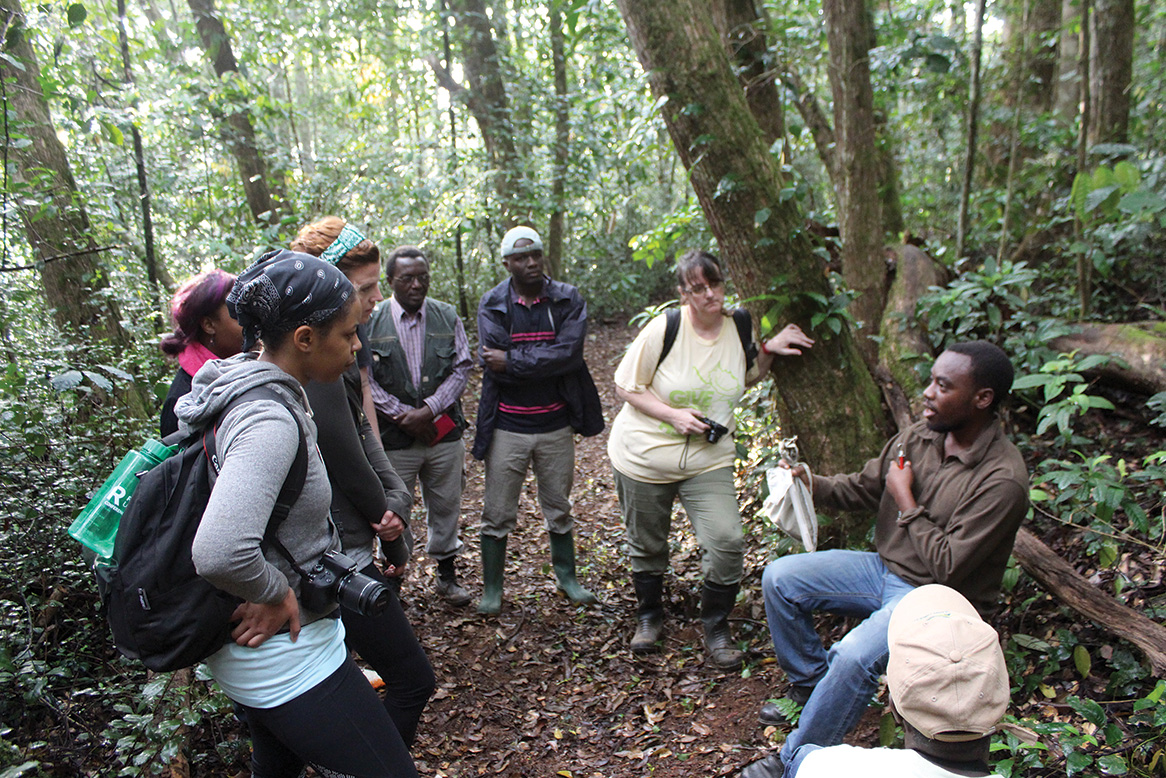
Professor Norbert Cordeiro with Tropical Biology and Conservation students

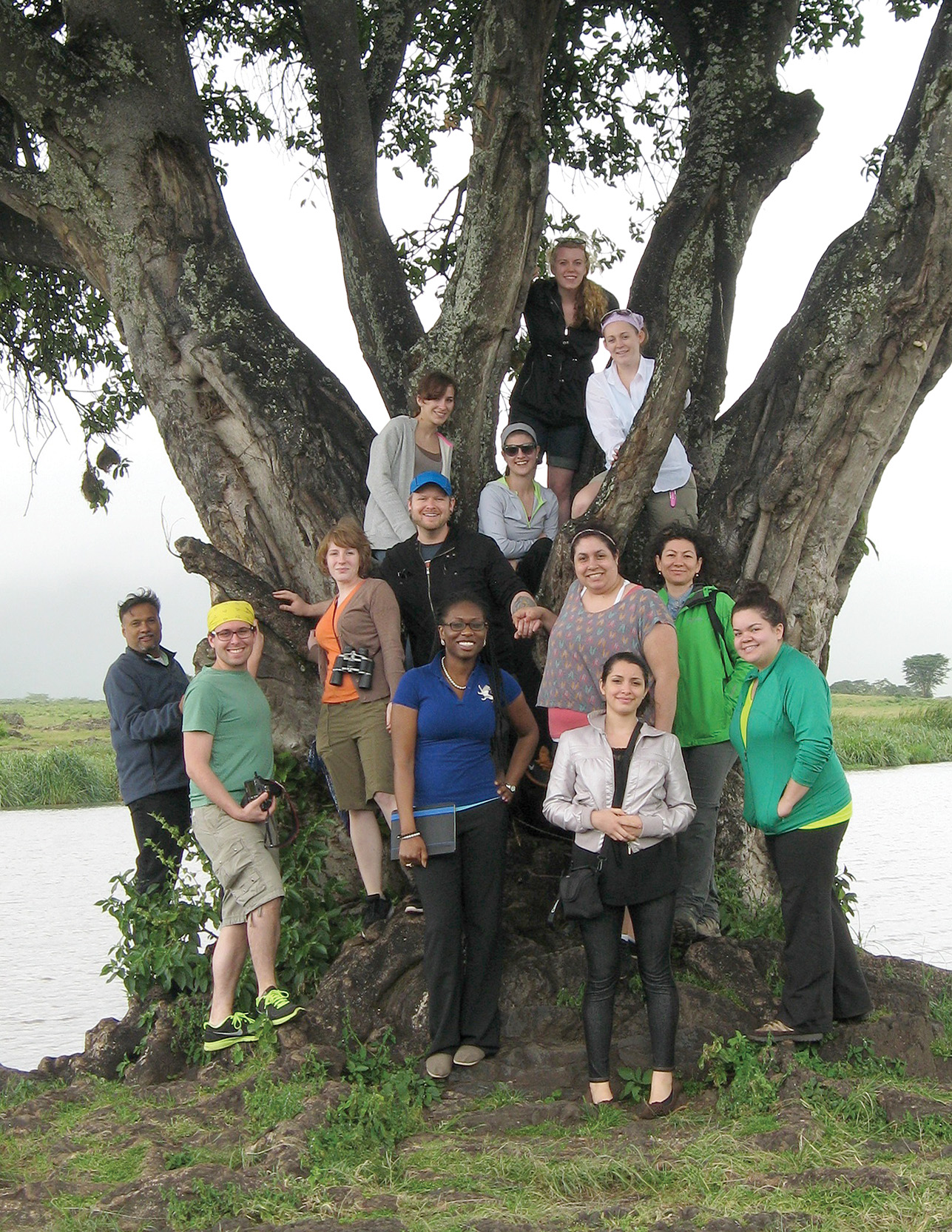
Professor Norbert Cordeiro (far left) with Tropical Biology and Conservation students at a wild fig tree in Tanzania, 2013.

A massive fallen tree blocks the only road to Mount Nilo, temporarily halting our team’s field visit to this remote, lush rainforest.

It is the early morning of Jan. 22, 2017. Though I have been to Tanzania on a number of occasions to prepare for trips with Roosevelt students taking my Tropical Biology and Conservation class, this is the first time in 22 years that I am returning to the Nilo Nature Reserve.

Together with colleagues Dr. Henry Ndangalasi from the University of Dar es Salaam, Victor Mkongewa, and Martino Joho of BirdLife Tanzania, I am certain the trip will be less about nostalgia and more about protecting the rainforest.

Emmanuel Mgimwa of BirdLife Tanzania demonstrates how to tag a bird for field study

Emmanuel Mgimwa of BirdLife Tanzania (far right) demonstrates how to tag a bird for field study, 2016. Pictured from left are students Brittney Austin, April Aloway, Wenke Dahl; Henry Ndangalasi, Nickson Ndangalasi; and professor Kelly Wentz-Hunter.

As conservation biologists, we are investigating how disturbance of the forest by local communities, including logging and farming, impacts the area’s globally endangered animals and plants.

The fallen tree throws a bump in our travels that could easily delay us by hours or days. However, being Tanzanian, my colleagues and I are all too familiar with the Swahili motto hakuna matata [no worries]. One way or another, we understand we will eventually make our way onward for the last hour of the trip to our camping site. All we need is a bit of patience, luck and the knowledge that an obstacle is only an obstacle if you let it be one.

Hardly 15 minutes later, along comes a noisy boda boda, a local motorbike taxi, the loud mechanical whirring of the engine drowning the rainforest’s melodious sounds of birds, shrills of crickets and tinkling of tree frogs.

For a time, the boda boda, too, is stopped by the fallen forest giant. Working as a team in typical Tanzanian fashion, we cut large tree branches and thick lianas that snake around the fallen tree. These woody vines use the tall trees to get to the forest canopy, only in this case they are to die with their fallen host.

A narrow space is carved away from a corner below the fallen tree, large enough to allow slanting boda bodas through with a little pushing and pulling.

One passes under with a passenger aboard, but the driver has given us two numbers of other drivers to call by cell. Victor calls, negotiates the fees, and within another half an hour, we leave our land rover behind, squeeze under the fallen tree, hop onto boda bodas with equipment, food and supplies, and head to our campsite.

My initial visit to Nilo in 1994 was the first time that Tanzanian biologists had visited the East Usambara Mountains since early exploration in the 1920s. On that trip, we rediscovered the endangered Tanzania mountain weaver, a bird that many believed was extinct. We also obtained the first record of the long-billed tailorbird, one of the most critically endangered species on the planet. This bird is found only in Tanzania’s East Usambaras, and is one of the reasons I returned to Nilo in January.

Our assignment was to locate tailorbird territories found earlier by the BirdLife field team in 2009, and to gauge the condition of the bird’s habitat. Climbing steep slopes and traversing about 15 miles a day for close to two weeks, we explored all 19 known territories, and discovered three new areas where the bird lives as well.

My involvement in this conservation effort is multi-faceted. I serve as BirdLife Species Guardian for the tailorbird (an honorary position), training Tanzanians in field-research techniques and collaborating with various partners and stakeholders on tangible strategies for conservation of this rare species.

Since 2005, my guardian work has allowed me to travel home to Tanzania at least once a year, giving me the opportunity to reconnect with family, friends and colleagues. These trips also reignite my love for nature and people, paving the way for development of sound conservation strategies for the East Usambaras.

I have developed important relationships in this remote area. It is not near the foothills of Mt. Kilimanjaro, Africa’s highest mountain, where I was born and raised. However, I have found the East Usambaras to be my home away from home, and the ideal place to engage my students in tropical conservation.

Perhaps there is an emotional attachment linked to raising my daughter for the first two years of her life in the East Usambaras, where her main toys were chameleons and tree frogs. Perhaps it is because the village we spend most of our time in is called Amani, which means “peace” in Swahili — a way of life embedded in the village’s aura, culture and landscape.

“Perhaps there is an emotional attachment linked to raising my daughter for the first two years of her life in the East Usambaras … No matter my personal reasons, one thing is certain: Tanzania needs all the help it can get.”

– Norbert Cordeiro, Associate Professor of Biology

No matter my personal reasons for attachment, one thing is certain: Tanzania needs all the help it can get. Approximately 65 percent of the country’s nearly 50 million people live below the poverty line. Given this circumstance, it isn’t surprising there is pressure on natural resources, like the rainforest, which has led to deforestation rates equivalent to the loss of 400,000 football fields per year over the last two decades.

Deforestation is pervasive in the East Usambaras, an area rich in flora and fauna found nowhere else in the world. We must make an effort to preserve this endangered place that is tied to local livelihoods and the environmental health of our entire planet. It is a calling we cannot ignore.

Collaboration and cooperation with others are key to preserving this environmental treasure, and my research, which frequently includes Roosevelt students, as well as my position as a species guardian, have allowed me to work with amazing people and organizations from all over the world.

Because of our efforts, I view the world as connected in inter-disciplinary ways, from professionals to local villagers, conservation managers to researchers, students to trained academics, and followers to leaders.

It is also a world where we work together to curb and remediate environmental destruction, at the same time always considering what is at stake for those who must try to get by in one of the world’s poorest countries.

With all of this in mind, I created an experiential learning course for Roosevelt students called Tropical Biology and Conservation 369-469. Since 2013, three classes totaling 40 students have visited the East Usambaras.

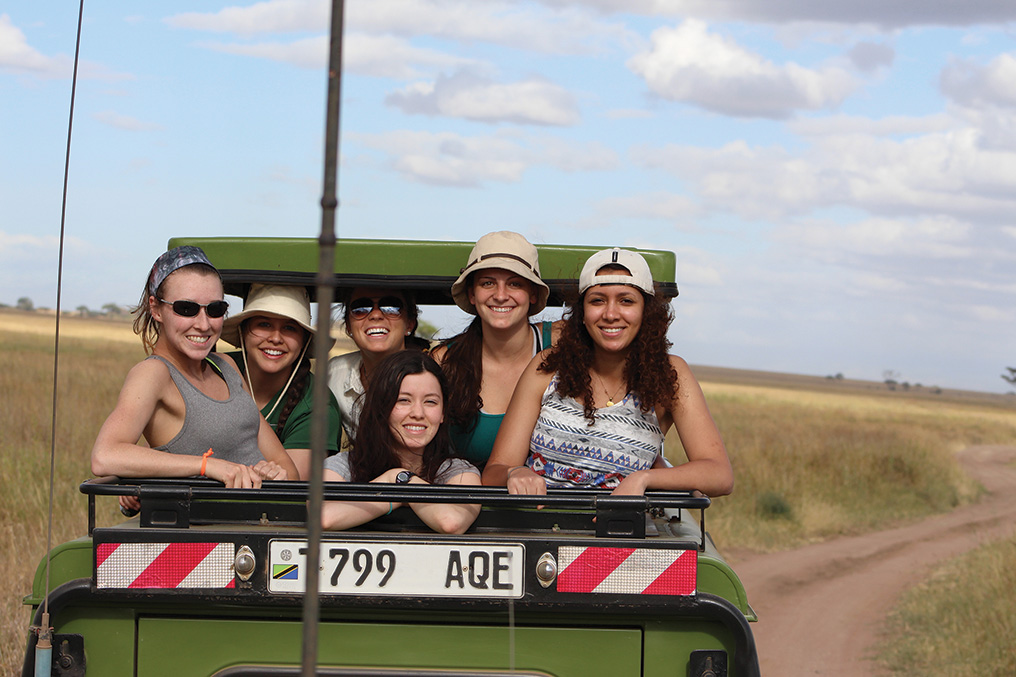
On these expeditions, my students learn about complexities involved in conserving the savannah ecosystem of the Ngorongoro-Serengeti; they then join local communities in efforts to combat rainforest destruction; and they plant thousands of tree seedlings that can help reverse deforestation.

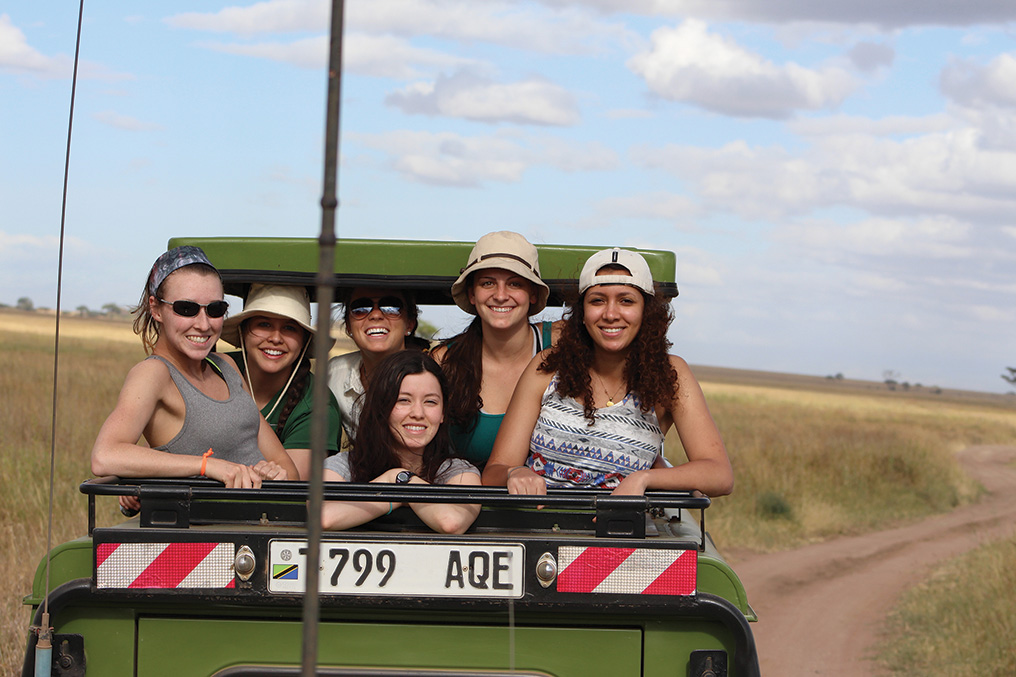
Roosevelt students travel into the Tanzanian savannah

Roosevelt students (from left) Olivia Downs, Maggie Dobek, Arielle Nausieda, Sarah Callaghan, Carli Schlaker and Najoua Alioualla travel into the Tanzanian savannah.

Learning should be about success, failure and the unexpected, as well as how to handle such outcomes in academics and in life. In this course, I want students to be aware that travel and fieldwork require flexibility.

Tanzania is a place that operates in a completely different cultural context than many of us understand. I inform my students in the classroom before we leave that they will have to work outside their comfort zone. I ask them to consider that “time” as they know it in the developed world isn’t perceived in the same way where they will be working in Tanzania. I encourage them to accept each day for what it brings.

“Learning should be about success, failure and the unexpected, as well as how to handle such outcomes in academics and in life.”

– Norbert Cordeiro, Associate Professor of Biology

In my experiences, especially growing up in Tanzania, failure and the unexpected are normal. How one perceives these outcomes determines personal and social growth. I believe not knowing what is to come, yet learning to expect the best of every situation, makes for more contentment with an experience and with life in general.

I don’t expect everyone to embrace this “glass half-full” mentality, but I do want my students to think about the concept during their travel and work in the wilds of eastern Africa.

It was therefore surprising to me that one of my former students, Roosevelt alumna Té Monoski, shared thoughts about the transformation that resulted from our first trip to Tanzania in May 2013.

“Our class trip to Tanzania was not just a momentary adventure, it was the experience that I would base future endeavors on for the rest of my life. Our trip forced me out of my comfort zone, and I loved every minute of it. Those few weeks in Tanzania, riding around in our jeep, to this day, remain one of the only instances in my life where every day was completely different from the previous. Every day I was learning and experiencing something totally new and wonderful … from birdcalls and mixed species [bird] flocks to rainforest vegetation and wildlife. It was addicting, and I felt the loss immediately upon returning to Chicago. Taking this trip to Tanzania cemented the way I choose to approach experiences in my life. Take chances, immerse yourself in new things, leave your comfort zone. Feel alive!”

Like almost all my students, Té was interested in understanding other cultures, being respectful of one another, and thinking about how we fit into the larger global environment. She and fellow student Corinna Dampf, along with the BirdLife Tanzania field team, used recorded birdcalls by a rare species known as the drongo to entice birds in the rainforest into hunting flight so that the drongo could catch insects from the birds’ wings.

The data collected studying the impact of the drongo’s habitat was the foundation for publication of a paper in the international peer-reviewed journal Biological Conservation. Their study also set the stage for further evaluation of how human disturbance affects interactions among dependent rainforest species, and the integrity of habitats.

Inquisitive, driven, inspiring — those are traits of the Roosevelt students I know and cherish. When I am with them, they give me energy and desire to keep learning new things and asking new questions. In the classroom prior to the trip, my students learn to become critical thinkers capable of problem solving while developing their projects at home and in executing those projects in the field.

Their projects have included: understanding butterfly diversity in the forest canopy vs. ground vegetation; conducting population censuses of the rare chameleons in farms vs. the rainforest; and identifying and estimating the abundance of animals in disturbed vs. undisturbed rainforest using motion-triggered camera traps.

It is awe-inspiring to see my students engaged. They learn how to work closely with local Tanzanian experts, some who speak limited English, and to eventually arrive at answers to questions their projects pose.

According to May 2016 graduation speaker Najoua Alioualla, the Tanzanian learning experience demands “many skills … such as critical thinking, adaptive learning and application strategies.” She calls it a “holistic approach to learning” that teaches not only conservation biology, but also training and implementation of independent, student-designed field experiments.

In the spring of 2018, I will return to Tanzania with more Roosevelt students. As always, I will make a reconnaissance visit as I did in January to plan, talk to local collaborators and field-test new project ideas. I am excited to work with an excellent team that includes Roosevelt biology professor Kelly Wentz-Hunter, who adds great depth by developing social interactions among students, and Dr. Ndangalasi, whose calmness and exuberance impart his immense passion for plants and all things Tanzanian.

There will be minor obstacles, like the giant tree that fell and temporarily blocked our path. However, I will be just as excited as my students about the upcoming journey, for Roosevelt students are a different breed. They ask insightful questions and are curious, open to new ideas and people, and authentically engaged in learning and activism.

“…Roosevelt students are a different breed. They ask insightful questions and are curious, open to new ideas and people, and authentically engaged in learning and activism.”

– Norbert Cordeiro, Associate Professor of Biology

I hope many will remember the motto hakuna matata when facing obstacles, as it will remind them of the resilience and flexibility they need to live in a world where each day brings the unexpected.


Professor Norbert Cordeiro portraitNorbert Cordeiro is an associate professor of biology at Roosevelt University. His specializations are in tropical conservation biology and ecology, and he serves as an editor for two African journals and one international journal in these fields. His research has focused in his native Tanzania, where he has spent the greater part of the last 27 years studying the ecology and conservation of the globally biodiverse East Usambara Mountains. His fieldwork with Roosevelt students has been possible in part thanks to student scholarships provided by Dr. Stuart Meyer (BS, ’56).

Standard
Alumni News, Fall 2016, Feature 2, Feature Stories

Alumni News Fall 2016

Golden Alumni Celebration

Golden Alumni

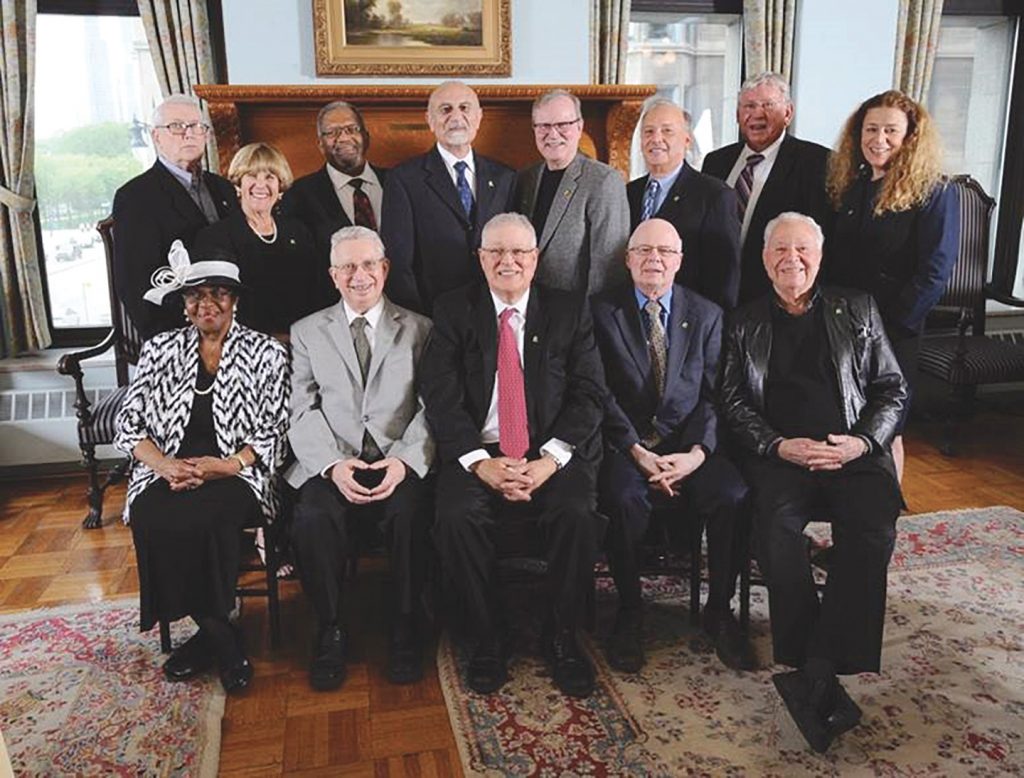
Members of the Class of 1956 joined Roosevelt’s spring graduates on the Auditorium Theatre stage during the spring semester Commencement ceremony in May. The alumni who celebrated their 50th graduation anniversary reminisced about their graduation and watched a new generation of Roosevelt graduates accept their diplomas.


Roosevelt Legacies

rufall16_pg64_3

Roosevelt alumni: Did your parents, children, aunts, uncles or grandparents attend Roosevelt as well? If so, then we want to hear from you. This spring, the Office of Alumni Relations is bringing together families with a legacy of Roosevelt graduates for a new special event to celebrate several generations of Roosevelt Lakers. We are inspired by your family’s deep connection to this very special University and look forward to honoring your ties to Roosevelt University.

If you are especially passionate about connecting with your Roosevelt legacy network, we invite you to join our growing Laker Legacy Committee. With your enthusiasm and gifts of time and talents, our upcoming spring legacy reception is sure to be a memorable one for you, your family and our greater Laker Legacy community.

If your family has a legacy of Roosevelt students and alumni, email or call Assistant Director of Alumni Relations David Solberg at dsolberg@roosevelt.edu or at (312) 341-2115. Please include your name, email address, graduation year and those of your family members who also graduated from or are currently studying at Roosevelt. We look forward to hearing your Roosevelt legacy stories and working together in connecting this unique and treasured alumni community.


Roosevelt Kicks Off Executive Mentoring and Career Readiness Programs

To help Roosevelt University students achieve their professional goals, the University has established two new innovative and parallel programs: an Executive Mentoring program and a Career Readiness program.

Academic achievement is not the only factor which affects post-college success in today’s competitive world. College graduates must exhibit a high degree of professionalism and leadership, including skills in cross-cultural communication, networking and presentation. Roosevelt’s new programs will help guide students through these essential experiences and provide expert training so that they can be confident in their careers upon graduation.

The Executive Mentoring Program allows Roosevelt students to interact with and to learn from experienced, successful professionals and to create relationships that will have a positive impact on their careers after graduation. In return, mentors will benefit from meeting and interacting with dedicated Roosevelt students and will experience significant personal fulfillment.

Mentors, who are Roosevelt trustees, alumni and friends, have at least seven years of professional experience and expertise in their field. Mentors give advice and feedback to students about their resumes. They guide students through the interview process and coach students in professional communication, proper attire and conduct.

Roosevelt University invites alumni and friends to guide students by serving as a mentor or career development professional.

Seasoned mentors introduce students to colleagues to help them create a professional network and provide and/or identify internship and job opportunities. They also provide insight about trends, issues and challenges in the mentor’s field of expertise. Students who have had the benefit of a mentor have an advantage over their peers who are entering the workforce, because they will have begun to build their professional network and will be aware of current issues and trends in their chosen field.

Mentors and students communicate at least once each month, including the summer months, and students are responsible for maintaining communication with their mentors. Students remain with their mentors until they graduate or until one of the parties decides to end the relationship. Mentors come from around the country. In this digital age, it is easy to maintain mentoring relationships electronically. Mentors and mentees will gather for an annual mentor appreciation luncheon in the spring semester.

Through the Career Readiness Program, Roosevelt students achieve a competitive edge, whether they intend to pursue a post-graduate degree or to enter the job market. The goal is to cultivate readiness skills and marketability that will prove to be invaluable when students apply for a job, a teaching assistant position or a spot in a highly competitive and selective graduate degree program. Students who complete the program earn a certificate. The program, which begins in the freshman or transfer year, focuses on developing skills to prepare for the workplace or graduate school.

Career Development professionals work with students to create an appropriate career plan of action, through one-on-one meetings, professional assessments, workshops and seminars. In collaboration with each of the six colleges at Roosevelt, workshops and seminars (both on campus and online) are customized to address specific areas of study to ensure that students are prepared, competitive and able to excel and enrich their lives.

Roosevelt University invites alumni and friends to guide students by serving as a mentor or career development professional. For more information and to sign up, contact Megan Bernard, associate provost for Enrichment and Retention, at mbernard03@roosevelt.edu, or call her at 312-341-3685.

Funding for this vital program is provided by The McCormick Foundation and trustees Steve Abbey and Bob Wieseneck.


Staying in the Spotlight

left to right: Scott Stangland, Courtney Reed and Stephane Duret

A dozen years have passed since Roosevelt University theatre alums Scott Stangland, Stephane Duret and Courtney Reed appeared together in a Theatre Conservatory production of Kiss Me Kate.

One of the directors of the fledgling Roosevelt show, Sean Kelley, who today leads Roosevelt’s Theatre Conservatory, remembers well the three alums – and couldn’t be prouder – as each has made it on New York’s Broadway.

“It’s pretty magical to realize that Roosevelt’s theatre program and these actors have come so far,” said Kelley, who considers himself to be more of a recruiter these days for Roosevelt’s theatre conservatory than he is a director of musical theatre.

That said, Kelley remembers working closely with:

  • Stangland (MFA , ’05), who starred in 2004 in Kiss Me Kate at Roosevelt’s O’Malley Theatre, and who today is understudy to the lead role in his second Broadway show, The Comet of 1812.
  • Duret (BFA, ’07), a Kiss Me Kate ensemble member who recently made his debut in Broadway’s Kinky Boots as both an understudy to the lead role and swing member of the New York show’s ensemble
  • Reed, also a Kiss Me Kate ensemble member and Roosevelt musical theatre graduate, who has been starring since February 2014 in Broadway’s Aladdin.

“It wasn’t just about singing and dancing. I remember telling them ‘If this is the career you want, your acting has to come first,’” recalled Kelley. “It’s wonderful for me to think back on how well they did in Kiss Me Kate,” he added. “But who could have known at the time that all three would be Broadway bound?” he said.

Stangland, who was a cast member in Broadway’s Once before starting in November as understudy to the lead role of Pierre, (being played on Broadway by Josh Groban), remembers Kelley casting and advising him on the Roosevelt set of Kiss Me Kate.

“I didn’t think at the time that I’d go on to pursue lead roles on Broadway, but here I am,” said Stangland, who calls the role of Pierre in The Comet of 1812 both “challenging and complex.”

“Looking back now, I realize I developed the work ethic I have today at Roosevelt. I was taught how to be a good person and how the theatre profession works. I credit Roosevelt for giving me the foundation to become strong at acting,” Stangland said.

Duret, who had roles in Chicago theatre before moving to New York in 2011 where he landed parts off Broadway and in international shows, also credited Roosevelt with helping him to polish his acting.

“Had I gone to New York right out of high school I wouldn’t have been ready,” said Duret, who spent the last three years preparing and auditioning for Kinky Boots.

“To know there is someone in your corner – and that’s Sean Kelley has been an amazing support. I really fell in love with the craft of acting at Roosevelt,” said Duret, who has been performing the show’s lead role as Lola.

The continuing star of Disney’s Aladdin, Reed also has credited her Roosevelt education with opening doors to professional theatres, people and opportunities. “I always found the faculty at Roosevelt and my fellow students to be dedicated, passionate and hard working,” she said recently.

While the Kiss Me Kate production is now history, Kelley believes the three Broadway actors it produced are a foundation for future interest in attending the Theatre Conservatory and the program’s continuing success.

“As our freshmen continue to choose Roosevelt’s theatre program, it’s people like Scott Stangland, Stephane Duret and Courtney Reed whom we should thank, for they are the ones who have brought Roosevelt continuing recognition,” said Kelley.


Alumna Forges Path on Broadway

Adrienne Walker

There are a lot of different ways to reach Broadway: For Alumna Adrienne Walker, the journey began as a student opera singer in Roosevelt University’s music conservatory.

A 2011 graduate of Roosevelt’s Master of Music in Vocal Performance program, Walker started her career in Chicago on the cast of the English-language opera, Porgy and Bess.

Then one thing led to another with Walker racking up roles in Chicago-area musical-theatre productions of Hair, Dreamgirls, Rent and The Color Purple, to name just a few.

Today, she is on Broadway, having made her debut in July in the role of the older Nala in Disney’s The Lion King.

“I went from doing classical voice to musical theatre. It was a complete shift, and I think the reason it’s worked out for me is because I’ve been able to adjust and have been enjoying myself,” said Walker.

At Roosevelt, the soprano studied with Roosevelt’s Chicago College of Performing Arts (CCPA) Artist Faculty Member Cynthia Clarey, who has had leading roles with opera companies all over the globe.

“Adrienne was one of my best students,” said Clarey, who has taught voice in Roosevelt’s music conservatory since 2008. “She has a beautiful soprano voice, and could have had an opera career, but I never felt she had the same feeling for singing classical music that she had for contemporary songs.”

Walker is quite confident of her vocal ability – and knows what to do to protect her voice, thanks in part to her training at CCPA. Her challenge has been preparing physically, but Walker is confident she’s gaining strength on stage day by day.

“Everybody has their own path, and this is mine,” said Walker, who believes the Roosevelt experience landed her in Chicago, which is where she needed to be to get started in the first place in musical theatre.


Harold Washington Lounge Dedicated

Congratulations to Roosevelt’s Chicago Southside Alumni Chapter for achieving its fundraising goal and honoring Roosevelt alumnus and former Chicago Mayor Harold Washington. The new Harold Washington Memorial Student Lounge was dedicated Nov. 2. It will provide Roosevelt students with a wonderful new place to study and continue Mayor Washington’s legacy of social activism.


Pizza and Theater

On Nov. 16, alumni gathered for a dinner at the Exchequer Pub before strolling over to the O’Malley Theatre to enjoy Roosevelt students in Promises Promises. Alumni are encouraged to watch their email for an invitation to the next evening of Roosevelt theater.


Parent Event

Parents of Roosevelt students were invited to a reception during new student move-in day in August. At the new event, parents learned about Roosevelt’s mission and goals and were welcomed to a network of parents, students, alumni and staff in Chicago and around the world.


BMO Harris

Roosevelt alumni who work for BMO Harris Bank in Chicago attended a reception at the bank on Oct. 24 that featured Roosevelt President Ali Malekzadeh. The alumni were encouraged to become mentors and support student scholarships.


Like keeping up with your alma mater? Want to learn more about new and upcoming alumni events in your area?

Follow us on Twitter, Facebook and Instagram for updates on Roosevelt alumni news and happenings on campus. We’ll not only be featuring news, networking opportunities and reunion events, but also memorable photos and stories to remember your days at Roosevelt. So give us a like, follow or tweet — connecting with your Roosevelt alumni network has never been easier. Make sure to use the hashtag #LifelongLaker when sharing your alumni memories on social media with us.

Standard