Balance Illustration
Faculty Essay, Feature 3, Feature Stories, Spring 2015, Uncategorized

Faculty Essay: What is social justice?

Susan Torres-Harding

Susan Torres-Harding is an associate professor in the Department of Psychology. Her research interests include understanding the impact of sociocultural factors on physical and psychological health and assessing the development of social justice attitudes and social activism. She earned her PhD in Clinical Child Psychology from DePaul University in 2001.

Social justice has always been an important value to me and a foundation for my career aspirations. Therefore, in 2006, I was pleased to join the faculty at Roosevelt University, a university founded on inclusivity and one with a strong focus on social justice and social action. I quickly realized that this was a friendly “home” where I could continue to discuss the impact of societal inequalities and discrimination in health care, my own area of research.

At the same time, I was intrigued by the reactions of friends and colleagues when I told them that I was now at Roosevelt. Invariably, I would meet people who had been at Roosevelt in those early years, and they would tell me stories about what a special place Roosevelt is. They described Roosevelt as a school where people of all races came together—a college unlike others. The pictures hanging on the walls of the Auditorium Building from those early years are visual reminders of this truly unique integration of people from diverse racial groups at a time when racial segregation was the norm. Today Roosevelt continues to be ethnically and racially diverse, but the world has changed since Roosevelt came into being in 1945. In addition to racial injustice, which regrettably remains prevalent in our society, we now truly confront other forms of discrimination based on gender, sexual orientation, social class and disability status.

As a Roosevelt psychology professor, I often talked in my classes about social justice as a key value for the Roosevelt community, but I found students grappled with the meaning of social justice. What is social justice? Whom is it for? Many students talked about social justice as if it were a high-minded ideal, unrealistic or impractical to do in real life. While we often discussed the need to use our knowledge and skills to work for a more fair and just society, I wondered if students had become overwhelmed with the amount of injustice in society and whether they believed they could actually make a difference in the world.

This led me to ask myself, what do students think social justice is all about? More importantly, I wanted to know what I could do to empower them to take action and strive to make a difference while at Roosevelt and after.

Social Justice Infographic? Illustration

In response to these questions, I started a series of studies to investigate how students understood social justice and how, if at all, they were learning about our social justice message and integrating it into their own lives. What did all of this talk of social justice mean to the students? And, how could we, as educators, facilitate the goals of students who had the sincere desire to promote social justice, but who also had the notion that it was too hard, impractical, unrealistic or idealistic? As an educator, I had a personal stake in these questions. I wanted to know if integrating social justice concerns into my classes was actually making a difference in how students viewed themselves, their communities, and their own personal and professional actions. In other words, were we living up to the Roosevelt University mission of educating “socially conscious citizens”? Does talking about social justice make a difference, or is it all a lot of feel-good talk that is disconnected from reality?

Students Define Social Justice

To begin answering some of these questions, my research team and I embarked on a study to first understand how students defined social justice. In textbooks, researchers and educators define social justice as “involving the recognition of the existence of social injustices based upon being a member of a non-dominant or marginalized social group.” These marginalized social groups can include people who live in poverty, women, people who are LGBTQ, people who are disabled, people from racial and cultural minority groups, and people who have severe mental illness or have a substance abuse disorder. Researchers also defined social justice as “a value or desire to increase access of power, privileges and socioeconomic resources to people from socially marginalized groups.”

But is this how students thought about social justice? I believed it unlikely that most students would think about social justice in such abstract terms. So we conducted a study with Roosevelt students simply asking how they defined social justice. We found that students were relatively consistent in their definitions. They tended to describe social justice as addressing injustices in equality and promoting opportunity, rights, fairness and acceptance of everyone, including people from diverse backgrounds. Interestingly, a significant proportion (44 percent) of the students said they engaged in some activity that promoted social justice.

Additionally, we asked students to describe what they were actually doing to promote social justice. In most academic papers, social activism is defined as political activism: marching in protests, attending rallies, writing legislators or voting in order to promote policy or legal changes.

They tended to describe social justice as addressing injustices in equality and promoting opportunity, rights, fairness and acceptance of everyone, including people from diverse backgrounds.

Interestingly, there was a tremendous range of responses to our question. In addition to political activism, we identified many different categories of social justice activities, including conducting social-justice-related research, being a member of or volunteering for an organization that focused on social activism, seeking out educational opportunities to learn more about social justice, engaging in advocacy on behalf of people from disadvantaged or marginalized groups, and talking to family and friends about social justice.

What was most impressive to me was the creativity displayed by students as they sought to promote social justice, as well as the diversity of issues addressed by their actions. Many students reported participating in marches, protests and other direct social actions for economic or racial change. One participant was working to promote social justice by acting in a short film that aimed to foster acceptance of LGBTQ youth during the coming out process. Some students were using a social justice approach when providing clinical services to children with developmental disabilities. A few reported that they were engaged in youth mentoring or were working on behalf of youth within the juvenile justice system. Others were working to promote racial justice, women’s empowerment and awareness around diversity-related justice. Still others described being LGBTQ allies or serving as advocates for women who have endured domestic and sexual violence. We also had students who volunteered at community or religious organizations to help individuals around issues of poverty and food security.

A significant number of students indicated that they spoke with family or friends about these issues. I think that these kinds of actions are more quiet forms of activism. Discussing issues of social justice with significant others might have the impact of changing attitudes or gaining support from them. In turn, this might ultimately increase awareness of social issues and might influence others to take action in some way in their own lives.

Many of the students’ efforts involved using resources available at Roosevelt University. These included engaging in social-justice related research, attending lectures, being part of student groups and organizations that promoted social justice such as RU PROUD (a lesbian, gay, bisexual, transgender, questioning and ally organization) and Students for a Sensible Drug Policy, engaging in social justice as part of their professional clinical training and volunteering as part of service learning. Although less than half of the students we surveyed reported engaging in activism, those who were active appeared to take advantage of the resources and opportunities available at Roosevelt, and many sought to integrate these experiences with their academic studies.

social justice infographic

Connecting With The Mission

The second study that my research team and I conducted focused on the role of the University mission in promoting positive attitudes toward social justice. I wanted to understand whether students who felt more involved at the University and agreed with its mission were in fact more likely to engage in social activism. Interestingly, I found that students who reported having a high sense of community—that is, feeling as if they belonged to the “Roosevelt family”—said they valued the social justice mission more.

Students who respected the social justice mission were much more likely to state that they intended to work for social justice in the future and felt that they possessed the skills to effect positive change. These students were also more likely to report having engaged in social activism, talk about social justice issues with family and friends and personally identify as social activists. It seems that Roosevelt’s social justice mission influenced students by impacting both positive attitudes toward social justice and facilitating the integration of social justice concerns into their personal and professional lives. Feeling a part of the Roosevelt community mattered because it allowed them to share in this core community value.

Balance Illustration

Thus, the mission and values of Roosevelt University are having an impact on our students’ actions. We are currently conducting additional studies where we hope to follow undergraduate students over time to see how their ideas and views of social justice might change as they move from freshman to senior year. We are also interviewing student activists to learn from their unique experiences, motivations and perceptions of their own work.

Indeed, it has been a pleasure to be able to assess and document the amazingly diverse and creative activism that is going on at Roosevelt. In addition to the examples listed above, Roosevelt students have participated in walk-outs and rallies in Grant Park, lobbied at the state capital, made videos to help educate others about traditionally marginalized groups, conducted interventions to promote health and wellness in our communities, and organized programs that give our students and people in the community a voice. We have so much to learn from our students!

An important part of social justice education is to trust that students are able to evaluate the information we provide and use it in a way that is valid, realistic and relevant to their own lives. Because students are able to come up with so many unique and creative ways to address injustices in their interpersonal and professional lives, professors should not provide answers, but rather should pose questions to help students recognize the real challenges in our society. We can encourage them to critically evaluate their own views and the views of others and provide them with a range of interventions and interpersonal skills that they can then use to confront a range of social problems and issues in their own ways. We also need to recognize that this is hard, risky work.

An important part of social justice education is to trust that students are able to evaluate the information we provide and use it in a way that is valid, realistic and relevant to their own lives.

Working for social justice is, by its nature, “radical” because it focuses on changing the status quo, challenging existing policies and can involve breaking rules. As educators, it is important that we not only talk about social justice but provide students with the skills they need to take action and be effective. Promoting favorable attitudes and teaching interpersonal intervention and activism skills will have a positive impact on students and help them fulfill the Roosevelt mission of creating “socially conscious citizens” who change the world.

Contact Susan Torres-Harding at storresharding@roosevelt.edu
Standard
John Dewey - Featured Image
Faculty Essay, Fall 2014, Feature 2, Feature Stories

What Would Dewey Say Today?

John Dewey Illustration 1

As a former classroom teacher in New Mexico and as a partner to Chicago Public School teachers engaging students in challenging curricula and teaching methods, I participated in a wide range of excellent educational efforts. But after several years in public education, I became distressed by both the disparities of resources among schools and societal prejudices toward some children whom I knew to be very capable of learning. I was frustrated and needed to learn new concepts while continuing to work with other committed educators. My solution was to enroll in the PhD in education program at the University of Chicago where I could explore innovative methods designed to support and enhance excellent and equitable educational practices for children and teachers.

During my studies at the U. of C., I encountered the educational philosopher John Dewey whose ideas and insights presented me with a new way to look at education and so much more. As an alumna of St. John’s College in Santa Fe, N.M., where “great books” and ideas are studied, analyzed and discussed in depth, I believe in the power of ideas. My immersion into Dewey’s ideas dovetailed with that philosophy and helped me see the real effectiveness of connecting ideas to action. I found Dewey’s ideas exhilarating because he delved into how people can and should work together to solve complex problems like those in education.

I decided to write my dissertation on Dewey and have since written several other papers on his pragmatic ideas about making things better. After earning my doctoral degree, I joined Roosevelt University’s elementary teacher preparation program. This is my dream job because at Roosevelt education is considered and practiced as a major tool for social justice and for supporting people in achieving their life dreams individually and collectively. This is an approach that Dewey surely would have endorsed.

I want to share with you who John Dewey was, what some of his main contributions were, and some ways in which his ideas are still relevant today. In particular, I want to share my excitement about how his ideas can still empower us to work together to make our world a better place.

Founder of the U. of C. Laboratory Schools

John Dewey (1859-1952) is known as a preeminent U.S. philosopher who wrote about many topics with an emphasis on education. Dewey founded the Laboratory Schools for children at the University of Chicago as part of his pragmatic approach. He wanted educators to both apply educational ideas to practice and to develop new educational ideas by reflecting upon the practical processes of teaching and learning. For Dewey, philosophy (or theory) was not distinct from practice. This was one of many dichotomies that he debunked. Highlighting the power of ideas for actively improving our world was one of Dewey’s contributions to the reconstruction of the field of philosophy. After leaving the University of Chicago, he was appointed chair in philosophy at Columbia University in New York. He wrote prolifically throughout his long life and his thinking and writings contributed greatly to the field of philosophy.

He explained that many of us often operate under a false separation of ideas and action which can weaken the power of putting ideas into action. Dewey argued that the value of ideas is measured by the problems they help people solve. In one main area of his writing, he proposed that education could and should be a force that helps learners develop their intellects so they can constantly critique the status quo and work with others to make the world a better place. “Progressive education” is the term that he and others used for this powerful idea.

Dewey’s sense of hopefulness is relevant and useful to all of us today. Although some criticize him for being utopian, I and many others applaud his hopefulness. It is based on reality and is a necessary disposition for people to have in order to solve problems and co-create a world that works well for everyone. Dewey’s hopefulness is based upon his observations about humanity that are stunning in their boldness and truth. For Dewey, every person everywhere matters. One main reason for this is that each person has talents that when identified and developed can contribute to the person’s own well-being and to the well-being of others whom she or he influences. For Dewey, all of our efforts impact others’ lives all of the time, but mostly, we are unaware of our interconnectedness and of our interdependence.

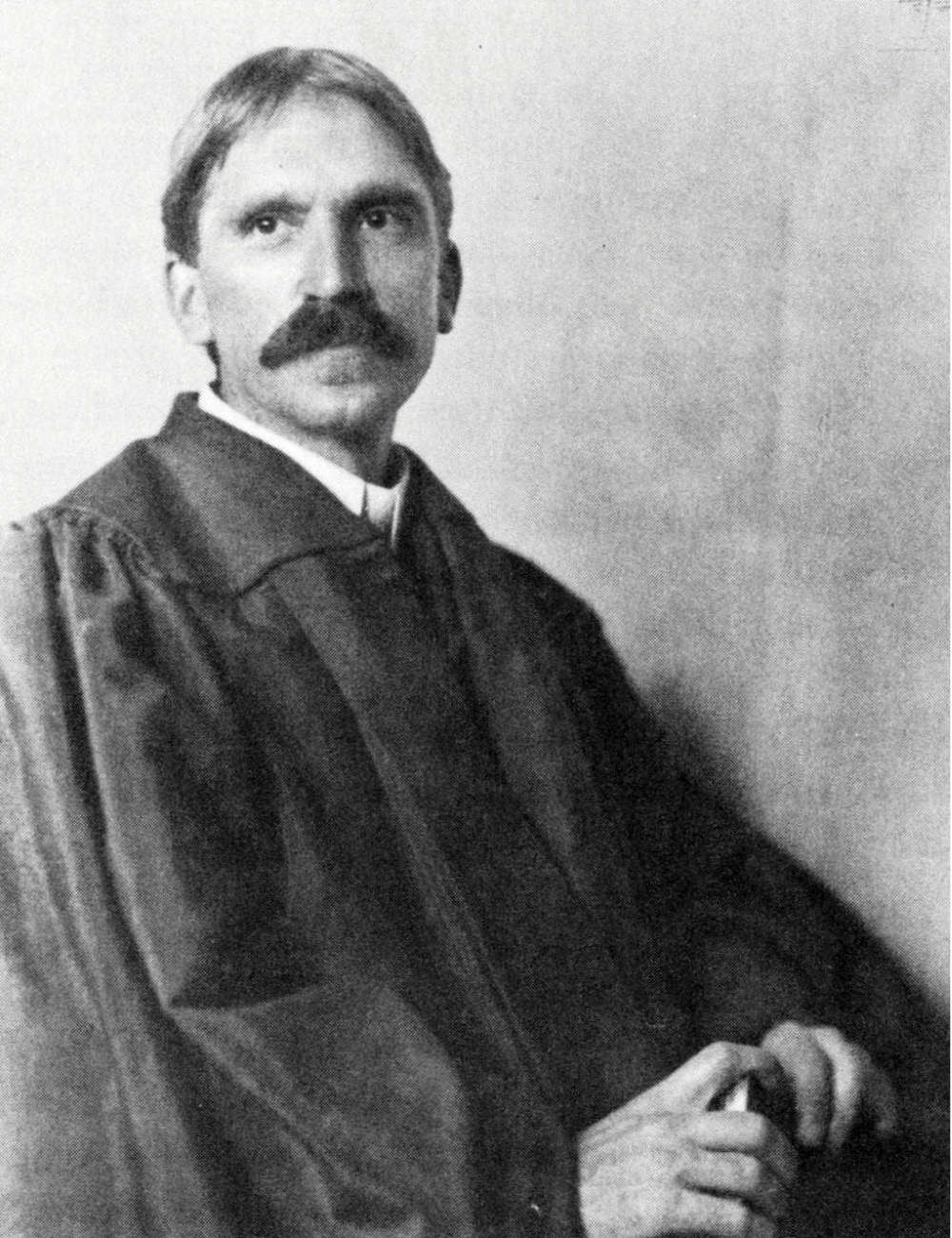
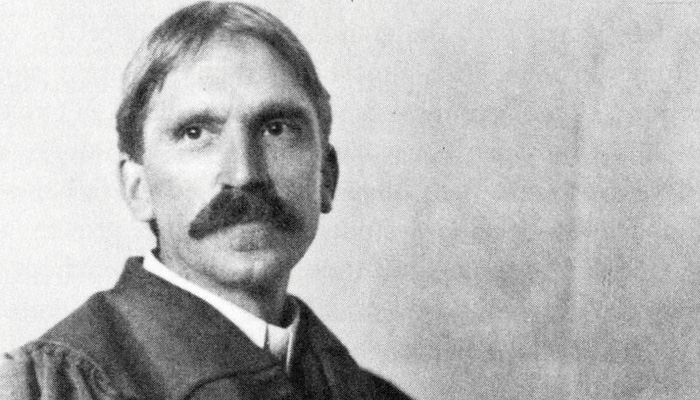
John Dewey

John Dewey, an American philosopher, psychologist and educational reformer, is one of the primary figures associated with the philosophy of pragmatism.

Dewey also states that everyone matters because all of us have ample intellectual powers that can be continuously developed. This gives us realistic hope that we can solve paramount problems, such as providing excellent education for all, and eradicating poverty, prejudice and injurious conflict, to name a few. When we have an educational system that acknowledges and helps each individual develop her or his capabilities and when we associate with one another freely and cooperatively in democratic ways, we can solve problems well. What is needed is a much more widespread belief in every individual’s potential and capacities, which requires efforts to reduce prejudice and discrimination. By doing this, everyone’s talents can be recognized. First-rate educational efforts are pivotal because they assist individuals in identifying their talents and developing them to their fullest. Dewey acknowledges that sometimes some of us need more resources than others in order to thrive and develop our abilities and intellects. One possible reason is that some of us have not had the necessary prior support. In these cases, just as a family gives more care and resources to a family member who is sick, society needs to give more to those in need. Furthermore, we need to reduce the negative societal influences and neglect that cause people to be in need.

Dewey believed that every child has the ability to learn complex subjects and I was able to see that philosophy in action when I analyzed the mathematical abilities of kindergarteners in the Chicago Public School (CPS) system. As an editor of the Everyday Mathematics (EM) curriculum, I interviewed (with the help of a Spanish translator when needed) hundreds of children. In these interviews, the children demonstrated strong understanding of math and problem-solving capabilities. Our effort at EM was to prove that a challenging and enriched mathematics curriculum could be used successfully in urban schools. We felt the need to show this in order to answer questions we encountered when trying to implement the curriculum in some city school districts. Many believed that only students in suburban schools could succeed with (and benefit from) such a challenging curriculum. Today, the Everyday Mathematics curriculum is widely used in CPS and in other urban and suburban school districts. Our experience with these hundreds of five-year-olds helped us persuade others. This is something that Dewey would support and is just one example of how to identify and develop the robust intellects that all children possess.

Dewey wrote extensively about democracy (with a small “d,” and no particular political party). Democracy for Dewey involved having people associate with one another in familiar groups, such as families and religious organizations, and with members of groups they don’t know well. He wrote that an important measure of the worth of a society includes the quality of communication and conjoint action between groups of people with different aims and interests. The more people take the actions of others into consideration and how their actions influence others, the better a society can become. Likewise, people need to learn how we are all interdependent on one another. Everyone in a democracy needs to listen to, work to understand and interact with individuals from as many different groups of people as possible.

Dewey was a public intellectual who voiced his opinions and took actions on current events to effect positive change. He promoted informed, organized and individual actions that improve society. He supported the idealistic and practical approach of teachers’ unions whose members worked in a spirit of justice for those who had suffered wrongs or who were in danger of being wronged, including both children and teachers. In just one of many examples from around the world, I believe he would have backed recent actions of the Chicago Teachers’ Union as it seeks to improve learning conditions for students and teachers and to further excellent education for all students. Dewey supported unions whose members worked to preserve the educational foci of schools when forces outside of education sought to use schools for their own benefit. The Chicago Teachers Union has stood up to the growing movement to privatize and fund education by corporations which could result in only a few children and youth receiving the best education. Dewey advocated for educational excellence for one’s own and “other people’s children.” Likewise, people all over the globe continue to stand up for and work towards improved life conditions and Dewey would support them.


Too often, youth are seen as empty and in need of being filled with knowledge or as trouble makers — as problems to be solved rather than as problem-solvers.
– Elizabeth Meadows


An Advocate of Relevance

Dewey’s debunking of dichotomies in every field he worked in as a pragmatic philosopher is relevant today. He wrote that thinking in “either-or’s” makes shallow the essential depths in which issues and concepts need to be explored in order to identify and improve the real issues and concepts involved. For Dewey, helping everyone experience life to the fullest in the present and mine the riches of past human learning and accomplishment were both key. Too often today, preparation is only seen as focusing on the requirements for the future, such as readying students for the next grade, college or job. This emphasis often diminishes the learning possibilities present in the lived experiences of children. For Dewey, fusing current life experiences with learning in school helps prepare youth for their futures.

Dewey’s advocacy of relevance as an educational lynchpin is important to reclaim today. It is vital for policy makers, elected officials, professional educators and members of society to be driven by this Deweyan question: What do children and youth need to know in order to develop and use their capabilities and talents to contribute to their own well-being and to the well-being of all members of their society? Often today, test scores are made paramount in a student’s progress educationally and in a teacher’s progress as a professional. This is done without a careful investigation into the meaning of the test scores and whether they truly measure well what is most important for students to learn. The high-stakes use of test scores does not focus on improvement, but rather on punishment. If test scores are too low, sometimes students are kept back a grade without additional measures to support the students’ development. In addition, teachers sometimes are let go from their jobs if students’ test scores fall below a set standard and school personnel can lose control of their school. Schools have been closed due to poor achievement as measured by tests.

Alternatively, assessments can be useful if they are used to further students’ and teachers’ learning. Dewey advocated focusing on both the child and the curriculum, a title of one of his many books, rather than one or the other. His is neither a child-centered nor a curriculum-centered education. It is both. Educators need to help students see how their interests and capabilities connect with the subject matters of the curriculum. They also need to guide the students’ interests towards learning about meaningful subject matters which have been developed by those who have preceded these children. Educators need to realize that children are capable of developing their powers to contribute new knowledge to humanity and facilitate their growth toward this end.

John Dewey Illustration 2

Dewey criticized routine educational practices in his day when children were separated from the day-to-day life of their community. An example of this was (and sometimes still is) when students’ chairs are literally or metaphorically bolted to the schoolroom floor. Dewey explained how this restricts students from following their social motivations to learn with one another and to venture outside the school walls to take part in the community’s activities. Ideal education facilitates children learning from their elders. Education was and can be again an organic part of the economic and artistic endeavors of the community. Through education, the young can not only receive learning from their elders but they also can develop and contribute new knowledge back to the community.

At the same time, relevant today is Dewey’s honoring of all children as capable and original thinkers and creators of new human knowledge. Too often, youth are seen as empty and in need of being filled with knowledge or as trouble makers – as problems to be solved rather than as problem-solvers. As noted earlier, Dewey’s philosophy is that every individual matters to the community and every person needs to be challenged and nurtured for their well-being and that of others. In terms of children being seen as making trouble, Dewey wants education to prepare students to fight the status quo, to take stands, and to work toward positive change for all.

In conclusion, Dewey’s pragmatic philosophy can help us work together to make our world a better place. His hopefulness, his belief in the worth of each person to contribute to the well-being of all, his definition of democracy as interaction and awareness of interdependence, his insistence that education prepares students to criticize current practices and work toward improved conditions for all, and his declaration that those in need be assisted compels us to think and act accordingly. Do we follow Dewey? Will we? Let’s.

Standard