Faculty Essay, Feature 3, Spring 2016

Living in Denmark: Lawrence Howe’s Fulbright Fellowship

LarryHowe_FINAL

In 2013, finally heeding the advice of experienced friends and colleagues, I decided to apply for a Fulbright fellowship.

Named for its founder, Senator William Fulbright, this 70-year program has fostered educational exchanges between the United States and countries around the world. Its goals have remained true to Senator Fulbright’s vision: to promote mutual understanding and international co-operation.

As I scrolled through the surprising number and variety of opportunities on the Fulbright website, the position of Distinguished Chair in American Studies at the University of Southern Denmark in Odense stood out as an attractive match. Having taught American literature from an interdisciplinary perspective for a long time, I saw this position as my way to help achieve the Fulbright goals.

I wasted no time in assembling the application materials and my three recommenders promptly submitted letters of support. Then the waiting began. Seven months later, I was thrilled when the acceptance letter from the Danish-American Fulbright Commission arrived.

In addition to expressing congratulations, the letter also detailed how much I had to do. First, I had to request leave from Roosevelt, which was generously granted. In addition to complying with visa requirements and addressing all of the practical considerations of living away, I had a lot to learn about Denmark. Scandinavia had never been on my itinerary in the handful of times I’d been to Europe.

A quick search turned up many references to the Danes as the “happiest people on earth,” countered by occasional criticism that cast them as cold and unwelcoming. I decided to keep an open mind. Fortunately, the Danes I met were the happy ones. Thanks to their genuine friendliness and the vital culture I came to appreciate, I had a fantastic year. At nearly every step along the way, there was something new to learn and to experience, all of which has subtly re-focused my perspective.

With only 5.5 million people, Denmark realized that maintaining a Danish-only policy could lead to isolation. So throughout their formal education, students learn English.

For Americans contemplating living in a foreign country, language can be a barrier to making the leap. Denmark minimizes the obstacle. Although it’s not officially a bilingual culture, most Danes speak English very well. With only 5.5 million people, Denmark realized that maintaining a Danish-only policy could lead to isolation. So throughout their formal education, students learn English.

To be sure, I had moments of uncertainty. I couldn’t read a local newspaper or follow a television broadcast, signs were often a mystery and on early trips to the grocery store I returned home with something other than what I thought I had purchased. But Danes are very approachable and easily shift to English for those who need help.

I started off with the best intentions of learning the language. So I was surprised when some people discouraged the idea. There’s a common riddle in Denmark that suggests their reason:

Q: Why is Danish the language spoken in heaven?
A: Because it takes an eternity to learn it.

Granted, to American ears, Danish is a challenge. The vowel sounds are subtly complex and Danes drop consonants seemingly indiscriminately. On more than one occasion I had to ask someone to write out the name of a street because I simply couldn’t match what I was hearing to the names on the map. Forget about trying to understand directions on the telephone. This aural difficulty and the unlikelihood of reinforcing what little I might learn upon returning to the U.S. persuaded me to take the easy way out. Although I have a shadow of regret, I think those who advised me had my best interests in mind. In the end, I think that the time I would have dedicated to puzzling over foreign sounds was better spent encountering the culture face to face.

Danes from across the political spectrum staunchly defend their cradle-to-grave social welfare system. Although high tax rates add significantly to the cost of living, Danes accept taxes as a worthwhile social investment. The nation’s middle-class stability is founded on shared responsibility for life-long education, universal health care, generous parental support, unemployment assistance and secure retirement income.

These cultural attitudes are reinforced by a practical approach to solving problems. Take, for example, their bicycle culture. In the 1970s, increased reliance on cars was causing extreme congestion, choking off the quality of life. As a result, they instituted high taxes on cars – adding as much as 180% to the sticker price – as a disincentive. Simultaneously, they committed to building and maintaining safe bicycle routes both in cities and in the countryside. Today, while many still own cars, a solid majority of Danes ride bicycles. It’s common to see even elderly people pedaling around, promoting health and fitness as well as relieving traffic congestion.

Because my wife and I ride bikes a fair amount, it seemed a good idea to make our first acquaintance with Denmark on two wheels. We mapped out a leisurely eight-day tour of several islands. The largest of these, Funen, where we would be living in the city of Odense, is centrally located between the Jutland peninsula to the west and Zealand, site of Copenhagen, to the east. We rode through quaint villages with traditional, white-washed, step-gabled churches, and across rolling farmlands with thatched-roof houses and stone barns. And then from the modest landscape rose Egeskov Slot (pronounced Áy – us – coh Sluh –see what I mean?), a sixteenth-century castle with world-class gardens.

After this close-up introduction to the Danish countryside, we headed to Copenhagen for the Fulbright orientation. The two-day meeting focused on useful information about Danish life and educational culture, but it also provided an opportunity to meet my Fulbright cohort.

The six Fulbright faculty or professional fellows and seven Fulbright students were accomplished in a wide array of fields – health-care policy, law, engineering, ceramics, finance, mineralogy, mathematics, bio-medical research, public art focused on sustainability education, and off-shore wind energy. After a tour of one of the world’s most picturesque cities, we scattered to our postings around the country.

A “Passing Grave” (c.3,500 BCE) on the island of Aero in Denmark. Photo by Judy Frei

A “Passing Grave” (c.3,500 BCE) on the island of Aero in Denmark. Photo by Judy Frei

My teaching experience afforded an easy transition. My professional responsibilities were quite familiar: two courses each semester – an American literature survey in each term, a Mark Twain seminar for seniors in the fall, and a graduate seminar on the literature of American race relations in the spring. My experience in the classroom was not markedly dissimilar to teaching in the U.S. But there are notable differences in the structure and expectations of Danish education. The most significant structural difference is that all five of the national universities are public. And not only is tuition free, but students also receive a stipend for enrolling. Each university has a different emphasis, with very little competition among them. For example, USD has the only American Studies program. Students who want to study that subject area must commute or move to Odense.

While faculty determine the specific content of their courses, a national educational body determines the volume of work to be assigned across the curriculum. Reading requirements are roughly 30-40 percent less than what I typically assign in a course at Roosevelt. Students are free to do as much or as little of the assigned reading as they choose, or to attend class meetings or not.

Student success is based solely on the final exam. Although the final exam is a high-stakes performance, students have multiple opportunities to succeed. Anyone not earning a passing grade may sit for a follow-up exam two months later. If needed, an additional opportunity is available six months after that.

My Danish colleagues see shortcomings in the system and would prefer to have more authority over academic protocols. For example, they contend that students would benefit from a more rigorous volume of reading and writing assignments throughout the semester, something closer to the practices at U.S. universities.

While I agree with their call for more writing, my Danish experience has prompted me to reconsider the volume of reading I typically assign. Danish faculty also criticize students’ irregular attendance, with concern that a few may enroll simply to take advantage of the stipend benefit. Although this may be true in some cases, attendance in my courses was consistent and regular, about what I see at Roosevelt. In fact, I was impressed by the turnout for 8 a.m. class meetings, especially because some students commuted as much as two hours by train and bus.

Denmark’s population is much more homogeneous than in the U.S., and this was reflected in the students I met. The large majority of them were Danes, though some were either immigrants or born in Denmark to immigrant parents, mostly from the Middle East. Although the current political climate has led to a closed-border policy, Denmark has traditionally welcomed refugees. Still, those who arrived under the more liberal policy and even their Danish-born children have experienced a social divide, an indication that the egalitarianism has not been fully achieved.
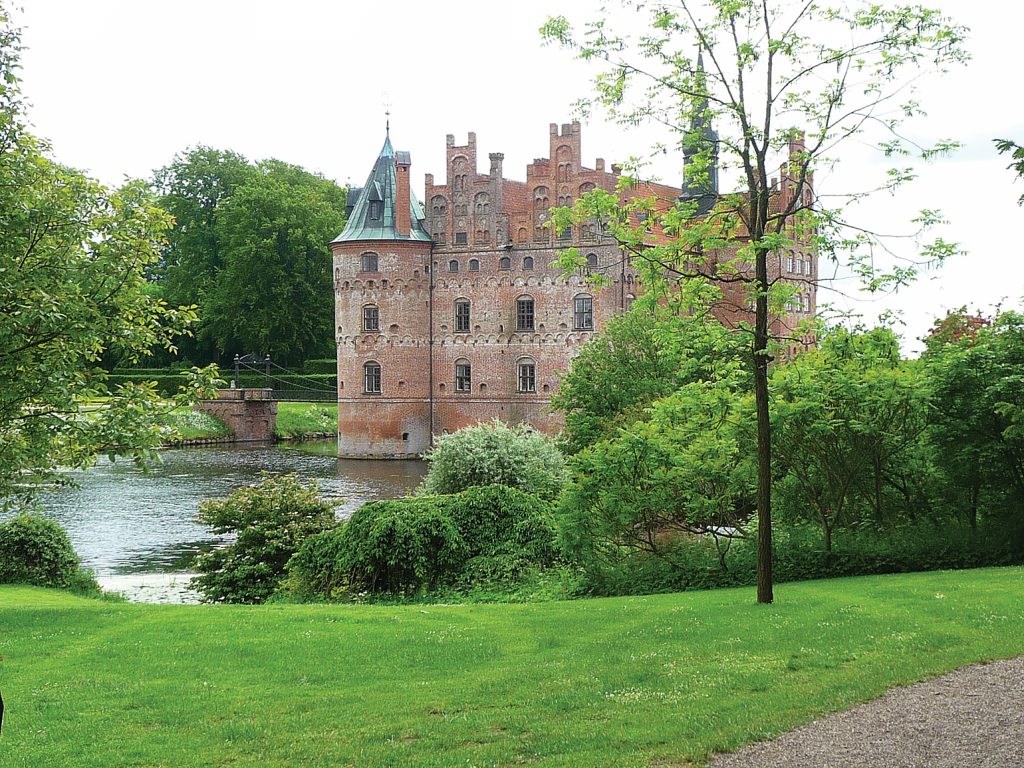
Egeskov Slot built in 1554 on Funen in Denmark

Egeskov Slot built in 1554 on Funen in Denmark

A few of my students were from other European countries, enrolled through the EU-sponsored Erasmus exchange program. Four Chinese students studied with me throughout the year. Like me, they were enjoying the opportunity to live abroad and to learn about another culture.

Danish students have very informal relationships with their faculty and are curious about them. At receptions and social events that bring faculty and students together, I had many conversations with students about different aspects of American life. They know a lot about the U.S. and are eager to know more.

I’ve maintained contact with quite a number of the students. Some have asked me to write letters of recommendation for applications to graduate school, internships or to study in the U.S. One of my Danish students is studying at Roosevelt this spring. I sponsored one of my students to conduct field research in the U.S. for her bachelor’s thesis on Native American language preservation. Before heading off to interview educators in South Dakota and Wisconsin, we hosted her for a few days and showed her Chicago sites. These personal contacts and correspondence with students continue to remind me of the value of my time in Denmark.

At a meeting of the American Studies student organization on the eve of the 2014 U.S. mid-term elections, I was invited to explain this phase of the political process. Both the turnout and the volume of questions were impressive. In return, students were an educational resource for me. Six months later, they explained to me how their 2015 parliamentary election had realigned their government.

Regardless of the outcome, it was a refreshing change to be in a country where the publicly-funded national campaign is compressed into three weeks.

Regardless of the outcome, it was a refreshing change to be in a country where the publicly-funded national campaign is compressed into three weeks. Political advertising is limited to uniform-sized placards posted on light poles – no robo-calls, mass mailings or television ad blitzes. The main outlets of the campaign are two televised debates, during which candidates from the 10 parties (yes, 10 parties) highlight the differences in their platforms. Voter turnout is quite high – almost 86 percent. And on the day after the election, the new government is installed while the various parties continue to negotiate over coalitions that will optimize leverage.

As much as I was able to learn on campus, I was even more enriched by the community emphasis on the arts as necessary to their quality of life. Communities both large and small support their local Kulturhus, where lectures, workshops, exhibits of a variety of arts and crafts, and musical performances take place.

Denmark’s music scene is diverse in ways that I had not anticipated. While Scandinavian folk holds its own among the more dominant forms of contemporary pop, Danes are jazz enthusiasts, which is more popular there than in the U.S. In the 1960s and ’70s, a number of African-American jazz musicians — Dexter Gordon, Ed Thigpen, Thad Jones, among others — emigrated to Denmark, finding both a community of Danish jazz players with whom they collaborated and a society more musically and socially accepting. In addition to hearing accomplished players at weekly sessions at a jazz club in Odense, I attended a concert of avant-garde jazz at the Nordic cultural center, featuring musicians from the Faroe Islands.

My year in Denmark coincided with the 150th anniversary of the birth of Carl Nielsen, Denmark’s most revered composer. An American Studies colleague and another Danish friend sing in choirs that performed concerts during this year-long celebration. One memorable performance was in Nørre Lyndelse, Nielsen’s childhood hometown. Listening to his music in the small church where his musical career began was a memorable authentic moment.

The other admired cultural figure of the region is Hans Christian Andersen. The author of famous tales like “The Emperor’s New Clothes,” “The Ugly Duckling,” and “The Little Mermaid,” Anderson was born in Odense. The city capitalizes on his celebrity much like Oak Park, Ill., promotes itself as Ernest Hemingway’s birthplace or Hannibal, Mo. claims Mark Twain. And like those two American figures, Andersen left his hometown in his teens.

Larry Howe touring on one of nearly 2,000 bike trails in Denmark. Photos by Judy Frei

Larry Howe touring on one of nearly 2,000 bike trails in Denmark. Photo by Judy Frei

As fulfilling as it was to learn so much about the history, society and culture of Denmark, the most gratifying aspect of my Fulbright experience, by far, was the friendship. My American Studies colleagues are extremely interesting and generous people. Their wealth of world experience, cross-cultural knowledge and good humor made for engaging and informative conversations and seamless connections among us.

I was frequently surprised at how current they are with American popular culture and contemporary issues in politics, business and sociology. A few root for one or another NFL team. The most dedicated fan and I had adjacent offices and he was eager to talk on Mondays about the weekend’s results. He even followed the NFL Draft and was thrilled to discover that it was held at Roosevelt University.

Another colleague invited us to see her roller derby team skate against a team from Aalborg. In addition to events like this, Danish friends welcomed us into their homes. There was always food and drink – smørbrød and beer, or coffee and wienerbrød (ironically, “Danish” pastry is an imported delicacy, as the name “Vienna bread” suggests). Try as I might, I never acquired the taste for pickled herring or a chaser of schnapps.

In winter, Danes light their homes with the glow of candles. Although the climate is not as severe as it is in Chicago, winter daylight hours are short. As a point of comparison, a Chicagoan would have to travel north almost 1,000 miles to match the latitude of southern Denmark. While the candles soften the darkness of the season, potted orchids on the window sills of nearly every house are a reminder of sunnier days ahead. Offsetting the darkness of winter, the midsummer sky begins to brighten at around 3:30 a.m., and remains light as late as 10:30 p.m. So the social life moves outdoors and also lasts longer during those summer months.

The opportunity to live in Denmark for a year was fascinating in more ways than I had imagined. I grew so accustomed to the rhythm of life there that my return date crept up on me without much notice. Short-term vacations to visit new places have their benefits, but only an extended stay provides sustained cultural exposure and a durable connection to people.

The Fulbright goals of mutual understanding and international co-operation were certainly fulfilled for me. I hope that my Danish friends feel that I reciprocated. For the many opportunities of that year, I’m grateful to more than a few people and institutions – to my Danish friends, to the American Studies program at USD, to the Danish-American Fulbright Commission and especially to Roosevelt University for granting me the leave time that made this rewarding experience possible.

Of course, I’m grateful also to those colleagues who encouraged me to apply for a Fulbright in the first place. I’d be happy to play a similar role for Roosevelt colleagues, alumni, and students. Like I did, they might find it the opportunity of a lifetime.


Larry Howe recently celebrated his 20th year on the Roosevelt faculty. A native of Boston, he completed his bachelor’s degree and his doctorate at The University of California at Berkeley. He is the author of Mark Twain and the Novel: The Double-Cross of Authority (Cambridge University Press), and is co-editor of and contributor to two essay collections—Refocusing Chaplin: A Screen Icon Through Critical Lenses (Scarecrow Press) and Mark Twain and Money (University of Alabama Press, forthcoming 2016.) When he’s not teaching or researching a wide range of topics in American culture and film, he plays mandolin in Compass Rose Sextet, a world folk and gypsy jazz ensemble.  He and his wife, Judy Frei, live in Oak Park, Ill.

Standard
Faculty Essay, Feature 4, Spring 2015

The Composing Process: First Note to Final Score

stacy garrop

Part 1: Pre-Composition

I am a composer and a teacher. As a composer, I write music for chamber ensembles, choirs and orchestras. My recent works include Mythology Symphony, which had its world premiere by Roosevelt University’s Chicago College of Performing Arts Orchestra in January 2015 (and will be commercially released by Cedille Records in November 2015) and Terra Nostra, a large-scale oratorio for two choirs, four soloists and a chamber orchestra, which will receive its world premiere in November 2015 in San Francisco. Along with composing, I thoroughly enjoy teaching. Since September of 2000, I have taught composition and orchestration to undergraduate and graduate students in the Chicago College of Performing Arts.

At performances of my music, I am frequently asked how I compose. Do I hear it all in my head? Do I use computers to assist me? Have I ever experienced writer’s block? These are excellent questions, all of which I will address as I de-mystify the composing process. The following steps and strategies are not only what I use when I compose, but also what I teach my composition students.

For me, the first stage of beginning any new piece is research. This stage involves studying other composers’ works, as well as familiarizing myself with the particular instrumentation for which I’ll be composing. For instance, when I wrote Helios for brass quintet (an ensemble that consists of two trumpets, horn, trombone and tuba), I became acquainted with the ensemble by studying brass quintet repertoire, listening to recordings and attending live concerts. These activities helped me to ascertain the ensemble’s strengths and weaknesses, as well to as detect possible performance issues (the tuba, for instance, needs a lot of air to produce sound and performers tire quickly, so a composer must leave ample time between passages for the musician to breathe). The more I understand how the ensemble works, the better I’ll be able to compose for the group.

Along with conducting research, I brainstorm about possible sources of inspiration. When a work is commissioned, I find out from the commissioners what their interests are and incorporate these interests into my brainstorming process. In the case of Noir Vignettes, my double bass and piano piece, the commissioner told me of his fondness for movies, and of his particular interest in the director Alfred Hitchcock. I watched Hitchcock’s Vertigo and Rebecca and, while I didn’t care for Hitchcock’s filmmaking style, I became very intrigued with film noir, the genre for both of these movies. I watched several more movies in this style, including The Lady from Shanghai, Double Indemnity, This Gun for Hire and The Maltese Falcon. After watching each movie, I wrote down my thoughts on various aspects; for instance, a femme fatale could have an exotic, enchanting sound, whereas a gumshoe detective smoking his last cigarette of the day should sound slow and jazzy. Alternately, if the commissioner wants me to choose the work’s topic, I select a subject that is of personal interest to me. Recent topics include the Greek myth of Icarus, the boy who flew too close to the sun, and a depiction of the starkness of Wyoming’s landscape.

Self-doubt and high expectations can make it difficult for a composer to compose.

At some point during the brainstorming stage, I start putting pencil to paper. This can be a rather daunting moment. What if the notes I write down aren’t interesting? How can I possibly fill up the entire page with thought-provoking, well-conceived music? Self-doubt and high expectations can make it difficult for a composer to compose. To aid myself through this part of the writing process, I use a strategy: whenever I begin a new piece, I write one minute of music a day for seven days. It doesn’t have to be a great minute of music, or even a good minute, but it has to be one full minute. The music need not be continuous – I can compose three different ideas, each 20 seconds long. Giving myself permission to compose without judgment is an essential element of the strategy. While the first few days of composing are typically challenging, I eventually produce ideas that have real potential. I also get increasingly focused on how to creatively use the instruments.

Once I have written several minutes of music, the sorting process begins. I select the strongest, most intriguing ideas and start to flesh them out further. To do this, I analyze the musical material from every angle. What musical pitches comprise the melody? What are the intervals between each set of pitches? How would it sound if I turned the intervals upside down or reversed their order? Can I extend these ideas into longer phrases? What if I move the pitches higher or lower? I will often cover entire tabloid size pieces of paper with various configurations of each musical idea and refer to these papers throughout the entire composing process when I need more material from which to draw. As my musical materials become more substantial, I create the overall formal structure, or “roadmap,” of the entire piece. Having a roadmap is critical, for how can a piece have direction if you don’t know where it is going? Building from the musical materials that I’ve been developing, I draw a graph for the work with the x-axis representing time and the y-axis representing the level of tension in the music. The graph can show many other elements as well: how many sections or movements the piece will have, what musical characteristics each section or movement will contain and so on.

Part 2: Composition

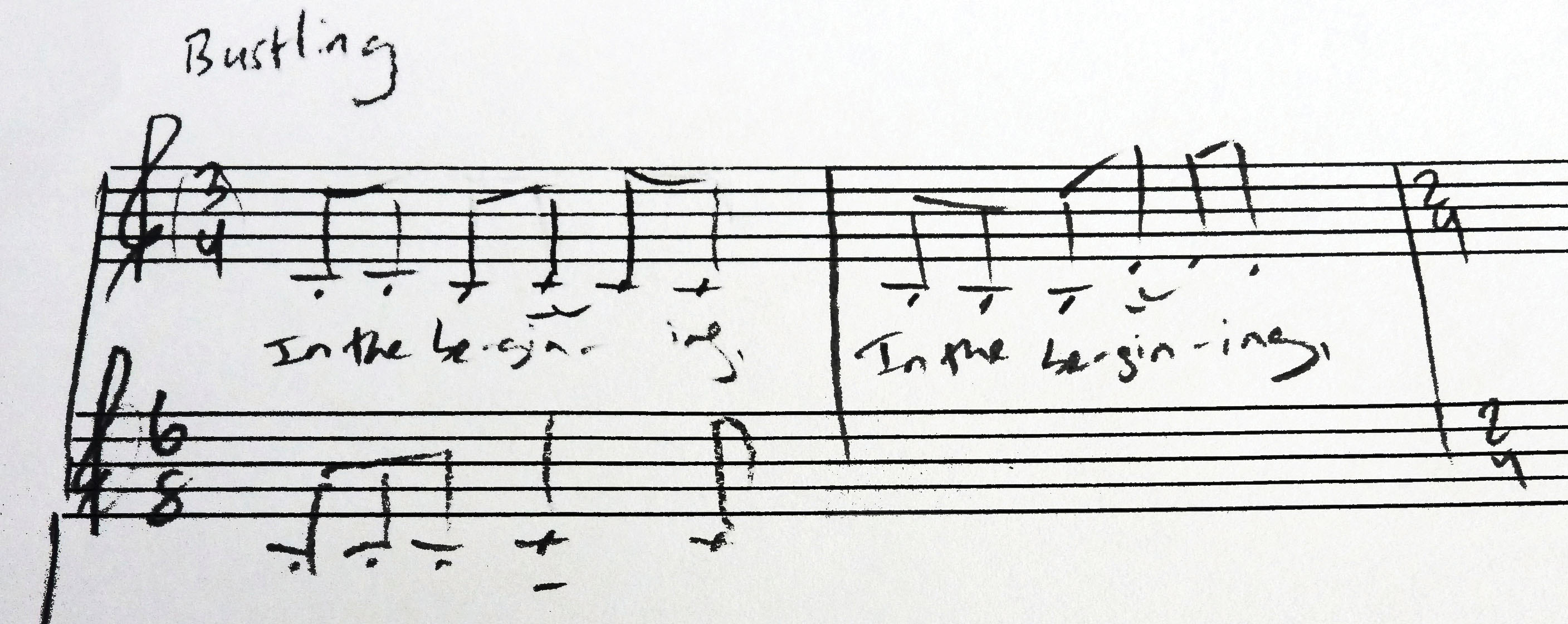
In the beginning sketch 1

Work in Progress: Handwritten sketch of Terra Nostra by Stacy Garrop

Once I’ve developed enough pre-compositional work, I delve completely into composing. This is the most exhilarating stage of the process as I am entirely engaged in sketching and developing my musical materials into full sections. For a while, I am conscious of every decision that I make while composing; however, the further I get in composing a piece, the more these decisions are being made subconsciously. I tend to write faster as this process moves along, as well as find it difficult to do anything but compose once I’ve fully hit my stride. Going to concerts, seeing friends for dinner, running errands – all of these can break my concentration on the piece and make it hard to resume where I left off. As a result, I generally find it easier to compose in large blocks of time, usually anywhere from two to four hours. Once I’ve reached a natural resting place, such as a break between sections or the end of the movement, then I will stop for the day.

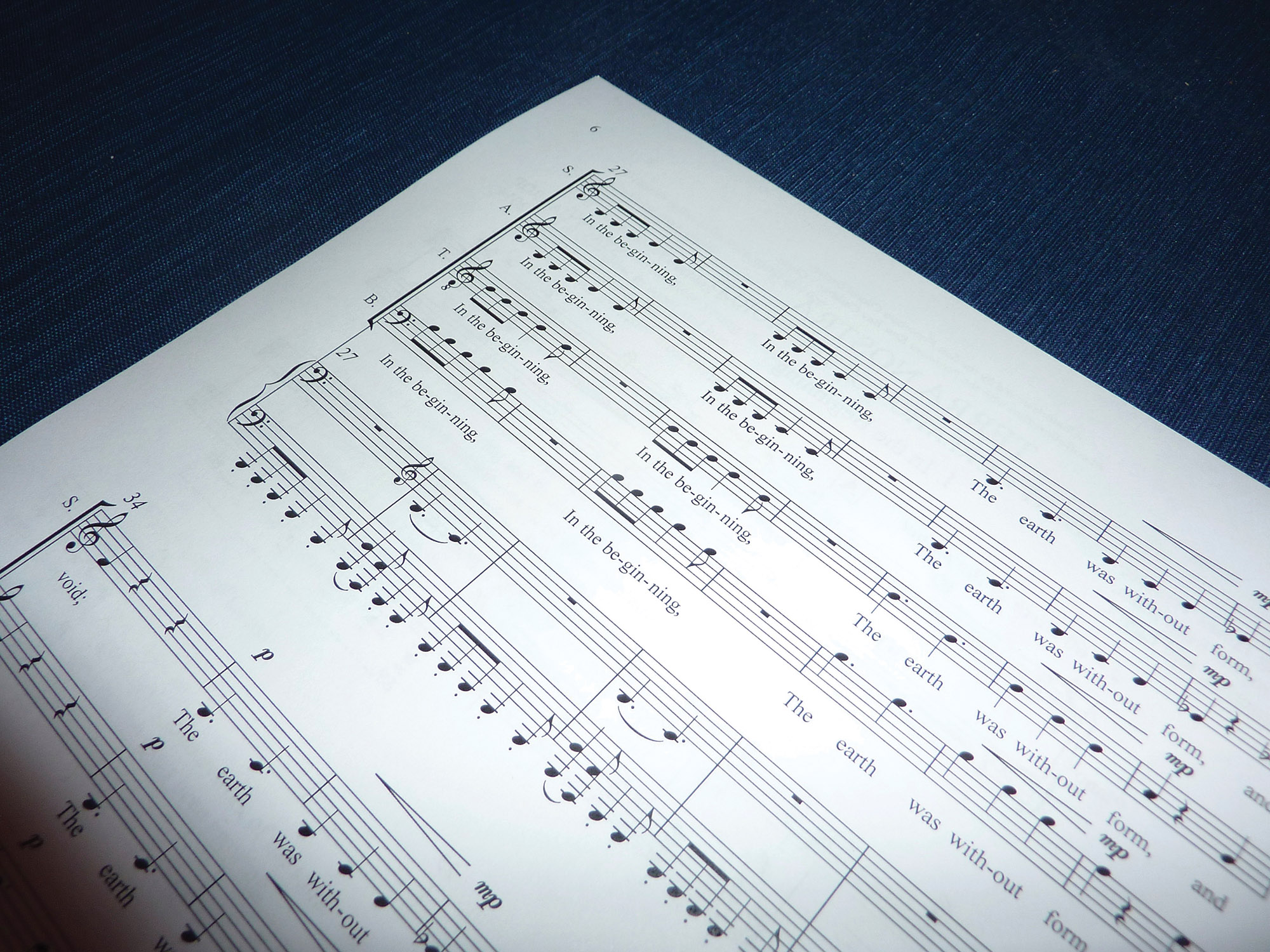
In the initial brainstorming stages, I sketch ideas using pencil and paper. Sometimes I’ll use my piano to tinker with possible ideas, while other times I’ll sketch directly from my head onto paper. I will work in this manner long enough for the ideas to take shape on paper; then I transition to a computer. I use a software notation program that allows me to hear the music that I write, as well as to create a beautifully engraved final score. Computer programs are a tremendous help to composers – you don’t have to wait until you rehearse with musicians to hear how your music will sound – but you need to use these programs carefully. Software programs never achieve an accurate, realistic balance between instruments so composers must account for balancing issues themselves. Nonetheless, I find this playback to be very useful, as I can check to ensure that my rhythms, tempi and pitches are to my liking.

For a while, I am conscious of every decision that I make while composing; however, the further I get in composing a piece, the more these decisions are being made subconsciously.

Every now and then, I need to evaluate what I’ve composed thus far. Is the music on the right track? Do the various musical ideas work together or has something shifted? While these assessments are valuable for a piece of any length, I find them to be even more important when composing a long piece. For example, when I wrote my piece Sanctuary for violin, cello and piano, I wanted the piece to start at a point of complete relaxation and, over the course of 13 minutes, progressively get more and more tense. This movement ends at a moment of extreme tension, which nicely sets up a very quiet beginning to the second movement. The first idea I composed seemed suitable to open the first movement, but after brainstorming additional ideas, I realized that the initial material would work far better if it occurred around the fourth minute. What had changed? I finally realized that my first idea had too much tension already and couldn’t be used at the beginning of the work. This realization helped me to compose a slow, mysterious opening that gives the piece ample room to grow.

Occasionally while composing, I will arrive at a spot where I can’t seem to progress any further. Some people call this writer’s block. When I reach such an impasse, I back up to a few measures prior to the trouble spot and rewrite the passage at least two additional times, each time leading to a different musical outcome. Within an hour or so, I have developed three or more possible options to consider. Not only does this method usually unearth a new way to proceed, but it supplies additional musical material that I can use elsewhere in the piece. This strategy also enforces the point that there’s no one exact path that a composition needs to follow; instead, there are several potential paths, each with its own strengths and weaknesses.

Once all of the notes are in the computer, I proceed to the final stage of composing: adding all of the details. These details include anything that shapes the music and gives it nuance. While these details may not seem as important as the choosing of pitches and rhythms, the truth is quite the opposite. Imagine hearing an entire orchestra playing loudly, followed by a moment of silence and then a single trumpet enters quietly. Now imagine if the orchestra plays very quietly and – without a moment of silence – the trumpet enters obnoxiously loud. While the notes and rhythms didn’t change between these scenarios, the details did and with startlingly different results.

Part 3: Post-Composition

In the beginning sketch 2

Final Version: Terra Nostra by Stacy Garrop

Now that the composing phase is complete, I move on to proofing the full score and individual parts. I don’t particularly enjoy this phase – it is tedious compared to the excitement of composing – but if I don’t work carefully, then rehearsals could be disastrous as the instrumentalists encounter mistake-laden scores. In addition to a full score that shows all of the instruments that play in the piece, each instrument requires its own individual “part” (for a string quartet, this would result in four separate parts for the ensemble’s two violins, viola and cello). Once I have made all of the instrumental parts, I check these against the full score three times to ensure that I have caught inconsistencies and errors. This phase can easily take just as long as composing the piece, if not longer, depending on the number of instruments involved.

I also need to give the piece a title. Technically, this can happen prior to composing the work, or at any stage along the way, including after composing is done. Sometimes, I’ll think of a title that shapes the brainstorming phase of pre-composing. This was the case with the double bass and piano piece; once I figured out that the piece would reference film noir, I easily came up with the title Noir Vignettes. At other times, I struggle to find a suitable title even after the piece is completed. Recently, I composed a piece in honor of Cedille Records’ 25th Anniversary season. James Ginsburg, the label’s president, mentioned that he had an interest in street musicians (or “buskers”) he encountered in the city of Prague. The word “buskers” didn’t appeal to me as a title, nor did a string of unfortunate titles that followed. I finally decided on Bohemian Café, as it aptly describes the carefree, freewheeling atmosphere that I invoke with the music.

No piece is ever complete until I have rehearsed it with performers.

No piece is ever complete until I have rehearsed it with performers. In this phase, I can make adjustments to various musical elements – increase a dynamic here or change an articulation there – to bring out more subtleties in the music. This is also the phase in which I finally discover what passages don’t sit well in a performer’s hands. Performers generally begin rehearsing without the composer present; I will listen to one or two rehearsals as the premiere draws near. This allows the musicians to work out the music for themselves and to create their own interpretation of my piece before I give them my thoughts.

The final phase of any piece is its premiere. This is a thrilling moment! My adrenaline is pumping throughout the event, from any pre-concert discussion I have onstage for the audience, to listening to the musicians play the piece, to conversing with audience members afterward.

I greatly enjoy this wonderful moment. At the same time, I am assessing the music as it is played, ascertaining where adjustments need to be made. I usually make a small round or two of revisions after the premiere, which I test out at the piece’s next performance. By the third performance, I have worked out all of the kinks and can finally consider the work finished. When the composing process is complete and I’m pleased with the final results, then I have successfully navigated the composing process from the first note to the final score.


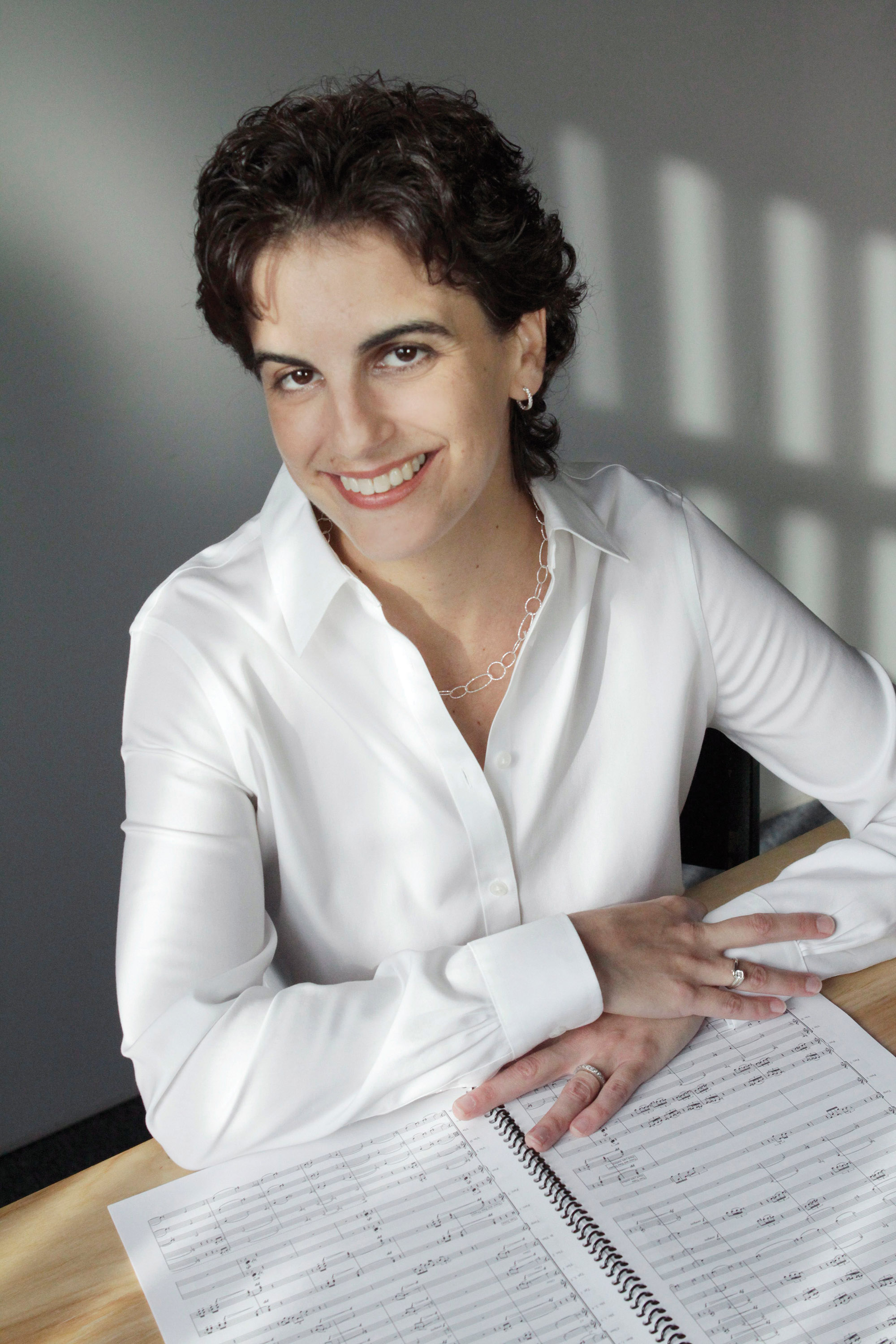
GARROPHeadshot3color

Bill Billingham Photography

Stacy Garrop’s music is dramatic, lyrical and programmatic, as she enjoys telling stories through music. Garrop received degrees in composition from the University of Michigan at Ann Arbor (Bachelor of Music), University of Chicago (Master of Music) and Indiana University at Bloomington (Doctor of Music). She joined the Chicago College of Performing Arts in 2000. Garrop has received numerous awards and grants including a Fromm Music Foundation Grant, Detroit Symphony Orchestra’s Elaine Lebenbom Memorial Award, Sackler Prize and two Barlow Endowment commissions. Theodore Presser Company publishes her works, and her music is commercially available on 20 CDs. Garrop has been commissioned by the Minnesota Orchestra, Albany Symphony, Chanticleer, Chicago a cappella, Capitol Saxophone Quartet, Cedille Chicago, Gaudete Brass Quintet, San Francisco Choral Society and WFMT 98.7 FM.

Standard
Fashion Forward Feature Image
Faculty Essay, Feature 4, Feature Stories, Summer 2011, Uncategorized

[Summer 2011] Fashion forward?

Cutler2011062-1Feminism and fashion are not often considered allies. If feminism is thought to be serious, high-minded and ideological, fashion is considered its very opposite: trivial, superficial and subject to the whims of personal taste. Where feminism concerns itself with ethics, fashion revels in aesthetics. If feminism teaches us to see the deeper forces shaping human experience, fashion directs our eyes outward, to the surface of things.

Indeed, fashion has long been a favorite target of feminism, which has, over the years, taken aim at trends unfriendly to women’s freedom. Feminism has fought against clothing that limits women’s physical — and thus social — mobility, and styles that demand women wage war on their bodies to achieve an idealized silhouette. But this is not the only way feminism’s relation to fashion plays out. Fashion has been a valuable accessory to feminism as often as its enemy, for as much as fashion may police the body or encourage conformity, fashion is also a powerful vehicle for defiant self-expression and lodging a collective complaint against the status-quo.

Fashion also has an uncanny ability to absorb and repack-age the look of countercultural movements, making them palatable to mainstream consumers and turning a profit in the process. Feminism was part of the very cultural engine that drove the hugely popular “natural look” in women’s cosmetics in the 1970s, directly influenced the “power suit” silhouette in American women’s fashion in the 1980s, and is frequently cited as inspiring the earthy punk of 1990s grunge.

“Fashion has been a valuable accessory to feminism as often as its enemy, for as much as fashion may police the body or encourage conformity, fashion is also a powerful vehicle for defiant self-expression and lodging a collective complaint against the status-quo.”

And fashion continues to be a central preoccupation in current commentary on feminism: The website of a leading feminist organization, the Feminist Majority Foundation, hosts a short video entitled “This Is What a Feminist Looks Like.” The video features men and women of varying ages, races, shapes and styles, each of whom utters for the camera, “This is what a feminist looks like.”

The video contains repeated references to a broad range of fashions and personal styles as compatible with feminism. Actress Christine Lahti tells the viewer, “It doesn’t mean that you hate men . . . it doesn’t mean that you have hairy legs.” Pop singer-songwriter Lisa Loeb smiles into the camera and says, “Sometimes I choose to wear short skirts. Sometimes I choose to wear pants. I don’t think I’m less of a feminist when I wear a super-short skirt.” Contrary to the assumption, then, that feminism stands in opposition to fashion, we have ample evidence that feminism works with fashion as well.

shoes

So what can current trends in women’s fashion tell us about feminism’s impact on mainstream culture in general, and women’s lives in particular? In what follows, I’ll make the case that new ways of thinking about women’s identity among contemporary feminists can be revealed through a close look at the trend of mix-and-match fashion.

Contradiction and third-wave feminism

In the 1990s, American feminism announced the onset of its “third wave” with an explosion of writing by young women both influenced by and critical of “second wave” feminism of the 1960s and 1970s. Inspired by the slogan “the personal is political,” so-called second wave feminism is characterized (by its critics, especially) as requiring that women bring their lifestyles into strict obedience to their political ideals to achieve greater ideological consistency. As feminist consciousness prompted women to reconsider their values and choices, feminists worked to reconcile whatever conflicts may have existed between their personal lives — including the choices they made and the values they espoused in love, sex, work, family and leisure — and their outward politics.

Self-identified third wave feminists who came of age following this era expressed skepticism regarding the moral rigidity they perceived in second wave feminism, considering it a set of harsh rules mandating political correctness in all spheres of life, at direct odds with pleasure, personal idiosyncrasy and self-expression. The inner life of the self, they argued, is unruly, chaotic, and made up of multiple, often conflicting elements not easily disciplined or aligned with a single moral code.

Thus, in a break with the perceived severity and inflexibility of an earlier feminism, third wave feminists claimed inner contradiction as women’s essential trait. This emphasis on contradiction appears repeatedly in some of the most popular feminist texts from the past two decades, most notably in Rebecca Walker’s To Be Real; Gloria Anzaldúa’s Borderlands/La Frontera, and Susan J. Douglas’s Where the Girls Are, in which she describes American women as a “bundle of contradictions” and explicitly links contradiction to feminism by observing that “contradictions and ambivalence are at the heart of what it means to be a feminist.”

In the same spirit, Donna Haraway’s classic essay of postmodern feminism, “A Manifesto for Cyborgs,” describes the female self as a figure of collage and hybridity, “a kind of disassembled and reassembled … self. This,” Haraway asserts, “is the self feminists must code.”

The fashion of contradiction

Feminists have coded this self so effectively in recent years that the notion of the contemporary American female self as a collage of contradictory bits and pieces has been absorbed into mainstream popular fashion trends and conceptions of personal style.

The self whom third wave feminists describe as having contradiction at her core expresses this internal chaos vividly in the hugely popular trend of mix-and-match fashion.

While mixing and matching has a rich history as a sartorial strategy ever since the advent of separates in the early 20th century — historically, it has served both utilitarian and subcultural goals, and has long been celebrated as a way to stretch one’s wardrobe in hard economic times. I focus here on a distinctive, early 21st century revival of a mix-and-match aesthetic in American mainstream women’s fashion, described by fashion journalist Anita Leclerc as a “parade of patterns (that is) like watching seven rival marching bands converge at a four-way intersection — talk about your clash of symbols.”

“Feminists have coded this self so effectively in recent years that the notion of the contemporary American female self as a collage of contradictory bits and pieces has been absorbed into mainstream popular fashion trends and conceptions of personal style.”

This latest iteration of mix-and-match fashion takes as its goal something other than utility or wardrobe-stretching, appearing instead to serve the rhetorical purpose of announcing the wearer’s contradictory nature. Through a style of deliberately clashing patterns, textures and references to different fashion eras at once, the contemporary American woman visually comments on her hybridized, indefinable inner self through juxtapositions of formerly unmixable, unmatchable styles.

clothes 1This trend stands in stark contrast to earlier ways women and girls were instructed to dress. If they were once encouraged to cultivate one look to express their identity, girls and women now show their fashion savvy by coming up with unlikely combinations of styles worn together, suggesting a preference for multiplicity over a singular look or a singular identity. In a feature called “Best Dressed Girls in America,” Seventeen magazine selected a small group of readers who exemplify what the feature editor calls “bold style.” Eight out of the 17 girls featured describe their personal style as some form of deliberate collage, using words like “eclectic,” “eccentric,” “odd and experimental,” and “a little bit of everything.” Catherine from New Orleans, aged 13, describes her personal style as “edgy punk mixed with glam prep;” Tory from Concord, Mass., age 15, calls her personal style “’60s mod and ’70s boho.”

clothes 2In the “Looks” column in BUST magazine, the featured fashionable feminist Cynara Geissler describes her fashion sense as “pull[ed] from a lot of seemingly disparate places. There’s a lot of tough, Springsteen, working-class stuff going on and also a Claudia Kishi from The Baby-sitter’s Club kind of whimsicality.” One gets the sense that it is downright unfashionable to claim allegiance to a stable fashion style or a stable female identity, in clear contrast to the ideologies of past generations, where expressing ideological consistency was more culturally valued.

This trend is not simply a result of the consumer’s own creative take, do-it-yourself-style, on the contents of her closet; the message that a clashing mix-and-match style best captures the mood of today’s woman comes from the top corporate brass, too.

Jenna Lyon, creative director for American retailer J. Crew, says she is “obsessed with unexpected pairings” in the company’s collection from last year. When British retail phenomenon Topshop opened its flagship American boutique in New York City, its promotional press materials defined the signature Topshop look as a clash of mix-and-match. Top-shop style adviser Daniela Gutmann promises that “[w]e’re not judging anybody. It’s O.K. if you want to wear a million prints at a time,” while style advisor Gemma Caplan confesses,  “[s]ometimes I feel like being all girly and cutesy, sometimes I feel like being rocky.” The Style Advisor tip on Topshop’s website for last year’s winter collection instructs shoppers to “clash your silhouettes to create a show-stopping look.”

“If mix-and-match skill is currently thought to be the essence of a woman’s personal style, then we might rightly wonder whether we expect women to perform a similarly dizzying balancing act in their lives more generally.”

On the national scene, the mix-and-matcher par excellence is Michelle Obama. Praised for her talent at mixing high and low, classic and trendy, and strong and soft, the First Lady is considered to have an exceptional sense of style that relies on quirky clashing.

Some of her most editorialized fashion choices to date are those that emphasize unlikely combinations: a girlish white cotton blouse with an exaggerated bow at the neck cinched with a black, metal-studded leather belt — equal parts frill and punk. Or a standard Washington look with a twist: a conservative twinset and delicate pearl choker offset with an oversized, clashing silver metallic belt, described by one fashion editor as “a busy ensemble.” To her fans, the very appeal of her look is in its purposeful assemblage of multiple fashion references.

At the 2009 Council of Fashion Designers of America awards ceremony, Mrs. Obama received the Board of Directors Special Tribute in recognition of her distinctive style, described by council president Diane von Furstenberg as “a unique look that balances the duality of her lives,” referring to the multiple roles the First Lady plays in both public and private. This statement invokes the notion of a multiple female self so familiar to contemporary feminists, suggest-ing the impact of feminist thought on more mainstream, popular notions of female identity.

Indeed, in descriptions of her life (and lifestyle) in the White House, Michelle Obama is repeatedly described in rhetoric celebrating her ability to inhabit multiple roles. In an interview, Katie Couric describes Mrs. Obama as “this Harvard-educated lawyer and former executive, digging up sweet potatoes on the back lawn of the White House,” and “She’s Michelle … great-great-great-granddaughter of a slave … Michelle the devoted mom … Michelle the wife of Barack … Michelle the glamorous style icon … Michelle the political player.”

This conception of Michelle Obama as having so many component parts — some of them potentially in conflict with each other — is mirrored in coverage of her personal style. Obama herself acknowledges this is her trademark look, describing her fashion sense in her June 2008 appearance on The View as “I do a little bit of everything.”

If Michelle Obama offers a highly visible image of an American woman successfully balancing a multiplicity of roles and styles, Carrie Bradshaw is the figure who aspires to it in the popular imagination.

Compare Carrie, whose fashion sense is defined by its very refusal to be defined, with the other members of her famous four-some: Miranda, a caricature of a single-minded “career woman” who dresses in staid, often severe clothing; Charlotte, whose childlike innocence is mirrored in her modest, girlish fashion sense; and Samantha, a sexual adventurer whose clothing is always body-conscious and often borderline garish.

Against the backdrop of these three stock character types, the distinctive trait of Carrie, the protagonist of the Sex and the City franchise, is her elusive, contradictory nature and profound ambivalence toward ideologies of American womanhood. She eschews yet craves marriage, is cynical yet hopeful about romance, and adamant yet anxious about self-sufficiency.

Carrie personifies a cultural moment in which cultural expectations of women are in flux, and this flux is the essence of Carrie’s cacophonous fashion sense, a signature look described by the scholars Stella Bruzzi and Pamela Church Gibson as a “violent yoking together of clashing sartorial styles” featuring the most unlikely combinations of garments, silhouettes and accessories that add up to a vision of deliberate discordance, such as a newsboy cap paired with hot pants, a trench coat and haute couture heels.

As a fictional meditation on late-20th-century feminism, Carrie’s expression of contradiction plays in a different, more anguished register than Michelle Obama’s: where the First Lady exudes confidence in achieving the feminist promise of “having it all” (and, it is worth noting that she has a network of support helping her do so), Carrie exudes insecurity, often stumbling to manage her personal life and consistently confused about what, exactly, will fulfill her.

Is contradiction worth celebrating?

watchIf fashion tells us what a culture thinks about itself, then we may conclude that the trend of mix-and-match in women’s fashion reveals the impact feminism — long considered anti-fashion and certainly not in the cultural mainstream — has had on popular notions of American women, their identities and their choices.

In addition to demonstrating what a culture finds appealing about women, fashion trends may also suggest what is socially required of women in a given cultural moment, leaving us to con-sider whether contradiction deserves to be celebrated or lamented as a feature of contemporary life.

clothes 3If mix-and-match skill is currently thought to be the essence of a woman’s personal style, then we might rightly wonder whether we expect women to perform a similarly dizzying balancing act in their lives more generally, and whether a cultural imperative that women “multi-task” (and like it!) is unconsciously reinforced through a mix-and-match aesthetic. For if we only celebrate the multiplicity of women’s lives, we fail to examine the particular social conditions under which those lives are forced to take on their multiplicity — and thus fail to consider whether “having it all” is a privilege or a burden.

Standard