Alumni News, Fall 2016, Feature 4

What Can We Learn From America: The American Dream Considered from a Dutch Perspective

Wat Wij Van Amerika Kunnen LerenA funny thing happened when I published my last book in the Netherlands this September. It’s a 140-page essay titled Wat wij van Amerika kunnen leren, which translates as What We Can Learn from America. I had been prepared for negative reactions, people denouncing the book on title alone. “Learning from America? A country torn apart by gun violence, income inequality and contentious race relations? Why would we?”

There were indeed a few reactions along those lines: one critic in a leading liberal newspaper said he had written “Drumpf???” on several pages when reviewing my book. Drumpf’s ascendency, he argued, epitomizes everything that’s wrong with the United States in European eyes. What could we in the Netherlands possibly learn from a people supporting such a candidate for president?

Truth to be told, I had expected people to be critical, and perhaps even get angry at the idea that we should “Learn from America.” I had explicitly picked a title which, I hoped, would start a debate about the perception of American society in the Netherlands. Because that perception, which is based on heavy media coverage of the U.S., is not good.

Many column inches in Dutch newspapers and minutes on TV-news channels are devoted to events in the United States. The presidential elections (including the nasty campaigns and debates), white cops shooting young black men, constant political bickering over Obamacare: they all get a lot of play in Dutch media. And the constant repetition of negative stories such as these leads to the impression among many that the U.S. is a country on the brink of disintegration.

As someone who studied in the U.S., visits the country at least once a year, and spent the summer of 2016 in the Chicago suburb of Arlington Heights, I know America is of course hardly disintegrating. Rather, my impression of the U.S. is still very much that of a dynamic, optimistic, can-do society in which problems are first discussed, then solved. Of course, lots of things go wrong in America: movements like Black Lives Matter are born out of justifiable frustration, President Obama has a reason to be moved to tears after yet another mass killing of innocent kids, and college has become insanely expensive. But America is still the country of wild optimism and limitless possibility. (If you don’t believe me, come spend a few months in Europe. Now there’s a continent where the mood has soured to an unprecedented level of bitterness.)

So the funny thing that happened, is that the Dutch public seems to agree with me. America has always had a special place in the hearts of the Dutch. We watch American movies and TV-series, eat American-style fast-food, wear American brands on our feet and bodies, and we love to visit the U.S. A stunning four percent of Dutch citizens visit America every year.

My secret hope is that we in the Netherlands will borrow some of the positive vibe that always infects me whenever I enter the U.S.

So perhaps it’s not that surprising that Dutch readers are willing to learn from America after all. And there is much to be learned. From the civilized way in which Americans behave toward each other, for instance, with their tremendous kindness and generosity. Or from the way in which ethnic minorities succeed in integrating in the larger fabric of American society. (One in 10 marriages in the U.S. is now ethnically mixed. In Europe we still struggle with the integration of third-generation immigrants.) Or take the entrepreneurial and innovative spirit you find in garages and on campuses across the country.

My secret hope is that we in the Netherlands will borrow some of the positive vibe that always infects me whenever I enter the U.S. That the American Dream becomes the Dutch Dream. If the first reactions to my book are any indication, thankfully there are quite a few Dutchmen who seem to agree.

Rick Nieman is a Dutch journalist, author and TV-presenter.

Standard
Alumni News, Fall 2015, Feature 4, Feature Stories

Going the Distance

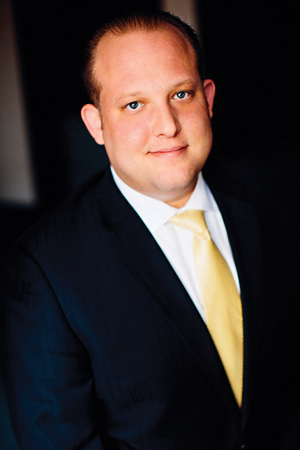
Ambition. Entrepreneurship. Tenacity. As a two-time Roosevelt graduate and founding partner of a fast-growing real estate firm, Leo Solarte has what it takes to achieve his ultimate goal: leaving a legacy.

Ambition. Entrepreneurship. Tenacity. As a two-time Roosevelt graduate and founding partner of a fast-growing real estate firm, Leo Solarte has what it takes to achieve his ultimate goal: leaving a legacy.

By the time Leo Solarte (BB, ’09; MSRE, ’11) finished his master’s in real estate in 2011, he had racked up 40,000 miles driving to properties on the potholed streets of Chicago’s South Side. Taking nine classes in one semester and managing the retail division of First Western Properties, a real estate firm, left time for little else. The passenger seat of his 2004 Cadillac CTS held his essentials: scattered listing sheets, textbooks, brochures and a computer. But it was worth it for Solarte. He had a legacy to leave.

“I bleed Chicago,” he said. “I love this city and want to leave my stamp on it. It’s my own little way of going down in the history books on a local scale.”

As co-founder and managing partner of boutique real estate firm Greenstone Partners, Solarte is driven to give back to his city, a trait he inherited from a long lineage of Chicago pioneers. His fifth great-grandfather signed the Declaration of Independence, and his family settled in Chicago in the 1860s and most are still in the area. Solarte says earning a reputation as an honest and ambitious businessman is his way of leaving a legacy his children can be proud of, and he’s off to a strong start. He was made an honoree of the National Association of Realtors’ 30 Under 30 Class of 2012, a CoStar Retail Power Broker for 2011, 2012 and 2013, and has been named Top Retail Leasing & Sales Agent annually since 2010 by the Chicago Association of Realtors’ Commercial Forum.

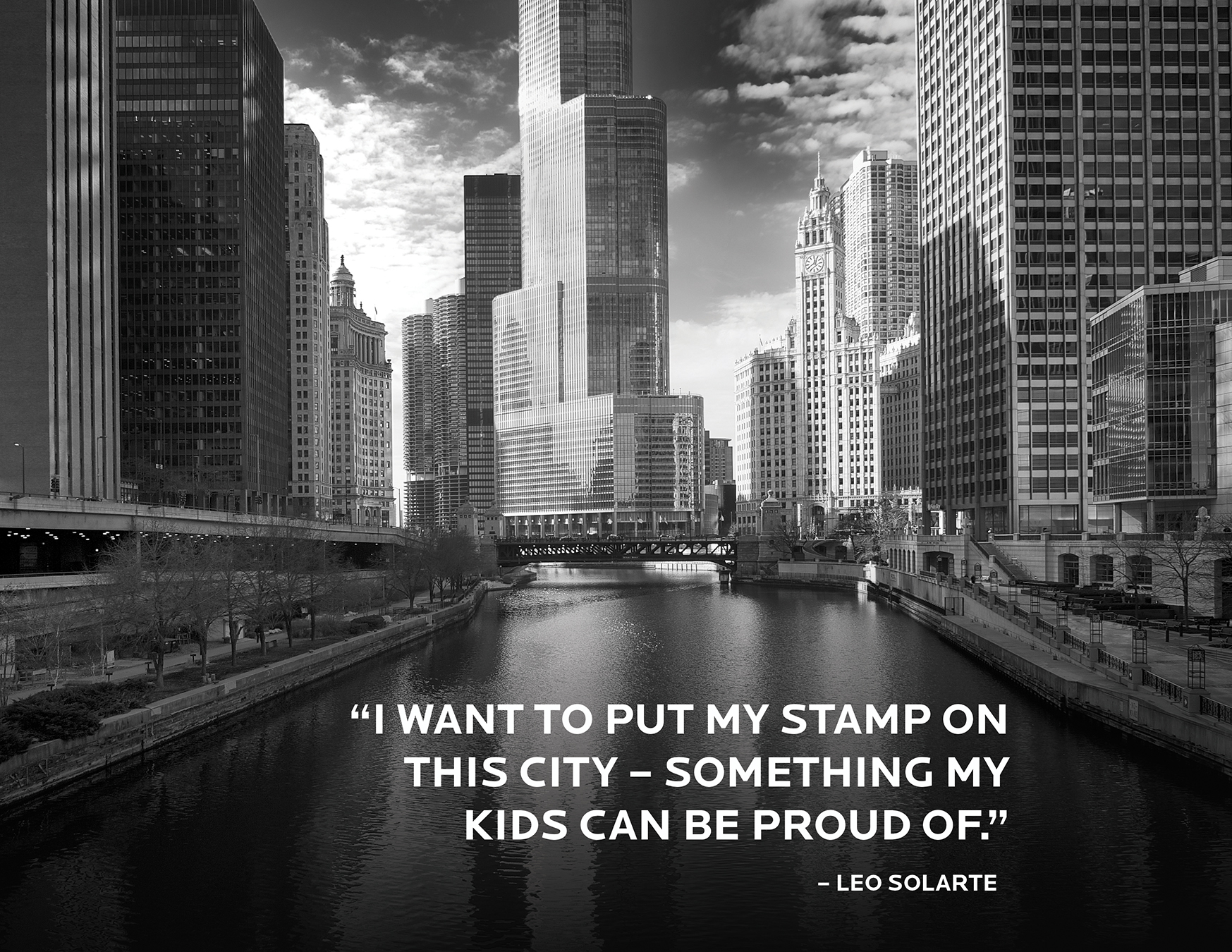
“I bleed Chicago. I love this city and want to leave my stamp on it. It’s my own little way of going down in the history books on a local scale.”

The 30-year old didn’t always have his sights set on real estate. After growing up in Portage Park on Chicago’s northwest side, he attended Whitney Young High School and worked at a used car dealership while taking night classes part-time at community college. He developed an interest in finance after one of his coworkers encouraged him to get a broker’s license, and enrolled at Roosevelt in 2007 to pursue finance.

When the stock market crashed in 2008, the mortgage business suffered dramatically. Solarte took the opportunity to stop working and study at Roosevelt full-time, finishing two years’ worth of classes in one year. Getting approvals to take nine classes in one semester impressed Roosevelt administrators, and the business dean encouraged Solarte to stay and earn a master’s in real estate. Solarte had been offered a real estate job the month he graduated, so he took it as a sign and dove headfirst into his master’s while working full-time.

“Without the networking opportunities provided to students in the program, it would have been very hard to have the sphere of influence I had as I started my career. The connections make a big difference,” he said.

Solarte’s professors picked up his ambition. “Leo has a characteristic we love in real estate—entrepreneurship,” said Jon B. DeVries, director of the Marshall Bennett Institute of Real Estate (MBIRE). “To be successful in real estate entrepreneurship, you have to move up the value chain from managing to leasing to owning to developing. This takes tenacity, a solid network and risk-taking. Leo has all of these qualities, and he’s been able to move up the chain with almost no interruption.” Solarte was named one of the program’s earliest scholarship recipients of the Joseph and Joyce Freed: Tomorrow’s Leaders in Real Estate Initiative in 2009 and 2010.

After graduating with his master’s in 2011, Solarte continued working at First Western Properties and watched as it grew from relatively few to 200 listings over the course of five years. He also knew he was paying the company a percentage of the commissions.

Three of his colleagues from other companies aired similar frustrations at quarterly dinners at Corcoran’s bar in Old Town. The four met initially to talk shop and have a few beers, but as time went on the conversations turned serious, all agreeing they wanted to start their own firm. “Like every other business out there, ours started over drinks,” Solarte laughed.

Downtown Chicago

Downtown Chicago

Now in its second year, Greenstone Partners—formed by Solarte, Peter Weitz, Jason St. John and David Tomlinson—manages over two million square feet of commercial properties throughout the Midwest and represents all of 7-Eleven’s new store development in Illinois. Solarte attributes the firm’s growth to the partners’ shared vision: establishing strong relationships with clients and providing them with sound advice even when there’s no commission on the table. “We’re very advisory in our roles; we’re not pressure salesmen at all. We’re aggressive and we go to bat for our clients, but we chose ‘Greenstone Partners’ instead of ‘Greenstone Realty’ to emphasize that we partner with our clients and are here for the long term,” Solarte said.

Managing relationships has proven another of Solarte’s skills. Tomlinson, whose first impression of Solarte was as a hard-nosed, cigarette-smoking South Side salesman, remembers a time last year when the four partners disagreed on a business strategy. Tomlinson grew frustrated and exhausted. But he got a call from Solarte the next day that changed his outlook from then on.

“Leo went out of his way to extend an arm and tell me how appreciative he was of my role at the company. It really changed the whole tide of the conversations we were having,” Tomlinson said. “He’s selfless, he’s tireless, he’s all about the team. I’ll never forget it.”

In 2015 Solarte decided to give back to another team: his alma mater. A new member of the MBIRE Advisory Board, Solarte said he hopes to mentor budding real estate professionals. His advice? “Reputation. That’s it. Your reputation is your business. You have to work hard and know what you’re talking about. There are a lot of smart people in this business and you can’t fake your way through it.”

Outside of Greenstone Partners and the advisory board, Solarte keeps busy with his wife Lupe and two sons (Vincent, 2, and Nicholas, 1) and with amateur boxing. In May, Solarte fought for the first time in the Chicago Real Estate Rumble, which raised money for Big Brothers Big Sisters of Metropolitan Chicago. Before the fight, he said he felt good because his trainer was a former WBC lightweight champion who fought greats like Manny Pacquiao. “I think that’s a good trainer to have,” he laughed. Though he didn’t win, he’s already training for next year. “I’m not giving up,” he said.


Solarte Close-Up

leo close up

My most treasured possession: Cuff links my grandfather gave to me when I turned 21.
How I met my wife: She worked at the finance corporation that opened the car dealership I worked at. My now sister-in-law handed me a blue post-it note with my wife’s phone number on it.
My favorite vacation location: Costa Rica
If I was not in real estate: I’d be a lawyer.
My favorite leisure-time activity: Back yard BBQs with friends and family.
Standard
Alumni News, Fall 2015, Sidebar Story

Buzzworthy journalism grads make headlines

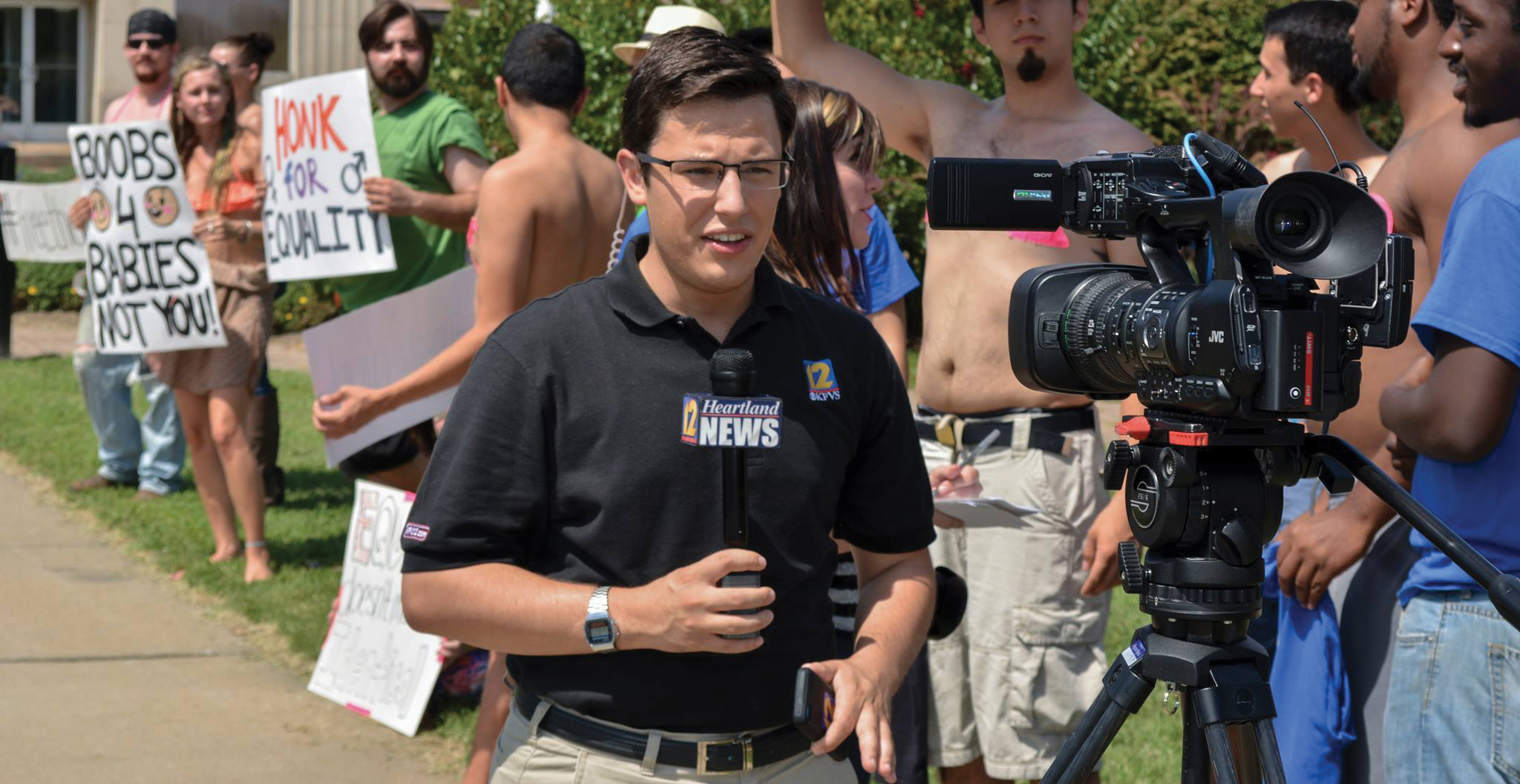
I have my Roosevelt journalism professors to thank for preparing me well for this experience,” says Giacomo Luca (above), an award-winning journalist who is currently reporting for CBS/Fox affiliate KFVS-TV in Cape Girardeau, Mo.

“I have my Roosevelt journalism professors to thank for preparing me well for this experience,” says Giacomo Luca (above), an award-winning journalist who is currently reporting for CBS/Fox affiliate KFVS-TV in Cape Girardeau, Mo.

From writing for daily newspapers to anchoring television news programs, alumni from Roosevelt University’s Journalism Program are realizing dreams as successful members of the media.

“Many of our journalism graduates are doing great things,” said Marian Azzaro, chair of the Department of Communication at Roosevelt. “One of the keys to our program is that it positions students to be prepared for the rapidly changing field of journalism by providing instruction in different media, from newspapers to video to Internet reporting.”

Started four decades ago, the Roosevelt journalism experience includes opportunities for learning at The Torch student newspaper, The Blaze student radio station and most recently The Fire, which is doing video news segments and is the newest student journalism format. “We’re teaching students to write and report for all kinds of journalistic media; these are skills that are useful and needed for success,” Azzaro said.

Jennifer (Berry) Hawes, a 1993 journalism graduate, brought positive attention to Roosevelt’s program as a member of a reporting team for The Post and Courier, a daily newspaper in Charleston, S.C., that won the Pulitzer Prize in April for Public Service for a five-part series on domestic violence.

She credits Roosevelt Associate Professor of Journalism Linda Jones with opening her eyes to the storytelling craft of journalism. “She instilled the importance of storytelling in me,” Hawes said of Jones, “and that’s what I’m really known for today.”

Roosevelt journalism alumnus Aaron Lee recently landed a job with ESPN in Chicago, getting a foot in the door toward one day achieving his ultimate goal of becoming an ESPN anchorman.

Lee, who also learned the importance of storytelling as a journalism undergraduate at Roosevelt, credits Roosevelt Journalism Professor John Fountain with inspiring him to tell his story of battling Crohn’s Disease and coming to terms with his mother’s untimely death.

“I remember having a professor who once told me ‘The sky’s the limit on where you can go’ and I feel that way about Aaron,” Fountain said recently.

Keeping that advice in mind, Lee covered the NFL Draft in Chicago as a freelance sports reporter and shortly after landed a job with ESPN Chicago. “This is going to be a stepping stone for me,” said Lee, who began work this fall on a master’s degree. “I’m getting to meet a lot of people at the network and they know I have aspirations to go a lot further.”

Giacomo Luca, who was working as an anchorman for a small TV station in Lima, Ohio, before graduating from Roosevelt in May 2014, already has moved up as an on-air reporter for a larger TV station that broadcasts out of Cape Girardeau, Mo.

As a reporter for a CBS affiliate station out of Cape Girardeau, which has the 81st largest TV market in the country, Luca goes live nightly, covering news from approximately 50 rural counties in four Midwest states.

“I broke into a top 100 market the month after I graduated from college and I have my Roosevelt journalism professors to thank for preparing me well for this experience,” said Luca. “I’ve been able to do my dream job every day and I couldn’t be happier.”

Standard