24th Annual Real Estate Gala Raises $255,000 for Student Programs

Toni Preckwinkle, president of the Cook County Board of Commissioners, received the 2025 Civic Leadership Icon Award, and David Doig, president of Chicago Neighborhood Initiatives, was honored with the Community Development Leadership Award at the 24th Annual Real Estate Gala on Oct. 16.

A big thank you to all the generous sponsors and attendees of our 24th Annual Real Estate Gala, which raised $255,000 to help fund our programs and support our students!

A round of applause for our sponsors:
Equity Residential; CIBC, Chicago Title Insurance Company; FitzGerald; JAMES AND BRENDA GRUSECKI FAMILY FOUNDATION; Alison Young; Bridge; CBRE; Colliers; Conor Commercial Real Estate; Deloitte; Farpoint Development, Habitat; Hispanic Housing Development Corporation; JLL; JRG Capital Partners, LLC; Mayer Brown; Mid-America Real Estate; Q2; Ryan; Tully & Associates Ltd.; Valley Bank; Waterton; Wintrust Bank Chicago; ADREANI FAMILY FOUNDATION; Chicago Architecture Center; Chicago Association of REALTORS®; First Eagle Bank; Ginsberg Jacobs LLC; The Goldie Initiative: Goldie B. Wolfe Miller Women Leaders in Real Estate; Golub & Company; Spaceco; Becovic Management Group; Chicago Community Loan Fund; Graham Grady; and Tiffiny Higgins.

Marshall Bennett Institute of Real Estate’s Collete English Dixon Launches Podcast Series on Built Environment and Social Equity

Collete English Dixon, executive director of Marshall Bennett Institute of Real Estate at Roosevelt University (MBIRE), has launched Brick, Grass (&) Steel, a podcast exploring how the built environment can support equitable, sustainable and resilient communities.

“From my days working in commercial real estate investment to my current role at the institute, I’ve seen firsthand that the built environment is never neutral.” said English Dixon. “Every decision about what gets built, where, and for whom shapes the fabric of our communities — impacting equity, sustainability and resilience. Experiencing this directly throughout my career inspired me to start this podcast.”

The series kicked off Monday, Sept. 22, with Eric Klinenberg, sociologist and New York University professor, whose groundbreaking book “Palaces for the People” examines how libraries, parks and other social infrastructure can strengthen democracy and reduce inequality. Klinenberg’s research and commentary have been featured widely in The New Yorker, The New York Times and other leading outlets.

New episodes are released biweekly, with a total of 10 episodes this season, each running 35–45 minutes (except for the 60-minute finale). Most episodes will spotlight a single guest, with one episode featuring a two-guest conversation. Confirmed participants include:
– Samuel Stein, urban planner and author of “Capital City”
– Richard Rothstein, author of “The Color of Law”
– Leah Rothstein and Richard Rothstein, co-authors of “Just Action”
– Dr. Robert D. Bullard, widely recognized as the father of environmental justice
– Nina Idemudia, CEO of Center for Neighborhood Technology (CNT)

“In this first season, we’re reflecting where we’ve been and what can be improved,” English Dixon said. “We’re asking: What can we do better? Why are these conversations happening? Each episode offers a different lens on equity, sustainability and resilience in the built environment.”

Episodes will address how physical spaces influence survival and recovery in the face of climate change and natural disasters such as hurricanes and wildfire, as well as how redevelopment affects equitable rebuilding. The conversation also explores how inequities in communities were created and prolonged.

“Brick, Grass (&) Steel comes from a place of both urgency and hope,” English Dixon said. “Urgency, because the choices of the past still shape our world today — highways splitting neighborhoods, industries polluting without consequence, and disasters disproportionately affecting certain communities. And hope, because I have witnessed the impact that people, ideas and policy can have on reimagining our cities. Equity and resilience are within reach, but only if we confront the past honestly and take bold steps forward.”

Episodes are available on major platforms, including Spotify or Apple Music.

Bachelor’s in Real Estate: A Winning Play for 2021 Graduate

Wrigley McGuire, second from left

When Wrigley McGuire scored a baseball scholarship to Chicago’s Roosevelt University, he knew he hit it out of the park. But, he says, his real winning play was selecting real estate as his major and pursuing his BSBA from Marshall Bennett Institute of Real Estate’s undergraduate program.

“My mother has worked in commercial real estate her whole career, so I grew up hearing her talk about work. I definitely had an interest in real estate, but what solidified my decision to study it at Roosevelt University was the great catalogue of courses offered,” said McGuire, a native of Tucson, Ariz.

He added, “And it was exciting to be studying CRE in a city like Chicago that is so well-known for commercial real estate. I absolutely love Chicago and had the best experience there.”

But when the Covid-19 pandemic hit during McGuire’s “ninth inning” – his final semester at Roosevelt University – he returned home to Tucson to complete his studies virtually.

McGuire said the robust program at MBIRE prepared him well for a future in the CRE industry, not only because of the classes, but also the relationships formed. “Roosevelt really sets you up for success.”

“One thing I appreciated was how my fantastic professors weren’t only teachers, but also active in the industry, with careers of their own, too,” he noted. “I couldn’t be doing what I am today without everything they taught me.”

One specific class that informed his career path was real estate finance. “Those finance classes and the real estate financial modeling I had the opportunity to do gave me the knowledge and experience to secure a job as a financial analyst with Raytheon Missiles & Defense.”

“Even though it’s not in the real estate industry, I’m keeping one foot in the door and will continue to do deals as a broker with Presidio Management. As of today, I have four commercial listings, including two mixed-use properties,” McGuire said.

“Real estate is the type of industry where the door is always open. There are so many ways to apply the knowledge you earn from a program like the one I graduated from at MBIRE. I am very grateful for all I learned, the connections I made – everything.”

Marshall Bennett Institute of Real Estate Awarded 1st Place in Graduate Division of Harold E. Eisenberg Foundation Real Estate Challenge

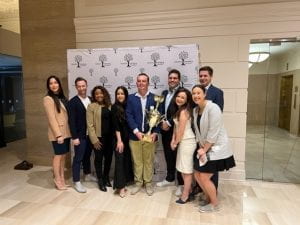
Marshall Bennett Institute of Real Estate won first place in the Graduate Division of the 12th annual Harold E. Eisenberg Foundation Real Estate Challenge. Team members, from left, include Alexandra Martello, Ryan Watt, Leila Gathogo Win, Pamela Sanchez Munoz, Trace McGuire, Brett Berlin, Tatiana Nagornova, Jennifer Warfield and Michael Penicnak. Not pictured: Tyler Hanson.
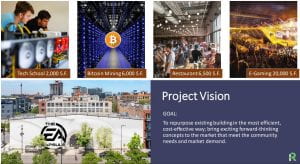
MBIRE’s winning proposal calls for transforming Johnny’s IceHouse, located at 1350 W. Madison St. in Chicago’s West Loop neighborhood, into space for a tech school, bitcoin mining, a restaurant and e-gaming arena.

Marshall Bennett Institute of Real Estate (MBIRE) won first place in the Graduate Division of the 12th annual Harold E. Eisenberg Foundation Real Estate Challenge, which culminated with final presentations on Saturday, April 23, at Wintrust, 231 S. LaSalle St. in Chicago.

The challenge tasked students with creating a redevelopment plan for Johnny’s IceHouse East, the 51,500-square-foot former home of the Chicago Blackhawks’ practice rink located at 1350 W. Madison St. in the heart of Chicago’s West Loop neighborhood.

MBIRE was among five graduate-level teams from universities across the country to participate in the program. As the grand prize winner, MBIRE was awarded $5,000 in scholarships, made possible by Wintrust Commercial Real Estate, toward its real estate program.

The winning MBIRE proposal, The Capsule, was presented by the school’s Windy City Development team and calls for transforming the building to create a lobby, 41-vehicle parking lot, 2,000-square-foot tech school and 6,000-square-foot bitcoin mining space on the first floor; a 16,800-square-foot e-gaming arena and 3,200-square-foot restaurant on the second floor; and additional space for e-gaming stations and dining on the third-floor mezzanine. The total project cost of The Capsule is $25.9 million.

MBIRE’s Windy City Development team included Trace McGuire (team lead), Brett Berlin, Leila Gathogo Win, Tyler Hanson, Alexandra Martello, Tatiana Nagornova, Michael Penicnak, Pamela Sánchez Muñoz, Jennifer Warfield and Ryan Watt.

“I’m incredibly proud of our team,” said Jon Dennis of UrbanStreet Group, who along with Andrew Savoy of CA Ventures, serve as adjunct professors at MBIRE and advisers for the team. “They performed a full market analysis to repurpose this building in a way that is exciting and forward-thinking. This competition gave them a taste of what it’s like to be a developer.”

According to the Eisenberg Foundation, the winning plan is the most economically viable and complementary to the unique uses surrounding the site. The Real Estate Challenge commences early in the year and culminates in April, when the student teams’ presentations are judged by a panel of professionals.

Supporters of the 2022 Challenge included Wintrust Commercial Real Estate, Bradford Allen and Johnny’s Icehouse.

Anthony “Tony” Pasquinelli, co-founder of Marshall Bennett Institute of Real Estate, dies at 88

Anthony “Tony” Pasquinelli, together with his brother Bruno, co-founded Pasquinelli Construction Company in 1958. Over 50 years, the Burr Ridge, Ill.-based company built 45,000 homes across 13 metro markets in 13 states, rising to its pinnacle in the early 2000s, when it became the fifth-largest private homebuilding company in the country.

Pasquinelli’s passion for real estate and higher education led him to become one of the co-founders of the Marshall Bennett Institute of Real Estate (MBIRE). He joined Roosevelt University’s Board of Trustees in 2000, continued his service as a public trustee until 2014 and remained a life trustee. In 2006, he and his family established the Pasquinelli Family Distinguished Chair in Real Estate, an endowed faculty position at MBIRE, and in 2009, the Pasquinelli Family Heritage Room, a study room located adjacent to the school’s library.

“Tony was more than just an industry leader and supporter of the Marshall Bennett Institute of Real Estate,” said Collete English Dixon, executive director of MBIRE. “He was a generous sharer of his time, talent and treasure to make sure that our program and the outcomes for our students were the strongest possible.”

Pasquinelli was influential in the development of Roosevelt’s downtown vertical campus, generously supporting both the Wabash Building and Goodman Center projects. The Chicago College of Performing Arts and the Auditorium Theatre were also beneficiaries of his generosity.

Pasquinelli, 88, died Sunday, April 17, at his home, according to his son, Joseph Pasquinelli, who is principal of Archideas, as well as an advisory board member of MBIRE and a member of the board of trustees for Roosevelt University.

Born in Chicago to first-generation Italian American parents, Pasquinelli attended Lindbloom High School and the University of Illinois, where he earned a bachelor’s degree in accounting. Drafted into the Army in 1956, he lived in Fort Lee, Virg., for two years before co-founding the construction company.

Pasquinelli lost the love of his life, Mary Ann Pasquinelli, née Roche, after 57 years of marriage on November 2, 2017. He is survived by his seven children, Joseph, Maria, David, Anthony, Ellen Bergersen, Anne-Marie Trnka and Joan Van Beest; his brothers, Bruno, Jim and Michael; 16 grandchildren; and one great-grandchild.

Funeral services for Pasquinelli were held Wednesday, April 20, at St. Francis Xavier Catholic Church in La Grange. In lieu of flowers, memorials to the Alzheimer’s Association, 225 N. Michigan Ave., Floor 17, Chicago, Ill., 60601, are appreciated.

Executive Director Collette English Dixon Gives Networking Tips for Women of Color

Collete English Dixon, executive director of MBIRE, recently explained to GlobeSt. how women of color use networking to help break down racial and gender barriers in the industry. Marshall Bennett Institute of Real Estate offers several opportunities for students to network with leaders in the commercial real estate industry. Click here to read English Dixon’s networking tips.

Marshall Bennett Institute of Real Estate Announces New $10K DL3 Realty Scholarship for Graduate Certificate in Real Estate Development

The Marshall Bennett Institute of Real Estate at Roosevelt University (MBIRE) announced that DL3 Realty, a Chicago-based minority-owned development firm, has established a new DL3 Realty Impact Scholarship Fund that will award $10,000 in scholarships annually to underrepresented students pursuing a graduate certificate in real estate development. Two qualified applicants to the certificate program will be awarded $5,000 each, beginning with the 2021-22 academic year.

“DL3 Realty’s generous support will make graduate-level commercial real estate knowledge accessible to professionals of color, allowing them to reach their career potential in an industry that has long been challenged by a lack of diversity,” said Collete English Dixon, executive director of the Marshall Bennett Institute of Real Estate.

In fall 2020, MBIRE launched two graduate certificate programs: Real Estate Finance & Investment and Real Estate Development. These new post-baccalaureate options were created due to the demand from professionals wanting to advance their skills without having to make a two-year commitment to pursuing a graduate degree. An MBIRE certificate can be completed in two semesters, taking two courses each semester. Classes are scheduled in the evenings to make it easier for students working during the day.

“I know firsthand how hard it can be for a person of color to break into commercial real estate, so I want to help minority students, especially those committed to community development,” said Leon Walker, Esq., managing partner of DL3 Realty, a firm that has invested more than $100 million toward real estate developments in some of Chicago’s neediest neighborhoods over the past few years. “I am passionate about mentoring our scholarship recipients on our ‘venture development’ approach, which includes partnering with private investors, local authorities and community organizations to transform historically disinvested communities through inclusive development.”

Professionals with a bachelor’s degree, and preferably with a background in commercial real estate, can apply now for MBIRE’s graduate certificate program and the new scholarship for the fall 2021 semester.

Following are additional guidelines and criteria for the DL3 Realty Impact Scholarship Fund:

  1. Students must be enrolled in the non-degree, real estate development post-baccalaureate certificate program.
  2. Preference is given to African American or Hispanic students, and to students who demonstrate a strong commitment to diversity, equity and inclusion.
  3. Scholarship recipients must maintain a 3.0 GPA for scholarship renewal.
  4. The fund shall award scholarships to at least two students annually.
  5. Scholarship recipients must participate in supplemental programming hosted by the MBIRE and attend industry events hosted by DL3 Realty. Students will be invited to be featured in DL3 Realty publications and social platforms.

“Our ultimate goal is to create a cohort of DL3 Realty ‘Impact Scholars’ that would be comprised of at least four to eight students,” Walker said. “But to achieve that we need additional commitments of at least $10,000. There’s been a lot of talk about moving the needle in CRE diversity, and this is one tangible opportunity for other real estate firms to make that a reality.”

Walker is also offering students use of one of DL3’s development projects as the students’ “community project,” which is a graduation requirement. Other plans for the cohort include either guest lectures from the developer sponsors or two to four “lunch and learn” sessions with the developers during the academic year.

Last year, MBIRE honored Walker with the 2020 Changemaker Award at its 19th annual and first virtual Real Estate Gala. “We want to create a new narrative around what it means to be engaged in communities of color and how we execute uplifting investments that provide both financial rewards as well as a positive social impact,” says Walker. “Our projects bring light, opportunity and hope, which inspires people to take different steps and make positive choices.”

For students who do want to continue their studies, the graduate certificate in real estate development completes more than 50% of the credits needed to complete a master’s in real estate degree at MBIRE.

Student Success Story! Monae Redmond: ASAE Forty Under 40 Award Recipient

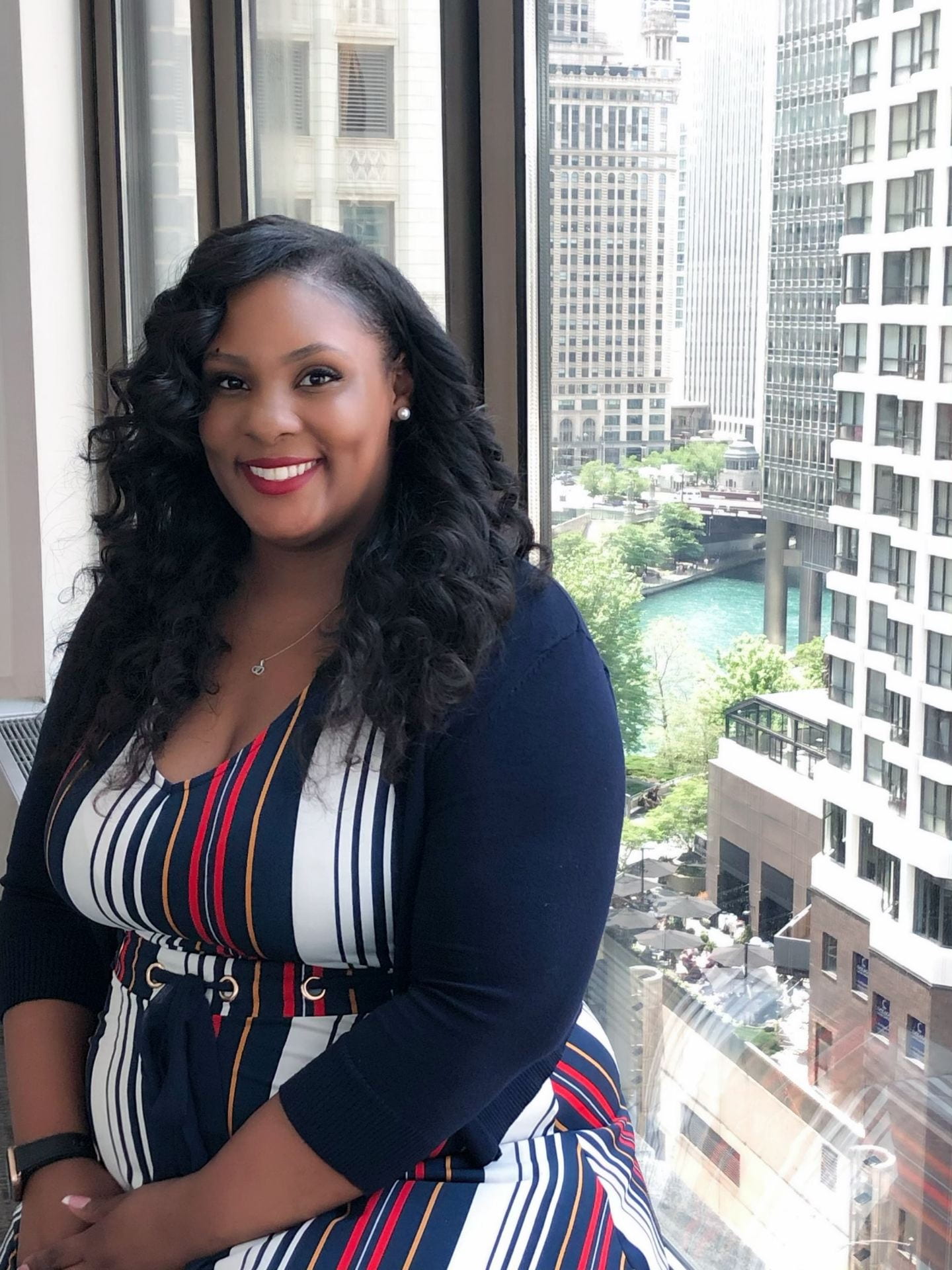
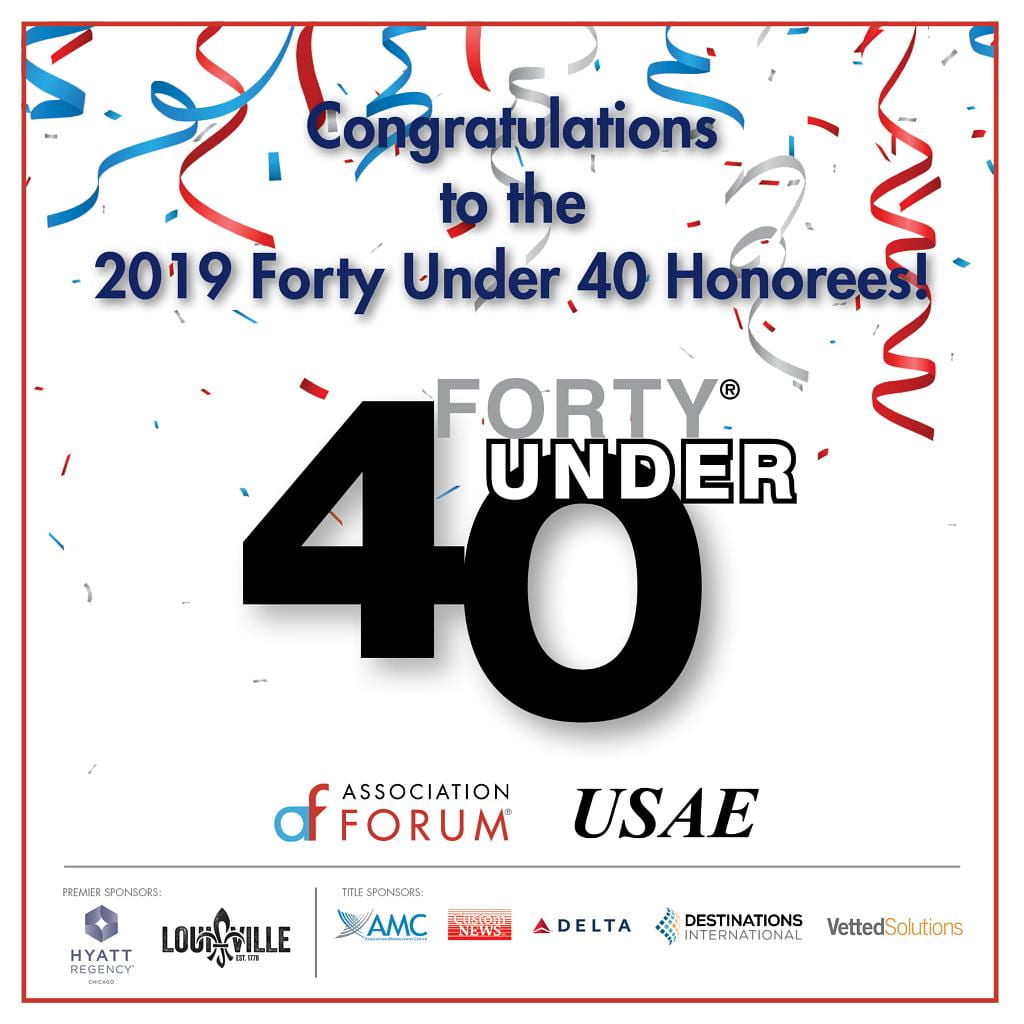
Congratulations to MBIRE alumna Monae Redmond  for being a 2019 Association Forum and ASAE Forty Under 40 award recipient, and also a 2019 Emerging Leader!

Monae is currently Manager, Member Care at the Chicago Association of REALTORS®.  She has been working for CAR since 2008, where she began as Branch Information Specialist/Manager before being promoted to her current role in 2012.

An established leader, she has managed a team of seven for the past six years, servicing approximately 15,500 members of the Chicago Association of REALTORS®. She possesses extensive knowledge of the real estate industry, and takes pride in providing top notch customer service to all members, students, volunteers and staff.  Highly invested in excelling and assisting others in their quest for professional development and advancement, she continues to empower others to fulfill their greatest potential. An advocate for comfortable work environments and open door policies that contribute to a healthy work/life balance, she strives to make a difference in the association world.

Monae aspires to “introduce and inspire a new wave of leaders who care for their employees and foster environments where everyone is accepted for who they are, and empowered to be whatever they want to be. She also is  very passionate about enhancing diversity and inclusion within all nonprofits and associations across the country.”

She has a Bachelor of Science, Business Management from Chicago State University and received her Master of Business Administration, Real Estate from our Institute in 2018. She also is a Li Licensed Illinois Real Estate Managing Broker and has received numerous awards .

What’s next for this high achiever?  Designations of CAE, RCE and CCIM!


Student Success Story: Marlon Taylor Recipient of NAIOP Scholarship

Marlon Taylor is a 1st year MSRE candidate at Roosevelt University’s Marshall Bennett Institute of Real Estate. He earned his Bachelor of Science in Architectural Studies from the University of Illinois at Urbana-Champaign. Starting his career in project management, he’s gained over 6 years of experience at some of the top construction and real estate firms such as Clark Construction and JLL. During his tenor, he’s developed a keen eye and passion for managing the real estate process through a variety of assignments ranging from new construction to adaptive reuse. Some of his key projects include a Naval Apartment complex (Norfolk, VA), the New Malcolm X College Campus (Chicago, IL), the Holiday Inn Disney Springs Hotel (Orlando, FL) and over 35 AMC Movie Theatre renovations across the nation.

Currently, Marlon  serves as a Development Consultant for The Gettys Group. There, he’s dedicated to maximizing Real Estate investments of key stake holders through his expertise in Project Management, Development and Consulting. Mr. Taylor is eager to join NAIOP’s talented community of members, gain exposure through mentorship and promote the value of the organization.

In addition to tuition assistance, recipients of the University Scholarship receive a one-year NAIOP membership, a mentor involved in a field related to their interests, as well as a variety of other local benefits. The NAIOP Chicago University Scholarship program is annual, with applications to the program accepted in early Summer of each year.

Read more here: