Crain’s Commentary: If Chicago Wants Real Neighborhood Revitalization, We Need to Rethink Public Policy

Crain’s Chicago Business invited Collete English Dixon, executive director of Marshall Bennett Institute of Real Estate, to author commentary for its Crain’s Forum on neighborhood vitality. The end result was a Crain’s op-ed that expands on how the built environment can advance equity, sustainability and resilience in communities.

Read the full article here: Crain’s Commentary.

24th Annual Real Estate Gala Raises $255,000 for Student Programs

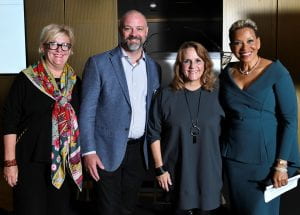
Toni Preckwinkle, president of the Cook County Board of Commissioners, received the 2025 Civic Leadership Icon Award, and David Doig, president of Chicago Neighborhood Initiatives, was honored with the Community Development Leadership Award at the 24th Annual Real Estate Gala on Oct. 16.

A big thank you to all the generous sponsors and attendees of our 24th Annual Real Estate Gala, which raised $255,000 to help fund our programs and support our students!

A round of applause for our sponsors:
Equity Residential; CIBC, Chicago Title Insurance Company; FitzGerald; JAMES AND BRENDA GRUSECKI FAMILY FOUNDATION; Alison Young; Bridge; CBRE; Colliers; Conor Commercial Real Estate; Deloitte; Farpoint Development, Habitat; Hispanic Housing Development Corporation; JLL; JRG Capital Partners, LLC; Mayer Brown; Mid-America Real Estate; Q2; Ryan; Tully & Associates Ltd.; Valley Bank; Waterton; Wintrust Bank Chicago; ADREANI FAMILY FOUNDATION; Chicago Architecture Center; Chicago Association of REALTORS®; First Eagle Bank; Ginsberg Jacobs LLC; The Goldie Initiative: Goldie B. Wolfe Miller Women Leaders in Real Estate; Golub & Company; Spaceco; Becovic Management Group; Chicago Community Loan Fund; Graham Grady; and Tiffiny Higgins.

Marshall Bennett Institute of Real Estate’s Collete English Dixon Launches Podcast Series on Built Environment and Social Equity

Collete English Dixon, executive director of Marshall Bennett Institute of Real Estate at Roosevelt University (MBIRE), has launched Brick, Grass (&) Steel, a podcast exploring how the built environment can support equitable, sustainable and resilient communities.

“From my days working in commercial real estate investment to my current role at the institute, I’ve seen firsthand that the built environment is never neutral.” said English Dixon. “Every decision about what gets built, where, and for whom shapes the fabric of our communities — impacting equity, sustainability and resilience. Experiencing this directly throughout my career inspired me to start this podcast.”

The series kicked off Monday, Sept. 22, with Eric Klinenberg, sociologist and New York University professor, whose groundbreaking book “Palaces for the People” examines how libraries, parks and other social infrastructure can strengthen democracy and reduce inequality. Klinenberg’s research and commentary have been featured widely in The New Yorker, The New York Times and other leading outlets.

New episodes are released biweekly, with a total of 10 episodes this season, each running 35–45 minutes (except for the 60-minute finale). Most episodes will spotlight a single guest, with one episode featuring a two-guest conversation. Confirmed participants include:
– Samuel Stein, urban planner and author of “Capital City”
– Richard Rothstein, author of “The Color of Law”
– Leah Rothstein and Richard Rothstein, co-authors of “Just Action”
– Dr. Robert D. Bullard, widely recognized as the father of environmental justice
– Nina Idemudia, CEO of Center for Neighborhood Technology (CNT)

“In this first season, we’re reflecting where we’ve been and what can be improved,” English Dixon said. “We’re asking: What can we do better? Why are these conversations happening? Each episode offers a different lens on equity, sustainability and resilience in the built environment.”

Episodes will address how physical spaces influence survival and recovery in the face of climate change and natural disasters such as hurricanes and wildfire, as well as how redevelopment affects equitable rebuilding. The conversation also explores how inequities in communities were created and prolonged.

“Brick, Grass (&) Steel comes from a place of both urgency and hope,” English Dixon said. “Urgency, because the choices of the past still shape our world today — highways splitting neighborhoods, industries polluting without consequence, and disasters disproportionately affecting certain communities. And hope, because I have witnessed the impact that people, ideas and policy can have on reimagining our cities. Equity and resilience are within reach, but only if we confront the past honestly and take bold steps forward.”

Episodes are available on major platforms, including Spotify or Apple Music.

Marshall Bennett Institute of Real Estate Becomes First College in Illinois to Receive Appraiser Qualifications Board Approval, Puts Students on Turbo Track for Appraisal License

Coursework from the bachelor of business administration major and master of science real estate degree programs at the Marshall Bennett Institute of Real Estate at Roosevelt University (MBIRE) has been approved by the Appraiser Qualifications Board (AQB) to satisfy most educational requirements to obtain a state license as a real property appraiser.

This groundbreaking course approval opens the appraisal industry to MBIRE’s diverse talent pool and helps reduce discrimination in valuation process.

Effective immediately and retroactive to include those who graduated from MBIRE as of and after May 2020, the approval grants credit for 285 of the required 300 hours, reducing the path to appraisal licensure by more than a year.

“This approval is a monumental step in the right direction for our students as well as the industry,” said Collete English Dixon, executive director of MBIRE. “Students will save not only hundreds of hours on the path to becoming an appraiser, but also thousands of dollars in tuition – allowing them to advance their career sooner than anticipated and with less barriers, like the additional class hours and fees. And, since we have one of the most diverse bodies of real estate students in the country, we will be supplying the valuation industry with access to a much-needed, diverse pipeline of talent.”

Property appraisers and assessors are one the least diverse segments of the real estate sector. In the Chicago area, 5% of appraisers are African American, 3% are Latino, and 1% are Asian, while 90% are white, according to the 2019 U.S. Census 5-year American Community Survey.

“The positive ripple effect of this approval cannot be understated, as having more people of color become appraisers reduces discrimination in the valuation process,” English Dixon said. “The industry is already seeking ways to improve diversity by recruiting new appraisers and educating the industry about potential bias. Our effort to seek and secure AQB approval is just one more step in that direction.”

The new initiative also gives Roosevelt University a competitive advantage as it is the only college in Illinois to receive AQB approval for its real estate courses. “We’re thrilled the AQB acknowledged the value of our undergraduate and graduate programs,” English Dixon said. “Being able to apply coursework that’s already been completed really shortens the appraisal career path for our graduates.”

An appraiser has many career options, from working for the county assessor’s office to being an appraiser in the private sector.

Previously, graduates pursuing an appraisal career had to take 300 hours of AQB-approved courses in addition to their real estate degree. The recent approval will now reduce that to just one 15-hour class – the National USPAP Course – to complete outside of coursework at Roosevelt University.

After a MBIRE graduate presented the idea to have school credit count toward the appraisal licensure education hours, Thomas Hamilton, Ph D, MAI, a full professor in the real estate department, worked with the student to create a proposal and present it to the AQB for review.

“Pursuing this initiative and getting the result we wanted proves that the Marshall Bennett Institute of Real Estate delivers what the industry needs,” said English Dixon.

In addition to the education requirement, appraisal students need to present a log of hours working on appraisal projects and pass the national exam for the certified general appraisal license.
Marshall Bennett Institute of Real Estate holds 21st Annual Real Estate Gala

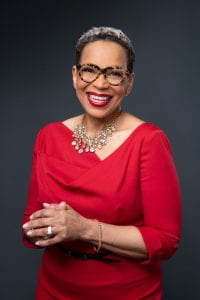
The Marshall Bennett Institute of Real Estate (MBIRE) recently held its 21st Annual Real Estate Gala, recognizing its 2022 Industry Leadership Award honoree Lori Healey, senior vice president, OPC implementation lead of the Obama Foundation, and celebrating its 20th anniversary of the first incoming class of graduate students. The 220 attendees, who came together at the renovated Old Post Office, celebrated commercial real estate leaders and supported real estate education. More than $230,000 was raised to benefit the student resources and educational programs of the Marshall Bennett Institute of Real Estate at Roosevelt University.

Six Keys to Preparing the Next Generation

With an offering of two graduate degrees – an MSRE and an MBA-RE – and an undergraduate degree in real estate, as well as two graduate certificate programs in real estate, the Marshall Bennett Institute of Real Estate (MBIRE) was an obvious fit for a planned Heartland Real Estate Business issue focused on real estate university education. MBIRE Executive Director Collete English Dixon recently wrote this article that outlines the six keys to preparing the next generation of CRE leaders.

CRE Future Leader: Grad Student Angela Azmitia

MBIRE Graduate Student Angela Azmitia is a Latina artist, affordable housing advocate and commercial real estate professional with an interest in high impact placemaking and equitable development. She was recently featured in REjournals as a CRE Future Leader. Read Angela’s story here.
Grad Student Passionate About Community Development

Roxanne Garcia

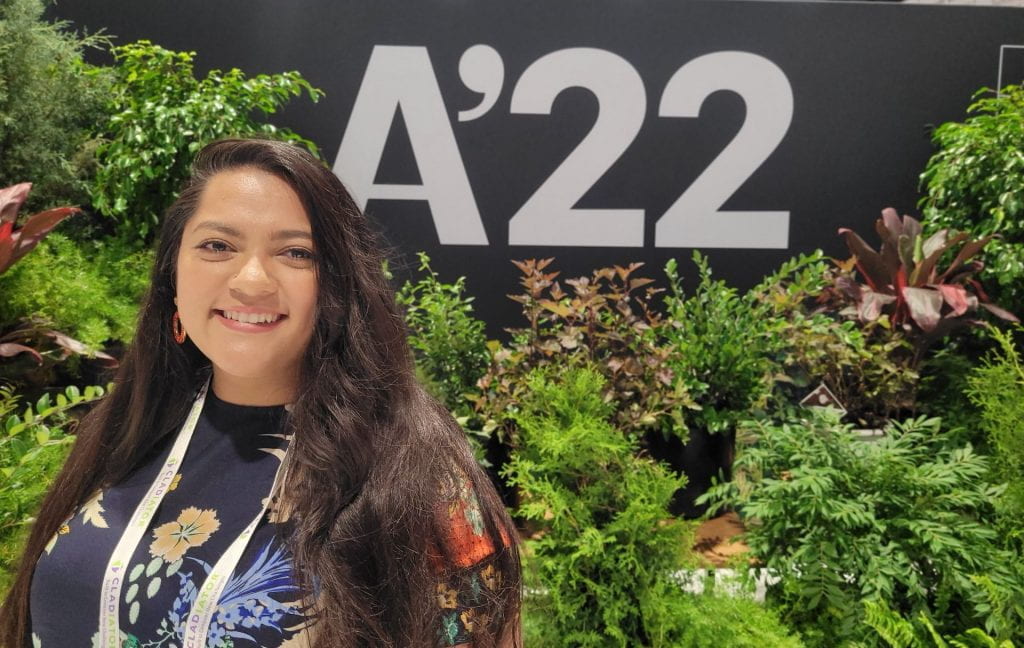
Roxanne Garcia is a Latina innovator with a mission to redefine what it means to be a young woman of color in the fast-paced real estate world.

An MBIRE candidate, Roxanne is currently focused on community development. She leans into her undergraduate training in architecture and urban planning, as well as her professional experience working at MKB Architects, solving community needs and issues that matter most.

Roxanne is no stranger to community engagement, especially when it comes to repurposing a space to fit the needs of others. She has extensive experience designing and project managing over 40 projects across the Chicagoland area.

“I pivoted from architecture into community development because I care deeply about making a difference in underserved neighborhoods. As a South Side Chicago native, this is close to home. I am passionate about taking on projects that promote economic stability and give communities more access to fresh food, affordable housing, and more jobs.”

Roxanne is a Roosevelt Scholar with The Teresa and Hipolito Roldan Scholarship. In addition, she is a graduate assistant for the John Newman Real Estate Scholarship, a program that allows her to conduct various research tasks and assist advisory staff.

Roxanne knew pivoting into community development was the right choice for her when she took her very first class at MBIRE – Introduction to Real Estate. “We learned so much – it was really challenging, but also exciting to feel like I was getting all this experience right away. One of my favorite projects was a case study on an actual property, so it gave us all a taste of the real world of real estate.”

Roxanne is continuing her hands-on learning as a CapEx Analyst & ROI Redevelopment Intern at LivCor, a Blackstone Company. “LivCor’s passion is leaving people – and places – better than we found them. We do that by creating great places to live, work, and grow. It’s incredible to work in an environment that puts our residents at the center of everything we do.”

One day, Roxanne hopes to start a development firm of her own and re-invest in the Chicago community where she grew up.

While she still has one more year left in the program, Roxanne says she already feels like she has been given so many tools and resources, not to mention an incredible network of connections. “As a woman of color in commercial real estate, having a network of CRE leaders, and especially other women in the business, is important. It can help open doors. And I’ve gained that at MBIRE.”


Marshall Bennett Institute of Real Estate Awarded 1st Place in Graduate Division of Harold E. Eisenberg Foundation Real Estate Challenge

Marshall Bennett Institute of Real Estate won first place in the Graduate Division of the 12th annual Harold E. Eisenberg Foundation Real Estate Challenge. Team members, from left, include Alexandra Martello, Ryan Watt, Leila Gathogo Win, Pamela Sanchez Munoz, Trace McGuire, Brett Berlin, Tatiana Nagornova, Jennifer Warfield and Michael Penicnak. Not pictured: Tyler Hanson.
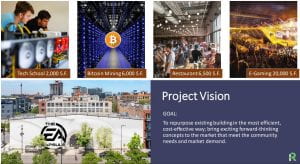
MBIRE’s winning proposal calls for transforming Johnny’s IceHouse, located at 1350 W. Madison St. in Chicago’s West Loop neighborhood, into space for a tech school, bitcoin mining, a restaurant and e-gaming arena.

Marshall Bennett Institute of Real Estate (MBIRE) won first place in the Graduate Division of the 12th annual Harold E. Eisenberg Foundation Real Estate Challenge, which culminated with final presentations on Saturday, April 23, at Wintrust, 231 S. LaSalle St. in Chicago.

The challenge tasked students with creating a redevelopment plan for Johnny’s IceHouse East, the 51,500-square-foot former home of the Chicago Blackhawks’ practice rink located at 1350 W. Madison St. in the heart of Chicago’s West Loop neighborhood.

MBIRE was among five graduate-level teams from universities across the country to participate in the program. As the grand prize winner, MBIRE was awarded $5,000 in scholarships, made possible by Wintrust Commercial Real Estate, toward its real estate program.

The winning MBIRE proposal, The Capsule, was presented by the school’s Windy City Development team and calls for transforming the building to create a lobby, 41-vehicle parking lot, 2,000-square-foot tech school and 6,000-square-foot bitcoin mining space on the first floor; a 16,800-square-foot e-gaming arena and 3,200-square-foot restaurant on the second floor; and additional space for e-gaming stations and dining on the third-floor mezzanine. The total project cost of The Capsule is $25.9 million.

MBIRE’s Windy City Development team included Trace McGuire (team lead), Brett Berlin, Leila Gathogo Win, Tyler Hanson, Alexandra Martello, Tatiana Nagornova, Michael Penicnak, Pamela Sánchez Muñoz, Jennifer Warfield and Ryan Watt.

“I’m incredibly proud of our team,” said Jon Dennis of UrbanStreet Group, who along with Andrew Savoy of CA Ventures, serve as adjunct professors at MBIRE and advisers for the team. “They performed a full market analysis to repurpose this building in a way that is exciting and forward-thinking. This competition gave them a taste of what it’s like to be a developer.”

According to the Eisenberg Foundation, the winning plan is the most economically viable and complementary to the unique uses surrounding the site. The Real Estate Challenge commences early in the year and culminates in April, when the student teams’ presentations are judged by a panel of professionals.

Supporters of the 2022 Challenge included Wintrust Commercial Real Estate, Bradford Allen and Johnny’s Icehouse.

In 2020, MBIRE Received Double The Number Of Inquires From CRE Firms Seeking To Recruit Black Students

In this story, published February 16, 2021, in Bisnow, Collete English Dixon, executive director of the Marshall Bennett Institute of Real Estate at Roosevelt University, weighed in on the increase she’s seen in interest among banks, wealth management and private equity firms involved in commercial real estate in recruiting Black graduates and students.

Bisnow reported, “Historically Black Colleges and Universities across the nation are experiencing a surge in interest this year as much of the business world, including the commercial real estate industry, has vowed to do more to promote inclusion.”

While MBIRE is not an Historically Black College and University, when a CRE firm makes a hire from the school, it is often a person of color due to the student body demographics – and it is someone ready to hit the ground running in CRE.

MBIRE offers one of the country’s most diverse graduate real estate program with the school’s Master of Science in Real Estate (MSRE) program often drawing at least 50% Black students and people of color.